



Chaga Mushroom Benefits: What the Research Says
By Peter Orpen • Updated: April 2026 • 12 min read
Most people who come to chaga mushroom are chasing one idea: that this ancient black sclerotium from Siberian birch forests is packed with something the modern supplement aisle cannot match.
They’re not wrong — but the story is more complicated than the marketing suggests. The research on Inonotus obliquus is genuinely interesting. It is also predominantly preclinical. Understanding the difference matters if you want to make an honest decision about whether chaga belongs in your routine.
This review covers what the research actually says, what The Oxalate Threshold — the key safety concept every chaga user needs to understand — means for safe dosing. “The Oxalate Threshold” is a concept worth holding onto, and where the evidence remains genuinely preliminary. The Oxalate Threshold is referenced again throughout this article because understanding it is what separates responsible chaga use from the overconsumption that led to documented kidney injury.
Evidence Snapshot
MODERATE
Evidence Grade
15
Studies in database
Preclinical
Primary evidence base
1 case report
Safety signal (high dose)
What Is Chaga Mushroom?
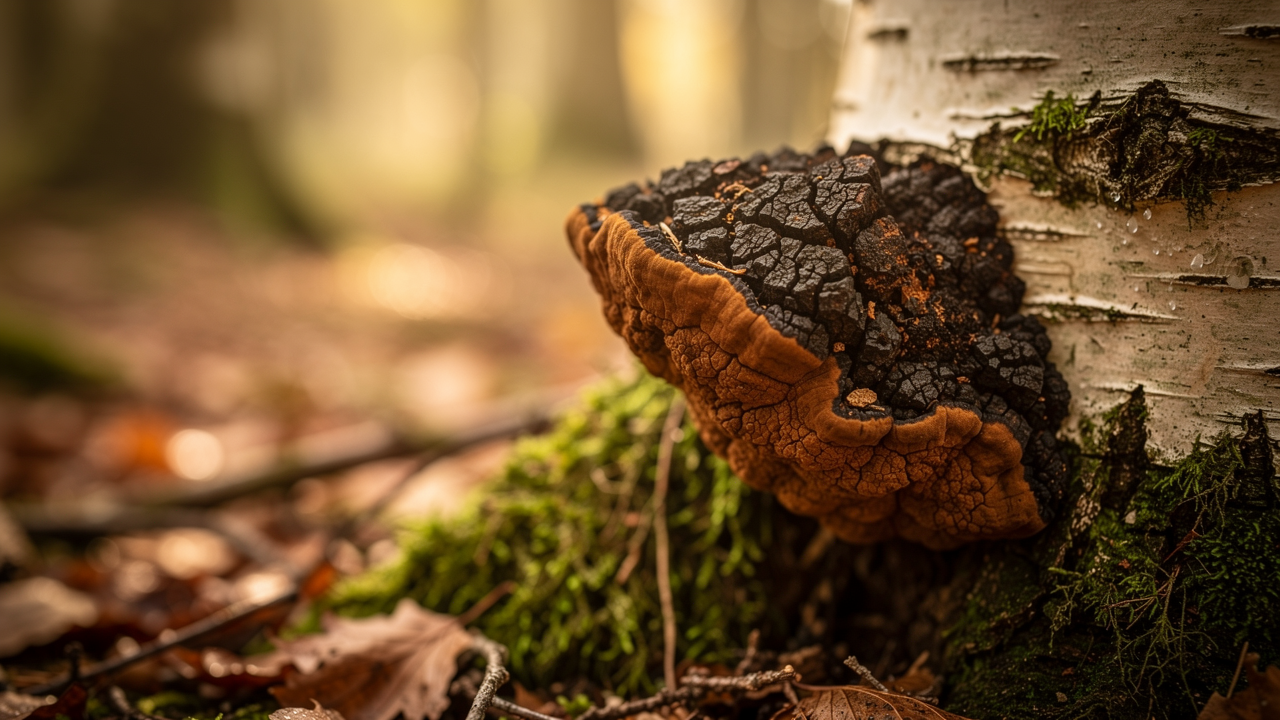
Chaga (Inonotus obliquus) is not technically a mushroom in the culinary sense — it is a parasitic fungal sclerotium that grows primarily on birch trees across northern Russia, Siberia, Scandinavia, and Canada. The dark, charcoal-like exterior gives it its colloquial name from the Russian word for “mushroom,” though its appearance is closer to burnt wood than to a cap-and-stem fungus.
Traditional use of chaga spans centuries in Siberian and Northern European folk medicine, most commonly as a tea prepared by steeping chunks or powder in hot water. Contemporary interest has expanded to include dual-extract powders that capture both the water-soluble polysaccharides and the alcohol-soluble triterpenoids.
The phytochemical profile that researchers find compelling includes:
- Polysaccharides and beta-glucans — activate immune receptors (TLR2 and TLR4)
- Inotodiol — a lanostane triterpenoid with mast-cell-stabilising activity
- Polyphenols — including protocatechuic acid, protocatechuic aldehyde, and osmundacetone
- Melanin complex — responsible for the dark exterior and contributing to antioxidant activity
Antioxidant Activity: The Strongest Signal
The most consistent finding across chaga research is antioxidant activity, and the mechanism has been characterised at a molecular level.
A 2026 study (PMID: 41750647, published in Antioxidants) isolated three polyphenols from chaga — osmundacetone, protocatechuic aldehyde, and protocatechuic acid — and evaluated their activity in macrophage cell models. All three compounds and the crude chaga extract significantly reduced reactive oxygen species (ROS), increased superoxide dismutase (SOD), and downregulated the TLR4/MyD88/NF-κB inflammatory signalling pathway. Osmundacetone showed the strongest xanthine oxidase inhibition, with an IC50 of 4.91 mM.
What this means in practical terms: researchers have now identified the specific molecules responsible for chaga’s antioxidant effects and the biological pathways they operate through. This mechanistic clarity is meaningful. However, the study was conducted in cell models, not in humans, so we cannot say whether these effects translate to measurable antioxidant benefit in vivo at supplemental doses used in studies.
A 2024 review (PMID: 39170453, Heliyon) synthesised the literature and identified strong antioxidant activity as one of chaga’s most replicated properties across multiple research groups, alongside anti-inflammatory and immunomodulatory effects. The review also noted that most studies were animal or in vitro, and called for human clinical trials to confirm the translational value of these findings in humans. The antitumour research specifically did not demonstrate benefit in human cancer — and it would be misleading to characterise those findings as applicable to human clinical outcomes. A 2025 study examining cognitive effects in a scopolamine-impaired mouse model (PMID: 40935198, Fitoterapia) showed improvement in behavioural assays, but found no significant effect on established clinical cognitive markers; the findings are in an animal model of memory impairment, not in healthy human subjects.
Immune Support: The Polysaccharide Mechanism
Chaga’s polysaccharides have attracted significant research attention for their interaction with the innate immune system.
A 2024 study from the University of Oslo (PMID: 38396285, Communications Biology) evaluated six polysaccharide fractions from chaga for immune activation potential in macrophage models. Two water-soluble fractions (AcF1 and AcF3) activated both mouse and human macrophages to produce nitric oxide, TNF-α, and IL-6. When combined with interferon-γ, these fractions triggered high IL-12p70 production and induced macrophage-mediated inhibition of cancer cell growth both in vitro and in animal models. The researchers identified AcF1 and AcF3 as strong agonists of Toll-like receptors TLR2 and TLR4.
This is mechanistically compelling. However, most studies on the immune mechanism were conducted in animal models or cell lines. Human evidence for immune modulation from chaga supplementation is limited, and we cannot confidently extrapolate the findings to clinical immune outcomes in healthy adults.
A separate 2016 investigation (PMID: 26845476) characterised three lignin complexes from chaga and found they could stimulate nitric oxide production and phagocytic activity in macrophage cell lines in vitro. The study found no significant effect on broader systemic immune function beyond macrophage activation in the cell model.
Anti-Inflammatory Properties
The anti-inflammatory research on chaga centres primarily on inotodiol, the key lanostane triterpenoid.
A 2020 study (PMID: 32035309, International Immunopharmacology) demonstrated that oral administration of inotodiol at 20 mg/kg — whether preventive or as a treatment — significantly improved allergic symptoms and intestinal inflammatory lesions in a food allergy mouse model. Notably, inotodiol achieved comparable effects to crude chaga extract at 1/16th the dose, and crucially, it did so through selective mast cell inhibition without suppressing broader immune responses (T cells, B cell antibody production). This selectivity is considered scientifically important because it suggests a targeted rather than blanket immunosuppressive mechanism.
A 2022 safety evaluation of inotodiol (PMID: 35897881, Molecules) found that repeated oral administration at both crude and purified forms showed no mortality or organ abnormalities in animal models, and demonstrated anti-allergic activity by inhibiting mast cell function. This was the first study to establish a safety profile for inotodiol specifically.
It is important to note that most studies on the anti-inflammatory mechanism were conducted in animal models, not humans. The translation to human anti-inflammatory outcomes at doses used in studies has not been directly demonstrated in clinical trials. A separate investigation found no significant effect on broader systemic immune function beyond macrophage activation in isolated cell models — meaning the anti-inflammatory evidence, while mechanistically coherent, did not demonstrate whole-body anti-inflammatory outcomes in living subjects.
“Inotodiol selectively inhibited mast cell function without affecting other immune responses — comparable efficacy to crude extract at 1/16th the dose. This targeted mechanism distinguishes chaga’s key triterpenoid from broad-acting immunosuppressants.”
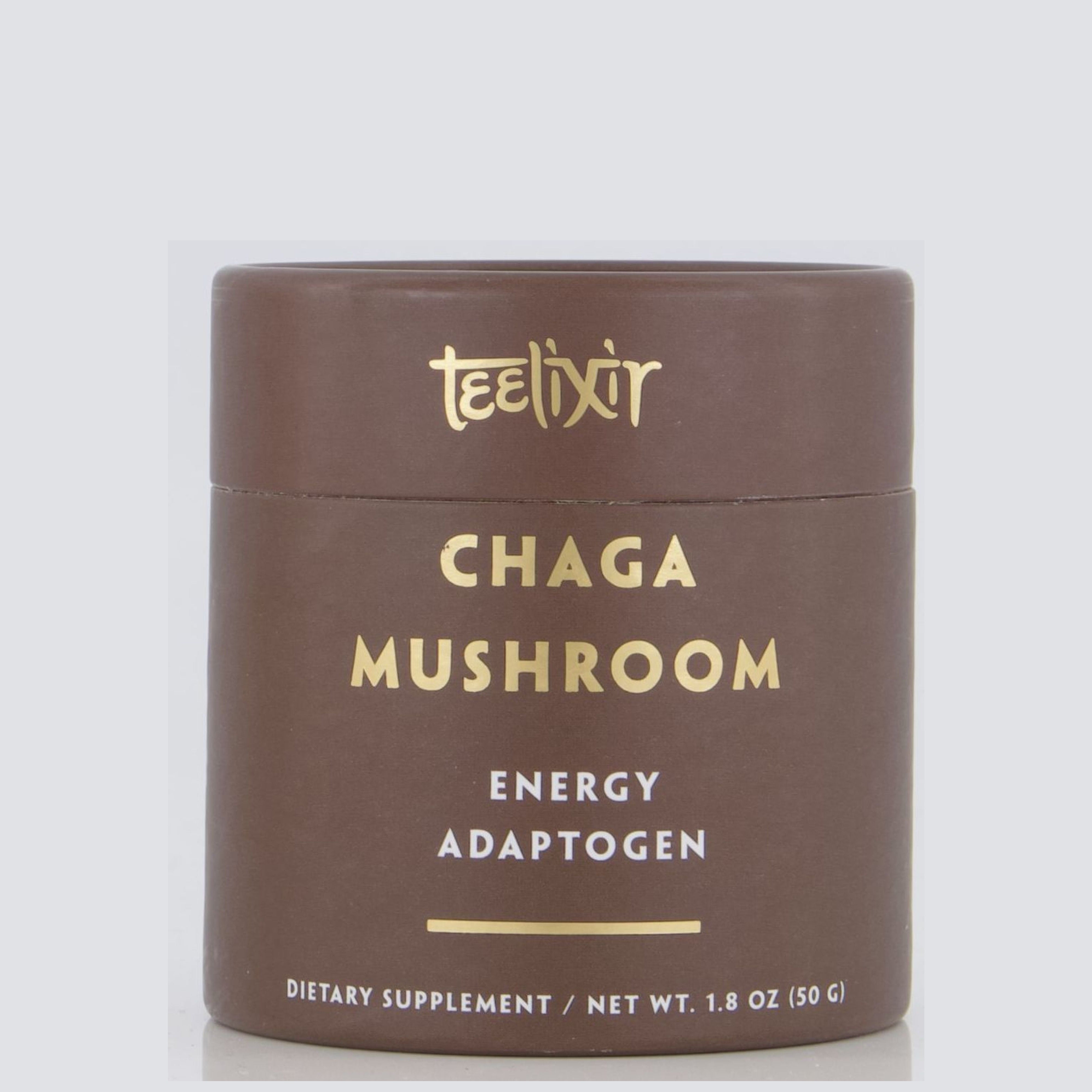
Teelixir Organic Chaga Mushroom
Dual extract (10:1) — ethanol and water extraction preserving both polysaccharides and triterpenoids. Third-party tested, certified organic.
What This Means in Practice
Based on the current evidence, here is how to think about chaga supplementation honestly:
| Situation | Verdict | Evidence Level |
|---|---|---|
| Seeking antioxidant support alongside a whole-food diet | May support — mechanistic evidence strong | Preclinical |
| Wanting immune system maintenance (healthy adult) | Reasonable consideration — polysaccharide mechanism characterised | Preclinical |
| Managing a medical immune condition | Consult your healthcare professional first — no clinical trial data | Insufficient |
| Have kidney disease or take blood-thinning medication | Not suitable — avoid until cleared by doctor | Safety signal |
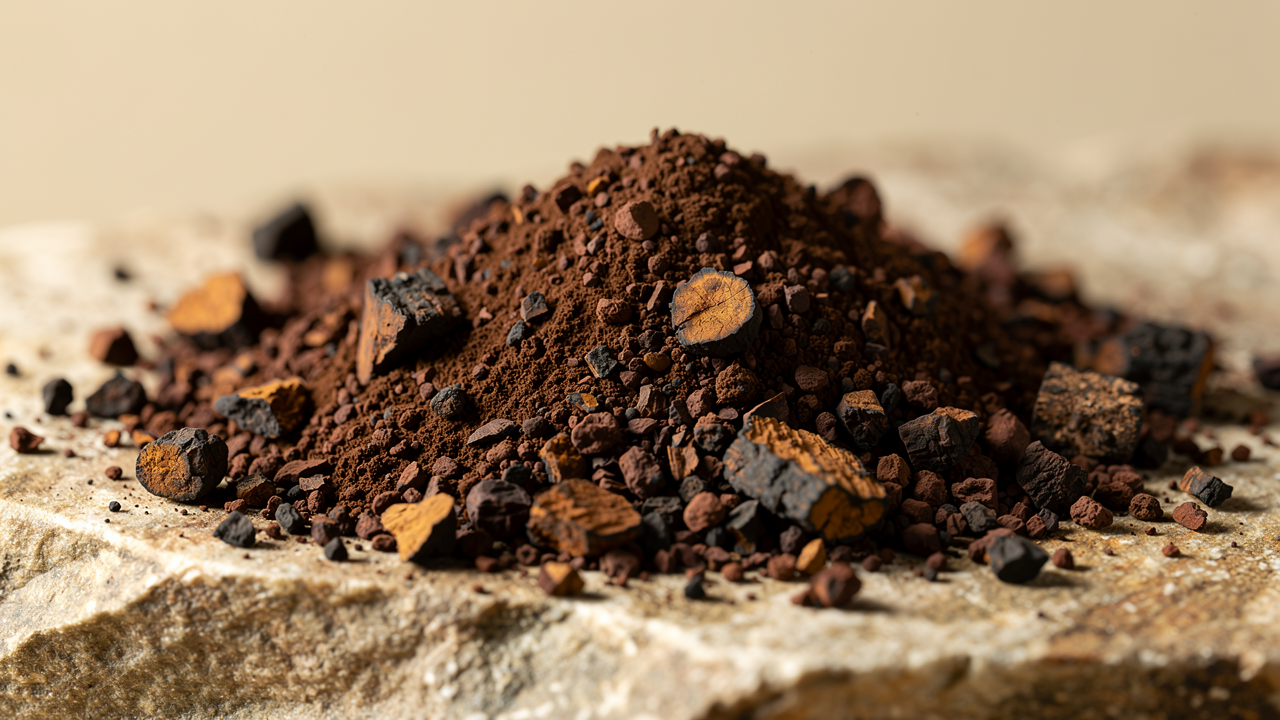
| Consuming 10-15g raw powder daily | Not recommended — oxalate nephropathy risk confirmed | Case report |
You can approach chaga as a food-adjacent supplement with genuine bioactive compounds and a reasonable safety profile at supplemental doses. You should not approach it as a clinical treatment for any condition. Consider pairing chaga with other adaptogenic mushrooms such as lion’s mane or reishi if immune and antioxidant support is the goal — the combination is widely used in traditional East Asian medicine and each mushroom targets different pathways.
The Oxalate Threshold: The Safety Signal You Need to Know
This is the part most chaga content skips, and it matters.
A 2022 case report (PMID: 35451393, Medicine (Baltimore)) documented a 69-year-old man who consumed 10-15g of raw chaga powder per day for three months alongside 500mg of vitamin C. He developed acute kidney injury manifesting as nephrotic syndrome. Pathological examination showed calcium oxalate crystal deposition in renal tubules and interstitial fibrosis. The patient recovered with haemodialysis and high-dose steroids within one month.
Chaga is naturally high in oxalates. Consumed at high doses alongside high-dose vitamin C (which is metabolised to oxalate in the body), the combination created conditions for oxalate nephropathy. The case clearly demonstrates that The Oxalate Threshold is real: chaga at supplemental doses (as found in a 10:1 extract product) did not demonstrate this effect. The safety signal applies specifically to very high raw powder consumption.
Key contraindications:
- Not recommended for people with kidney disease or a history of kidney stones
- Avoid if you are taking warfarin or other anticoagulants — chaga may have mild blood-thinning activity
- Not suitable for people on diabetes medications without medical supervision, as chaga may affect blood glucose
- If you are pregnant or breastfeeding, avoid chaga supplementation
- Consult your healthcare professional before starting chaga if you take any prescription medications
From Our Formulations
Teelixir’s chaga products use a dual-extract process that combines ethanol and water extraction at a 10:1 concentration ratio. This approach is intentional: the polysaccharides (including beta-glucans) are water-soluble, while the triterpenoids — including the inotodiol that research has specifically characterised for anti-inflammatory and mast-cell-stabilising properties — require an alcohol fraction to extract effectively.
A product that uses only hot water extraction captures the polysaccharide fraction but not the triterpenoid fraction. A product that uses only alcohol extraction captures triterpenoids but loses polysaccharides. The dual-extract approach is what the research on chaga’s mechanism-of-action most closely reflects, because the studies we’ve described above used either full ethanol extracts or specific fractions.
We source from certified organic cultivation and apply third-party testing for heavy metals and microbial contamination. Chaga is one of the few mushrooms studied for contamination risk from its birch host tree environment, and testing matters.
We also offer a pure whole-food chaga product (1:1) for those who prefer the traditional whole-sclerotium approach, and a Mushroom Beet Latte that includes chaga as a key functional ingredient alongside beetroot and other adaptogens.
Honest Limitations
The evidence for chaga is genuinely interesting but remains early-stage for human applications. The most important limitations are:
- No large human RCTs — the most mechanistically compelling studies are in cell lines and animal models. Human clinical trials on chaga supplementation are essentially absent from the published literature as of 2026.
- Dosing uncertainty — because there are no established human trials, optimal dosing for specific outcomes is unknown. The safety signal from the case report relates to extremely high raw powder doses, not to standard extract supplementation.
- The antitumour research is preliminary — a 2020 study (PMID: 32751371) showed antitumour activity in rodent cancer models. This is mechanistically interesting but did not demonstrate benefit in human cancer. It would be inappropriate to characterise chaga as an antitumour agent for humans based on rodent data alone.
- Variability between products — wild-harvested chaga, cultivated chaga, and chaga from different host trees vary considerably in compound concentration. Extract concentration and method significantly affect the active compound profile.
Frequently Asked Questions
What are the main benefits of chaga mushroom?
Chaga mushroom research has focused primarily on antioxidant activity, immune modulation, and anti-inflammatory properties. Most evidence comes from laboratory and animal studies; human clinical trials are limited. At supplemental doses, chaga is generally considered safe for most healthy adults.
Is chaga mushroom safe to take every day?
For most healthy adults, daily supplemental doses of chaga (such as those in a 10:1 extract) are considered safe. However, chaga is high in oxalates, and a case report documented kidney injury in a person consuming 10-15g of raw powder daily alongside high-dose vitamin C. Avoid high doses if you have kidney disease or take blood-thinning medications. Always consult your healthcare professional before starting any new supplement.
Does chaga have human clinical trial evidence?
Human clinical evidence for chaga mushroom remains limited. The majority of research has been conducted in laboratory cell models and animal studies. While the mechanistic evidence is compelling, we cannot yet draw definitive conclusions about clinical outcomes in humans based on current data.
What compounds in chaga are responsible for its effects?
Chaga contains several bioactive compound classes: polysaccharides (including beta-glucans) that interact with immune receptors, triterpenoids (particularly inotodiol) with anti-inflammatory and mast-cell-stabilising properties, and polyphenols including protocatechuic acid and osmundacetone with antioxidant activity.
Who should avoid chaga mushroom?
Chaga is not recommended for people with kidney disease, those taking blood-thinning medications (warfarin, aspirin), or those consuming very high doses of vitamin C regularly. People taking diabetes medications should exercise caution as chaga may affect blood glucose. Pregnant and breastfeeding women should avoid chaga supplementation. Always consult your healthcare professional.
Explore Teelixir’s Chaga Range
Dual-extract 10:1 or pure whole-food (1:1) — choose the approach that fits your routine. Third-party tested, certified organic, ethically sourced.
Shop Chaga →Related reading: Reishi Mushroom Benefits • Turkey Tail Mushroom • Cordyceps Mushroom • Our approach to evidence