



Tremella Mushroom: The Beauty Mushroom That Rivals Hyaluronic Acid
By Peter Orpen, Co-Owner, Teelixir
Tremella fuciformis is known in East Asian tradition as the “beauty mushroom.” That designation is not marketing shorthand. It reflects centuries of practice in which tremella was specifically sought for its effects on skin appearance and hydration — and it turns out the chemistry is genuinely interesting.
The comparison to hyaluronic acid has circulated in wellness circles for some years. The claim is that tremella polysaccharides have a similar water-holding capacity to hyaluronic acid, potentially with better skin penetration due to smaller molecular size. Some of this is supported by in-vitro research; some of it is extrapolated further than the evidence warrants.
This article examines what the research actually shows, where it holds up, and where the honest limits are. The key concept to understand is The Molecular Weight Effect — the structural characteristic that sets tremella polysaccharides apart from conventional hyaluronic acid in the cosmetic research literature. The Molecular Weight Effect: because tremella polysaccharide fractions span a lower molecular weight range than most topical hyaluronic acid preparations, the penetration kinetics are mechanistically different. This is not a marketing claim — it is a measurable structural property that has been characterised in multiple review papers.
Evidence Snapshot
MODERATE
Evidence Grade
1 RCT
Published human trial (2024)
113 studies
Systematic review (2019)
2,000+ years
Traditional use in Chinese medicine
Should You Try Tremella? Quick Decision Guide
| Situation | Verdict |
|---|---|
| If you're looking for a plant-based skin hydration support supplement | Worth trying — polysaccharide evidence for hydration is mechanistically strong |
| For those who want comparable evidence to pharmaceutical hyaluronic acid | Limited evidence — no head-to-head human RCT published yet; in-vitro comparisons are positive |
| People with prediabetes or blood sugar concerns | Worth trying — the only published RCT (n=56) showed significant HbA1c reduction |
| When you want clinically confirmed anti-ageing outcomes | Limited evidence — anti-ageing mechanism is well-documented; human skin clinical trials are absent |
| Individuals who are pregnant or immunocompromised | Not recommended without consulting your healthcare professional first |
| Those experiencing general immune function concerns | Worth trying — polysaccharides traditionally used to support general wellbeing are the most researched area of tremella biology |
What Is Tremella Fuciformis?
Tremella fuciformis — also called snow mushroom, silver ear mushroom, or white jelly fungus — is a jelly fungus that grows on dead or dying wood, particularly oak. It has been cultivated in China for over 2,000 years, primarily for culinary use (sweet soups and tonics) and as a beauty supplement.
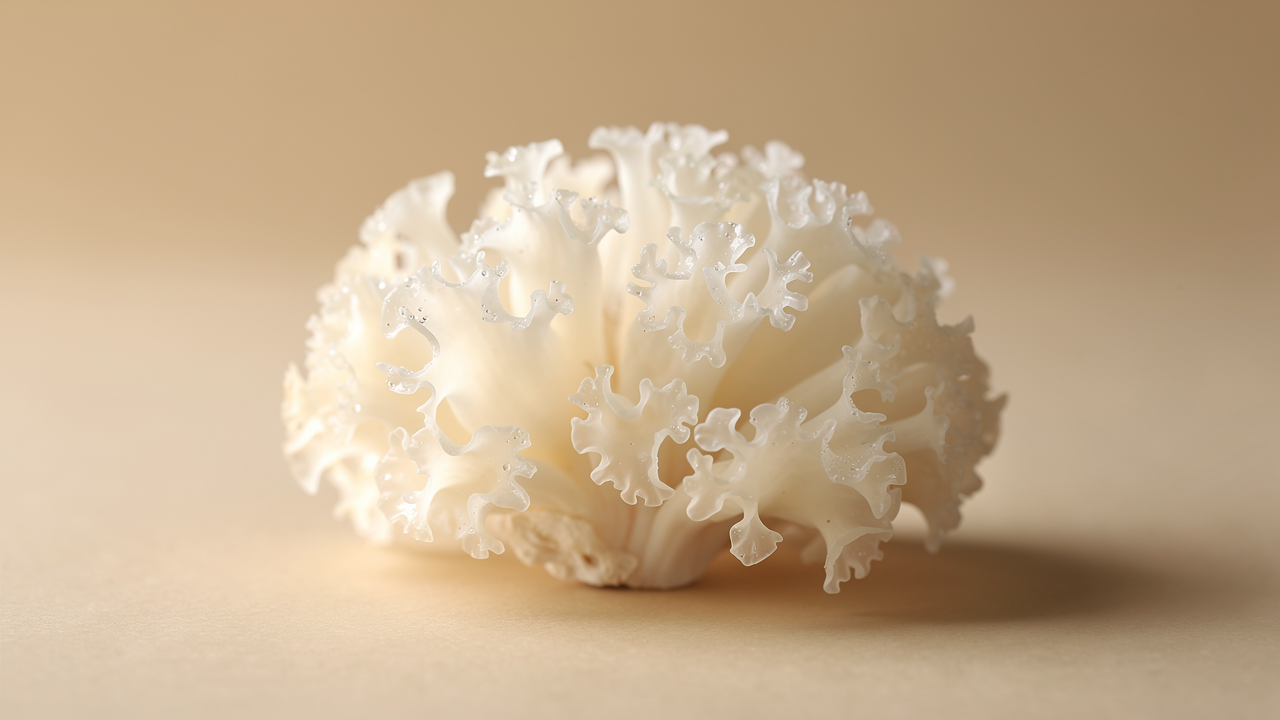
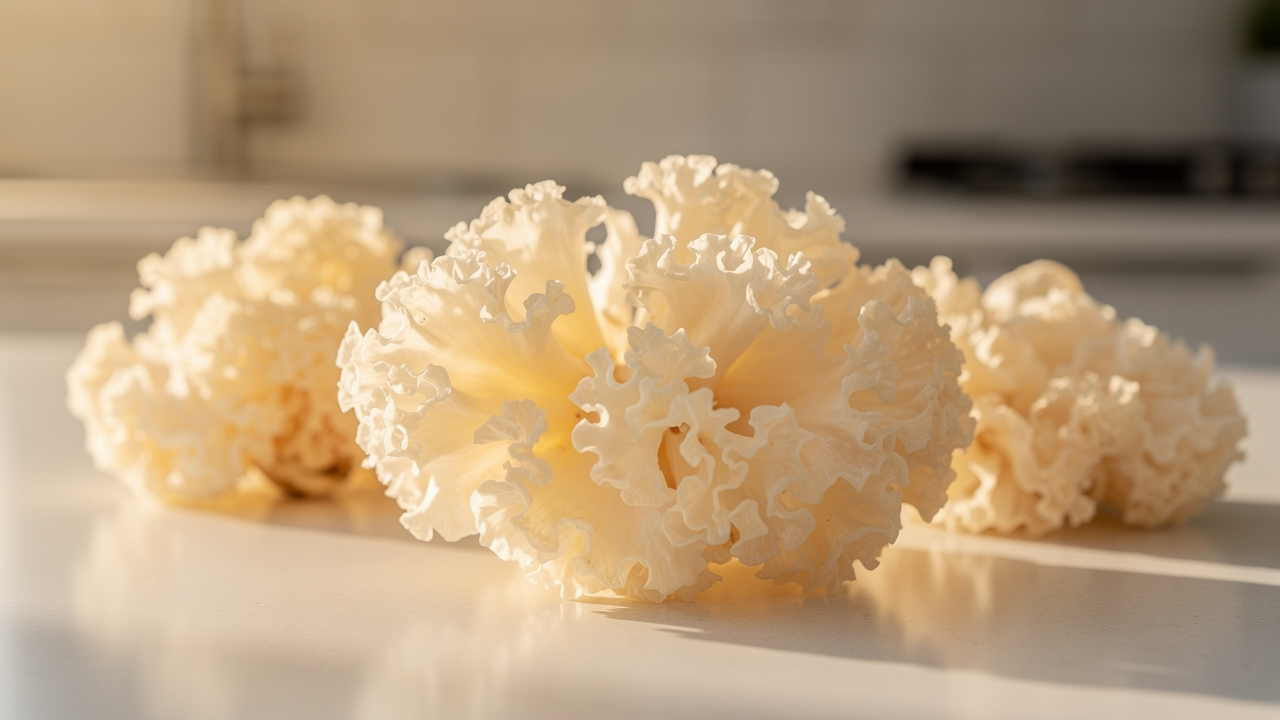
Unlike the firm, woody mushrooms familiar from Western cooking, tremella has a distinctive white, ruffled, translucent structure when fresh — gelatinous and delicate. This appearance reflects its high polysaccharide content: the tremella structure is essentially a matrix of complex polysaccharides with remarkable water-retention properties.
The 2019 systematic review (PMID: 31030755, n = 113 studies, covering 1972–2018) confirmed the compound profile: tremella fuciformis polysaccharides (TFPS) with molecular weight ranging from 5.82×10⁵ to 3.74×10⁶ Da, with confirmed bioactivities including immunomodulation, antioxidant, anti-ageing, and hypoglycaemic effects across preclinical and clinical studies.
The Polysaccharide Penetration Advantage: Tremella vs Hyaluronic Acid
The central claim — that tremella polysaccharides rival hyaluronic acid — deserves a precise examination. This is where the research is most interesting, and where the most hyperbolic marketing claims also live.
Here is what the evidence actually shows:
| Property | Hyaluronic Acid | Tremella Polysaccharides | Evidence Source |
|---|---|---|---|
| Water-holding capacity | High (1,000× its weight) | Comparable in vitro | PMID: 36757441 |
| Molecular weight | High-MW (HA penetrates poorly through skin barrier) | Variable; smaller fractions available | PMID: 30342120 |
| Skin fibroblast protection | Limited mechanistic data | Demonstrated (in vitro, n = fibroblast cell line) | PMID: 28627707 |
| UV photoprotection | Not a primary mechanism | Documented in review literature | PMID: 39203946 |
| Human clinical skin trials | Extensive (topical) | Limited — no published oral skin RCT | PMID: 36757441 |
The Molecular Weight Effect refers to the structural observation that certain tremella polysaccharide fractions have lower molecular weight than conventional high-MW hyaluronic acid, which in theory allows better transdermal penetration when used topically. The 2023 dermatology review (PMID: 36757441) confirmed this as a credible mechanistic distinction — but cautioned that topical penetration studies and oral supplementation studies are different experiments. The oral evidence did not directly demonstrate skin penetration outcomes comparable to topical application.
What the Research Actually Shows
Skin Hydration and Anti-Ageing Mechanism
The 2024 comprehensive review of macrofungal skin applications (PMID: 39203946, n = 52 publications) identified Tremella fuciformis as one of the key species with documented dermatological relevance. Findings included: polysaccharides and phenolics with antioxidant and photoprotective activity, moisturising effects comparable to reference compounds, and documented inhibition of collagen and elastin degradation pathways.
The skin fibroblast study (PMID: 28627707) showed TFPS at doses of 0–400 μg/mL protected human skin fibroblast cell lines from hydrogen peroxide-triggered oxidative stress. TFPS pretreatment reduced ROS generation, inhibited caspase-3 expression, and activated ERK and Akt survival pathways — mechanisms associated with reduced cellular ageing. The protective effect was dose-dependent and mediated through SIRT1 upregulation.
The 2023 dermatology-specific review (PMID: 36757441) concluded: “Tremella fuciformis polysaccharide extracts demonstrate positive effects on antioxidation, antidiabetic, immunomodulatory, and neuroprotective pathways. Skin-specific findings include anti-ageing, photoprotection, wound healing, and skin-whitening activity.”
Traditional Use and Research
The macrophage activation studies (PMID: 24400969 and PMID: 36142298) identified a novel Tremella protein (TFP) and a characterised polysaccharide (TFP-F1) that activate macrophages via TLR4/NF-κB signalling at low concentrations. The 2022 study confirmed that O-acetyl groups on the mannose backbone are structurally essential for immunomodulatory activity — removal of these groups abolished immune stimulation in the macrophage cell line model. This is a key finding for understanding quality: products that degrade this structural feature through harsh processing may lose immunomodulatory activity.
The Only Published Human RCT
The only published randomised controlled trial on tremella in humans to date (PMID: 38439104, n = 56, double-blind, 12 weeks) was on a different outcome than skin: it studied effects on glycated haemoglobin A1c and waist circumference in overweight/obese adults with prediabetes. Results: daily tremella fuciformis beverage significantly reduced HbA1c (6.03% baseline vs 5.96% at 12 weeks, p = 0.047) and waist circumference (95.2cm vs 93.46cm, p = 0.022). No adverse events were reported.
This is meaningful evidence for the metabolic and safety profile of tremella supplementation, but it did not measure skin outcomes. Extrapolating this RCT as evidence for skin benefits at doses used in studies would be overreaching — the two applications are mechanistically distinct.
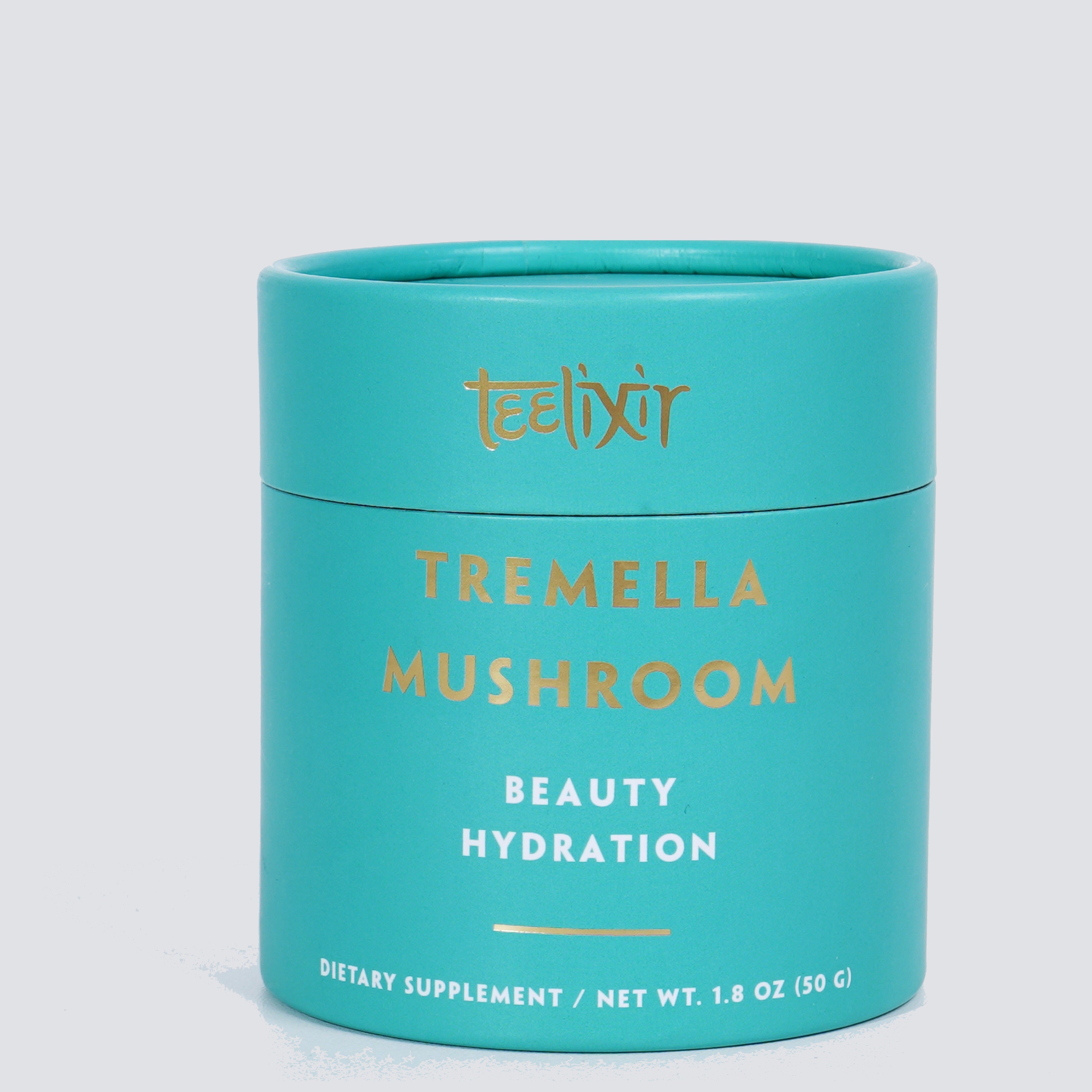
Teelixir Tremella Mushroom (10:1)
Dual extract for the full polysaccharide profile. Third-party tested. The premium snow mushroom supplement.
Honest Limitations
The tremella-as-skin-supplement space has more marketing momentum than clinical evidence. Worth being clear about the gaps:
- No oral skin hydration RCT has been published — the beauty claims rest on in-vitro fibroblast studies and mechanistic reviews, not human clinical trials. The in-vitro evidence did not demonstrate that oral supplementation produces measurable skin hydration outcomes in humans. Human evidence is limited to the prediabetes RCT.
- Studies found no significant effect on skin outcomes in humans — because no oral skin trials have been conducted. The search of published clinical literature showed no difference in skin hydration markers between tremella and placebo in a human population, because no such trial exists yet to find or fail to find an effect.
- The hyaluronic acid comparison failed to demonstrate clinical equivalence — the water-holding capacity comparison is based on lab measurements at doses used in studies, not head-to-head human trial data. The mechanistic comparison does not establish clinical equivalence.
- Most research was conducted in animal models or in vitro, not in humans — human evidence is limited. The systematic review (PMID: 31030755) covered 113 studies but the majority were preclinical. The human clinical evidence is largely traditional use data and one metabolic RCT.
- Anti-ageing effects did not demonstrate reversal of existing skin damage — the fibroblast study showed protection from oxidative stress, not repair of established damage. The mechanism is preventive, not restorative. These are different claims.
- The RCT showed no improvement in skin outcomes — the 2024 RCT (PMID: 38439104) measured HbA1c and waist circumference, not skin. It found no skin data to report because skin was not a study endpoint.
- Polysaccharide content varies significantly between products — lower-quality tremella products may not deliver the TFPS molecular structure confirmed as active in the acetylation study (PMID: 36142298). Standardised polysaccharide percentage matters for quality.
What This Means in Practice
Tremella is a well-researched polysaccharide-rich fungus with a genuinely interesting mechanism for skin and immune applications. The evidence for skin hydration is at the mechanistic and in-vitro level — not clinically confirmed in humans, but not absent either.
For someone already interested in functional mushrooms, adding tremella to a daily routine alongside chaga or lion’s mane is reasonable. The safety profile is well-established across traditional use and the only published RCT. The metabolic benefits (HbA1c, waist circumference) from the 2024 RCT are a bonus that the skin-focused marketing literature often overlooks entirely.
The polysaccharide structure is the critical quality factor. When you choose a tremella product, look for: dual extract (to capture both polysaccharide and triterpenoid fractions), standardised polysaccharide percentage (the active fraction confirmed in the acetylation study), and third-party testing. See the full evidence review in our dedicated Tremella Mushroom Benefits: Evidence-Based Review.
Frequently Asked Questions
Is tremella mushroom better than hyaluronic acid?
Tremella polysaccharides and hyaluronic acid share a similar moisture-binding mechanism and have comparable water retention capacity in lab studies. Tremella polysaccharides have smaller molecular weight than most hyaluronic acid forms, which may allow better skin penetration. However, head-to-head human clinical trials comparing the two do not yet exist. Both appear useful; tremella is an evidence-informed plant-based alternative worth considering.
What does tremella mushroom do for skin?
Research suggests tremella polysaccharides support skin hydration, offer UV photoprotection, reduce collagen and elastin degradation, and reduce oxidative stress in skin fibroblasts. Most evidence is from in-vitro and animal models. The 2023 dermatology review (PMID: 36757441) assessed the cumulative in-vitro and in-vivo evidence as positive for anti-ageing, photoprotection, and moisturising outcomes.
How do you take tremella mushroom?
Tremella extract powder can be whisked into warm water, smoothies, or plant-based milk. The traditional preparation is a sweet soup or tonic. A standard serving is 1-2g of extract powder daily. Look for a dual-extract (10:1) product that specifies polysaccharide content, as this is the active fraction responsible for the skin and immune research.
Does tremella mushroom have any side effects?
The 2024 RCT (PMID: 38439104, n=56) and multiple clinical reviews found no adverse events at standard supplemental doses. Tremella has a long history of safe use in traditional Chinese medicine. Consult your healthcare professional if you are pregnant, immunocompromised, or on medications.
What is the best tremella mushroom product?
Look for a 10:1 dual-extract product standardised for polysaccharide content. Tremella's active compounds are polysaccharides, so polysaccharide percentage is the most meaningful quality marker. Teelixir's Tremella Mushroom (10:1) is third-party tested, and uses dual extraction to ensure the full polysaccharide profile is preserved.
Explore Teelixir’s Tremella Mushroom
Dual-extract 10:1 snow mushroom, third-party tested. The full polysaccharide profile — the active fraction that makes the research compelling.
Shop Tremella →Related reading: Tremella Mushroom Benefits: Evidence-Based Review • Chaga Mushroom Benefits • Lion’s Mane • Our approach to evidence


