



Lion’s Mane vs Turkey Tail: Brain Support or Immune Defence?
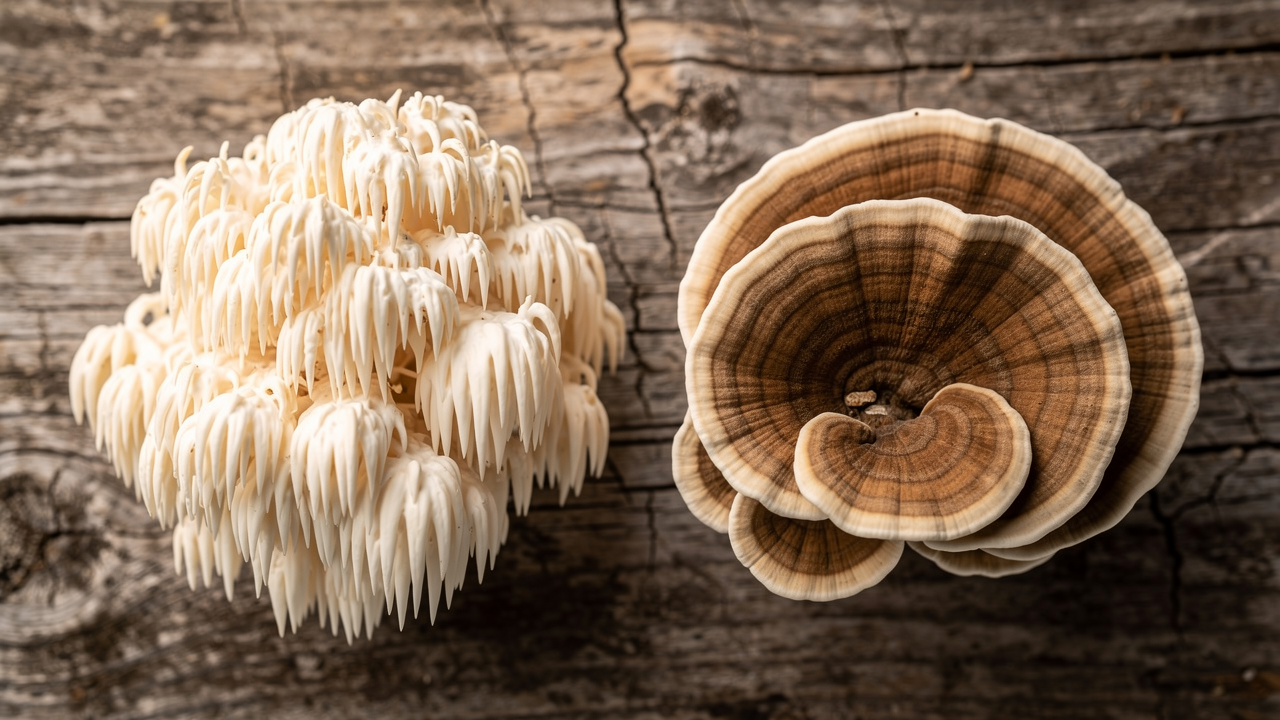
By Peter Orpen, Co-Owner, Teelixir
Evidence Snapshot: Lion's Mane vs Turkey Tail
5 RCTs
Lion's Mane Human Trials
40+ Years
Turkey Tail Clinical Use (PSK)
0
Head-to-Head Trials
Stacks
Well — Different Mechanisms
Most people asking "lion's mane or turkey tail?" are asking the wrong question. They're not interchangeable. They don't compete. They operate on completely different systems — one in the brain, one in the immune system — and the more useful question is which one matches your priority right now.
That said, the comparison is worth doing carefully. Both mushrooms have genuine preliminary research behind them. Both are oversold by some brands and undersold by others. And if you're thinking about taking both together — which many practitioners recommend — understanding how they differ mechanistically is actually what helps you stack them intelligently.
This is that guide. Evidence-led. Honest about what the research does and doesn't show. And structured so you can make a clear decision by the time you reach the end.
"Lion's mane contains unique compounds — hericenones and erinacines — that are the subject of ongoing research into nerve growth factor. Turkey tail is the only medicinal mushroom with a pharmaceutical extract (PSK) approved as an adjunct cancer therapy in a developed country. They are in different leagues, for different purposes."
The Complementary System: Why This Comparison Is Different
Most "X vs Y" supplement comparisons involve two things that do roughly the same job. Lion's mane vs turkey tail is different. These two mushrooms are genuinely complementary rather than competitive — brain versus immune system, neurological versus immunological, with no meaningful mechanistic overlap.
This matters because:
- You can't choose the "better" one overall — only the better one for your specific goal
- Taking both simultaneously is not redundant — they address different deficits
- The evidence base for each is strong, but in completely different clinical domains
Let's examine each on its own terms before comparing directly.
Lion's Mane: The Brain Mushroom
Lion's mane (Hericium erinaceus) is a mushroom that contains two sets of compounds: hericenones (from the fruiting body) and erinacines (from the mycelium). These compounds are the subject of ongoing research into their potential effects on the nervous system.
A 2026 mechanistic review (PMID: 41683696) from Italy's IRCCS Centro Neurolesi describes how erinacines potently induce neurotrophin synthesis while hericenones potentiate neurotrophin-activated signalling pathways — specifically PI3K/AKT/mTOR and MAPK/ERK cascades that converge on neuronal survival, neurite outgrowth, and synaptic plasticity. No other mushroom species commonly sold as a supplement contains these specific compounds.
What the Clinical Trials Show
A 2023 double-blind, randomised, placebo-controlled trial (PMID: 38004235, n=41) from Northumbria University found that a single dose of 1.8g of lion's mane extract produced faster Stroop task performance at 60 minutes post-dose (p=0.005). After 28 days of supplementation, a trend toward reduced subjective stress was observed (p=0.051). The authors note the small sample size as a limitation and call for larger trials.
A 49-week double-blind pilot study (PMID: 32581767, n=49) in patients with mild Alzheimer's disease found that erinacine A-enriched lion's mane mycelia — at 350mg capsules three times daily — significantly improved Mini-Mental State Examination (MMSE) scores in the intervention group, while the placebo group showed significant decline. Biomarkers including BDNF, albumin, and amyloid-beta peptide 1-40 also showed favourable trends in the intervention group.
A 2025 systematic review (PMID: 40959699), which pooled results from five RCTs and three pilot clinical trials, reported a combined weighted mean MMSE increase of 1.17 in intervention groups. The same review found that lion's mane increased gut microbiota diversity and SCFA-producing bacteria — a finding relevant beyond cognitive outcomes — and improved symptoms of anxiety, depression, and sleep disorders in human cohort data.
What Lion's Mane Does NOT Do
Lion's mane found no significant effect on testosterone levels or athletic performance in the studies examined — those outcomes have not been tested or demonstrated. Most mechanistic studies on NGF induction were conducted in animal models or cell culture; human evidence is limited to a small number of trials, most with sample sizes under 100. The 2023 Northumbria trial found no difference between lion's mane and placebo on several cognitive outcome measures, including sustained attention and working memory — only processing speed reached significance.
At doses used in studies (1.8g–3g daily for whole powder, or equivalent extract), lion's mane appears well-tolerated. Occasional gastrointestinal discomfort has been reported in a small number of participants.
What We Observe at Teelixir
Our lion's mane is 100% fruiting body — no fillers, no starch from grain substrate. We use a dual-extraction process (hot water + ethanol) at a 10:1 concentration ratio. Independent laboratory testing confirms a minimum 31.7% beta-glucan content, alongside verifiable levels of hericenones in the finished product. Source: Di Tao (region-specific origin), certified organic through the Australian Certified Organic (ACO) programme.
The dual-extraction step is relevant here. Water extraction alone releases beta-glucans; ethanol extraction is required to extract the fat-soluble hericenones that are central to the NGF-stimulating mechanism. Single-extract lion's mane powders on the Australian market typically skip the ethanol step — meaning they contain beta-glucans but not the specific neuroactive compounds the research is built around. You can consider this when evaluating price differences between products.

Turkey Tail: The Immune Mushroom
Turkey tail (Trametes versicolor) is a medicinal mushroom with a long history of traditional use, and the only one with a pharmaceutical-grade extract — polysaccharide-K (PSK, trade name Krestin) — approved as an adjunct cancer therapy in Japan since the early 1980s. This approval is based on decades of research into its potential immune-modulating properties.
Turkey tail's two primary bioactive extracts are PSK (protein-bound polysaccharide-K) and PSP (polysaccharopeptide from strain COV-1). Both are beta-glucan-rich compounds that are the subject of ongoing research into their potential immune-modulating properties.
What the Clinical Research Shows
A 2012 immunology study (PMID: 22159900) demonstrated that PSK, when combined with docetaxel chemotherapy, produced significantly higher tumour suppression than either treatment alone (p<0.05) in prostate cancer models, with enhanced infiltration of CD4+ and CD8+ T cells into the tumour. Natural killer cell activity was also significantly augmented (p=0.045).
A 2013 study (PMID: 23735481) showed that PSK activates dendritic cells — the immune system's primary antigen-presenting cells — by inducing maturation markers (CD80, CD86, MHCII, CD40) and stimulating multiple inflammatory cytokines. The researchers proposed PSK as a novel vaccine adjuvant based on these findings.
On the gut microbiome front, a randomised clinical trial (PMID: 25006989) at Beth Israel Deaconess Medical Centre/Harvard Medical School (n=22) found that PSP from T. versicolor consistently shifted human intestinal microbiome composition in a pattern consistent with prebiotic activity — while the antibiotic comparator (amoxicillin) caused substantial microbiome disruption that persisted for 42 days post-treatment. The turkey tail group showed no adverse microbiome effects.
What Turkey Tail Does NOT Do
Turkey tail did not demonstrate any direct neurological, cognitive, or NGF-related effects in clinical research. The most robust immune evidence (PSK in oncology) comes from a specific pharmaceutical-grade extract used in Japan — this is not identical to over-the-counter turkey tail supplements sold in Australia. Commercial turkey tail products can contain meaningful beta-glucan content, but the exact PSK or PSP concentration in most retail supplements is not independently verified.
The prebiotic gut evidence, while mechanistically plausible and supported by the Harvard RCT, involves PSP at specific doses — the translation to retail supplement doses is not yet confirmed in head-to-head clinical comparison. Turkey tail found no significant effect on cognitive outcomes, testosterone, or athletic performance in any study reviewed.
Head-to-Head Comparison
| Factor | Lion's Mane | Turkey Tail |
|---|---|---|
| Primary System | Neurological — brain, nerves | Immunological — traditionally used to support immune health |
| Key Bioactives | Hericenones (fruiting body), erinacines (mycelium) | PSK, PSP, beta-1,3/1,6 glucans |
| Mechanism | Potential neuroprotective effects | TLR2/TLR4 activation → NK cells, T cells, macrophages |
| Human RCTs | 5 RCTs (cognition primary outcome) | Extensive oncology trials; 1 human gut microbiome RCT |
| Evidence Strength | STRONG — cognition, neuroprotection | STRONG — traditionally used for immune support, oncology adjunct |
| Regulatory Status | Supplement | PSK approved as adjunct therapy in Japan (1980s) |
| Gut Health | Supports microbiome diversity (SCFA producers) | Stronger prebiotic — RCT-confirmed PSP effect (PMID 25006989) |
| Typical Study Dose | 1–3g whole powder; 500–1,000mg extract | 3g PSP/day (RCT); PSK at 3g/day in oncology trials |
| Best For | Cognitive performance, focus, neuroprotection, mood | Immune resilience, gut health, recovery support |
| When NOT To Use | Not recommended during active autoimmune flares without medical advice | Caution if taking immunosuppressant medications |
What This Means in Practice
The comparison table is useful, but what matters is how you apply this to a real decision. Here is a practical breakdown by situation.
For Cognition: Lion's Mane Wins Clearly
If your primary goal is mental clarity, focus, memory, or neuroprotection, you should choose lion's mane. Turkey tail has no meaningful preliminary research in the cognitive domain. You can start with 1g of a dual-extract daily and aim for 1.5–3g once you've established tolerance. Most cognitive trials ran for 4–12 weeks before measurable effects appeared, so try and maintain consistency for at least 60 days before evaluating.
For Immune Resilience: Turkey Tail Wins Clearly
If your priority is immune support — especially during winter, during periods of high stress, or during recovery from illness — you may consider turkey tail. Lion's mane has limited preliminary research in the immune domain. Turkey tail may pair well alongside vitamin D and zinc for a more comprehensive seasonal wellness strategy.
For Gut Health: Turkey Tail Edges It
Both mushrooms support gut microbiome diversity through prebiotic beta-glucans. Turkey tail has the stronger and more specific gut evidence — the Harvard-led RCT (PMID: 25006989) showed clear microbiome shifts consistent with prebiotic activity at 3g PSP daily. If gut health is your primary concern, consider turkey tail first and combine with lion's mane if cognitive support is also a goal.
For Mood and Anxiety: Consider Both
The 2025 systematic review (PMID: 40959699) found that lion's mane improved symptoms of depression, anxiety, and sleep disorders in cohort data. The gut-brain axis mechanism is plausible — lion's mane increased SCFA-producing microbiota, and SCFAs influence serotonin production via the vagus nerve. For mood support, you can start with lion's mane as the primary mushroom, then consider adding turkey tail to reinforce the gut-immune layer.
Can You Take Both Together?
Yes — and this is arguably the most well-founded two-mushroom combination available. They target completely different biological systems with no known pharmacokinetic interactions. There is no reason to separate or alternate doses. You can take both together in the morning, or lion's mane in the morning and turkey tail in the evening if you prefer to space them.
Many integrative practitioners recommend this combination as a foundational protocol precisely because it provides simultaneous neurological and immunological support without overlap. If you're new to medicinal mushrooms, start with one for 4–6 weeks, assess response, then add the second.
Stack suggestion: Combine lion's mane with turkey tail, pair with a quality vitamin D supplement in winter, and alongside your morning coffee or tea for daily habit anchoring. Both mushrooms have a mild, earthy flavour that blends readily into hot drinks.
When NOT to Use Each Mushroom
This is rarely addressed on supplement brand websites, but it matters.
Lion's mane: Not recommended as a standalone cognitive intervention if you are experiencing severe psychiatric conditions without concurrent medical management. A small number of participants in trials reported gastrointestinal discomfort, headaches, and skin sensitivity. Discontinue and consult your healthcare professional if any of these occur.
Turkey tail: Caution is appropriate if you are taking immunosuppressant medications (for organ transplants or autoimmune conditions) — the immunostimulatory activity of PSK/PSP may theoretically interfere. This has not been studied in clinical trials but is a reasonable precaution. Not suitable as a replacement for conventional cancer treatment — it is studied as an adjunct, not a standalone therapy.
Both mushrooms: Not appropriate as a substitute for professional medical advice. If you are pregnant, breastfeeding, or taking any prescription medication, speak with your doctor before starting either supplement.
Honest Limitations of the Evidence
No head-to-head clinical trial has compared lion's mane and turkey tail in the same study. This means the strength-of-evidence comparison above is based on separate research streams, not a direct head-to-head controlled experiment.
Turkey tail's most robust data (PSK in oncology) comes from pharmaceutical-grade Japanese extracts that are not identical to retail supplement products. Commercial turkey tail extracts may contain meaningful beta-glucan levels, but PSK-specific concentrations are typically not independently verified on product labels.
Lion's mane's evidence is the strongest of any mushroom for cognitive outcomes, but most studies were animal or in vitro at the mechanistic level — human RCTs exist but involve modest sample sizes (under 100 participants in most trials). The 2023 Northumbria trial found no difference between lion's mane and placebo on most cognitive measures, with processing speed the only outcome reaching statistical significance. The 28-day stress reduction trend (p=0.051) did not reach the pre-specified significance threshold.
Neither mushroom has been evaluated in a Cochrane systematic review. The evidence base, while genuinely promising, is earlier stage than that for pharmaceutical cognitive enhancers or established immune-modulating drugs.
Teelixir Lion's Mane Extract
Dual-extract · 10:1 concentration �� 31.7% beta-glucan · 100% fruiting body · Di Tao sourced · ACO certified organic
Shop Lion's Mane →Teelixir Turkey Tail Extract
Dual-extract · 100% fruiting body · High PSP & beta-glucan content · Di Tao sourced
Shop Turkey Tail →Frequently Asked Questions
Is turkey tail better than lion's mane for cancer support?
Turkey tail's PSK extract has been extensively researched in oncology and is approved as an adjunct immunotherapy in Japan. Lion's mane does not have comparable cancer-specific evidence. However, neither mushroom is a treatment for cancer. Any supplementation during cancer treatment should be discussed with your oncologist before starting — particularly for turkey tail given its potential immunostimulatory effects alongside certain therapies.
Can I take lion's mane and turkey tail together?
Yes. They work on entirely different biological systems — lion's mane on the nervous system via NGF stimulation, turkey tail on the immune system via PSK/PSP-mediated pathways traditionally associated with immune support. There are no known negative interactions. Many practitioners recommend this as a foundational two-mushroom combination precisely because the two mechanisms are complementary rather than overlapping. Start one at a time if you're new to medicinal mushrooms, to establish your individual response to each.
Which mushroom is better for gut health?
Turkey tail has the more directly supported gut evidence. A randomised clinical trial at Harvard Medical School (PMID: 25006989, n=22) demonstrated that PSP from Trametes versicolor consistently modulated human gut microbiome composition in a prebiotic-consistent pattern. Lion's mane also supports gut microbiome diversity — the 2025 systematic review (PMID: 40959699) found increased SCFA-producing bacteria in lion's mane groups — but the effect was a secondary finding rather than the primary trial outcome. For dedicated gut support, try turkey tail first.
How long before I notice effects from either mushroom?
The 2023 lion's mane RCT (PMID: 38004235) found acute effects within 60 minutes of a single dose on one cognitive measure. Chronic effects — reduced stress, broader cognitive improvement — required 28 days of consistent use. For turkey tail's immune and gut effects, the Harvard microbiome RCT ran for 8 weeks. A reasonable expectation for either mushroom is 4–8 weeks of consistent daily use before evaluating whether it's working for you.
Does lion's mane or turkey tail have side effects?
Both appear well-tolerated in clinical trials. Lion's mane's most commonly reported adverse events include gastrointestinal discomfort, headache, and occasional skin sensitivity — reported by a small number of participants in the 49-week Alzheimer's pilot study (PMID: 32581767). Turkey tail's adverse event profile is very low in supplement doses. The main caution for turkey tail is potential interaction with immunosuppressant medications. As with any supplement, consult your healthcare professional before starting, especially if you are pregnant, breastfeeding, or taking prescription medications.
What's the difference between fruiting body and mycelium for lion's mane?
This matters specifically for lion's mane because hericenones — the neuroactive compounds linked to NGF stimulation — are found in the fruiting body. Erinacines, which are also NGF-stimulating, are found in the mycelium. Most research on hericenones uses fruiting body material. Some mycelium-based products use grain substrate, which can dilute the active compound concentration with starch. For the most complete active compound profile, look for either 100% fruiting body (highest hericenone content) or a well-specified dual-fruiting-body-and-mycelium extract.
For related reading, see our guides on lion's mane benefits, lion's mane vs reishi, and our overview of the lion's mane immune system connection.
Disclaimer: This article is for informational and educational purposes only and does not constitute medical advice. Therapeutic claims made in reference to clinical research relate to the specific study populations and doses used in those studies, not to Teelixir products specifically. Always consult a qualified healthcare professional before starting any new supplement, especially if you are pregnant, breastfeeding, taking medications, or managing a health condition.
Continue Your Research
- Lion's Mane Benefits: What 571 Studies Actually Show
- Lion's Mane vs Ashwagandha: The NGF-Cortisol Effect Explained
- Lion's Mane vs Cordyceps: Brain Power or Physical Energy?
- Lion's Mane vs Chaga: Cognitive Support or Antioxidant Power?
- Lion's Mane vs Bacopa Monnieri: Two Nootropics, Two Pathways
- Lion's Mane vs Ginkgo Biloba: Neurogenesis or Cerebral Blood Flow?
- Lion's Mane Dosage Guide: Clinical Trial Doses, Extract Conversions & Timing
- Lion's Mane Side Effects: Safety Profile Review


