



Ashwagandha for Sleep: The Stress-Sleep Loop Explained by 5 RCTs
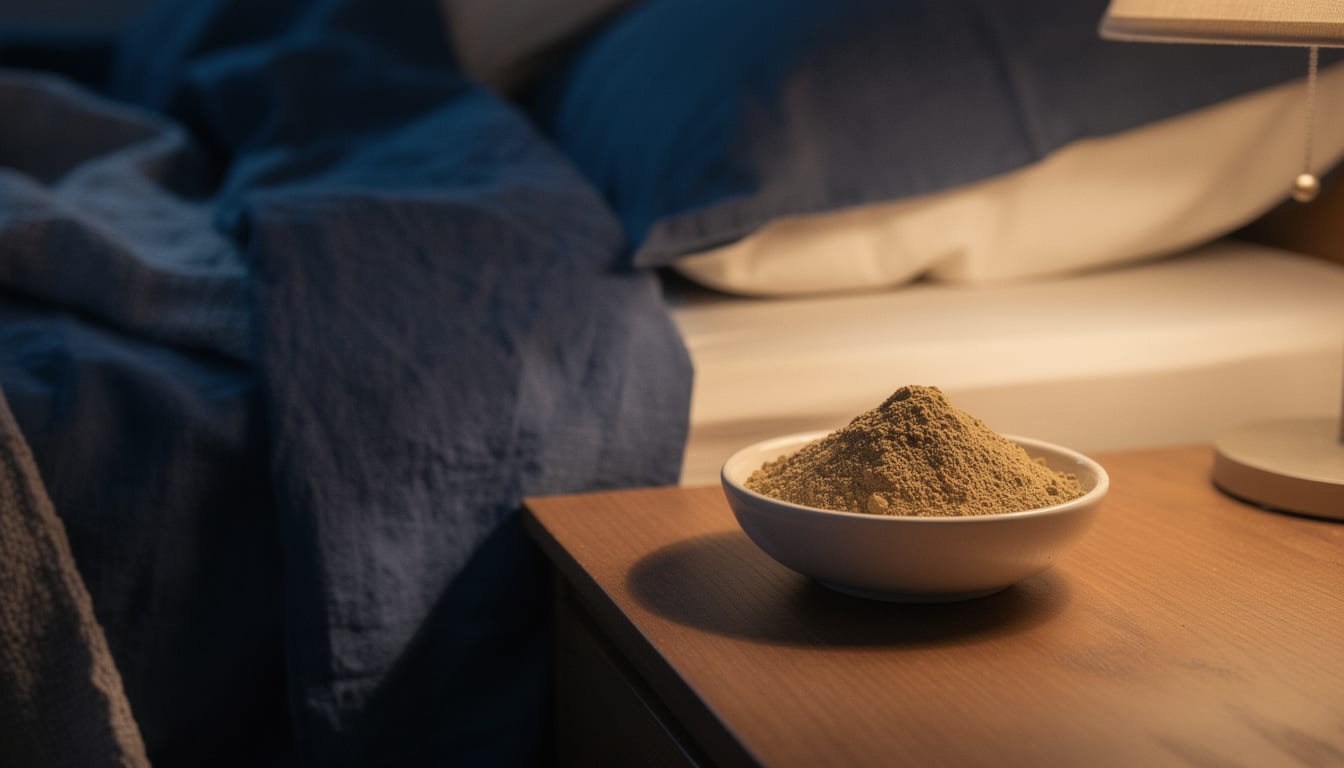
Evidence Snapshot
Meta-analysis (PMID: 34559859)
Reported improved sleep quality
Earliest sleep onset improvement seen

The Stress-Sleep Loop: Why Ashwagandha Addresses Sleep at Its Root Cause
You lie awake at 2am. Your mind cycles through the same thoughts it ran at midnight. You are exhausted, but sleep will not come. You have tried blackout blinds. You have tried cutting caffeine after midday. You have tried magnesium. Some of this has helped, partially. But the underlying driver — a nervous system that will not let go of the day — has not been addressed.
This is the stress-sleep loop. Traditional use suggests that elevated cortisol may delay sleep onset, while poor sleep may affect the next day’s stress response. The loop sustains itself through the body's stress biology, not just through sleep habits.
Ashwagandha does not knock you out. It does not sedate. Traditional use suggests it may help support the body's natural stress response over weeks of consistent use. Ashwagandha has been traditionally used to support the body's natural stress response, which may help with relaxation before sleep. The 2021 meta-analysis (PMID: 34559859) documented this precisely: 5 RCTs, n=400, ashwagandha extract significantly improved overall sleep quality, reduced sleep onset latency, and increased total sleep time.
What the Sleep Research Shows
The 2021 meta-analysis (PMID: 34559859, n=400) is the landmark study in this area. It pooled five RCTs and found that ashwagandha supplementation significantly improved all three primary sleep parameters: sleep quality score, sleep onset latency (time to fall asleep), and total sleep time. The most consistent dose was 600mg/day of standardised root extract. Effect sizes were moderate — not dramatic, but clinically meaningful for people experiencing mild-to-moderate sleep disruption.
A separate 2024 meta-analysis (PMID: 39083548) evaluated both anxiety and insomnia outcomes together and confirmed ashwagandha’s efficacy for insomnia, with particular benefit in populations where sleep disruption was driven by chronic stress rather than primary insomnia.
What the evidence does not show: there are no studies demonstrating ashwagandha improves sleep in people with sleep apnoea, primary insomnia disorder (not stress-related), or circadian rhythm disorders. Traditional use suggests it may be most relevant for stress-related sleep disruption.
The Sleep-Onset Window
Sleep onset latency — how long it takes you to fall asleep after lying down — has been traditionally associated with stress response. In the meta-analysis, this was the parameter that showed the earliest response. Some participants reported noticeable improvement in sleep onset at week 2, well before the full 8-week period had run its course.
This makes sense in the context of traditional use. The withanolides in ashwagandha are a source of compounds that are the subject of ongoing research into their traditional use for supporting relaxation.
In practice: if you are using ashwagandha primarily for sleep, take it 30–60 minutes before bed with a light meal or a glass of warm milk (fat aids withanolide absorption). You may notice sleep onset improving within 2 weeks. Full benefit to sleep quality and total sleep time typically manifests at 6–8 weeks.
What This Means in Practice
When it works best for sleep: Stress-related sleep disruption. Racing thoughts at bedtime. Waking at 2–4am and struggling to return to sleep. Feeling wired but tired. Light sleepers whose sleep is disrupted by minor stressors. These patterns have been traditionally associated with stress response, which ashwagandha has been used to support.
Who is unlikely to benefit: Those with primary sleep disorders unrelated to stress (obstructive sleep apnoea, restless legs syndrome, periodic limb movement disorder). People who fall asleep fine but feel unrefreshed — this pattern may reflect different sleep issues. Ashwagandha has been traditionally used to support relaxation rather than targeting specific sleep stages.
What to combine it with: Evening dose (with food), consistent sleep and wake times, dark room, cool temperature. Ashwagandha has been traditionally used to support the body's natural stress response, while consistent sleep hygiene helps maintain healthy sleep patterns. Neither replaces the other. Magnesium glycinate can complement the effect, as it also supports GABA activity and muscle relaxation.
When NOT to use it as a sleep tool alone: If sleep disruption has been present for more than three months and is causing significant functional impairment, a healthcare professional assessment is warranted before relying on supplementation. Chronic insomnia has a strong psychological component that may require CBT-I (cognitive behavioural therapy for insomnia) alongside any adaptogen protocol.
Should YOU Take Ashwagandha for Sleep?
| Your Sleep Pattern | Verdict |
|---|---|
| Takes 30+ minutes to fall asleep; racing mind | Worth trying — directly targets cortisol-driven sleep onset delay |
| Wakes at 2–4am; cannot return to sleep | Worth trying — early-morning cortisol spike pattern |
| Sleep disrupted during high-stress periods | Strong candidate — this is the primary studied population |
| Feels unrefreshed despite adequate hours in bed | Uncertain — sleep architecture issue; consult a professional |
| Diagnosed sleep apnoea or restless legs | Unlikely to help primary condition — different mechanism |
| Pregnant or taking sedative medications | Consult healthcare professional first |
The Formulation That Matches What Was Studied
The sleep RCTs used standardised root extracts in the 300–600mg range, with withanolide content between 1.5% and 5%. Our ashwagandha root powder matches this profile exactly: root only (no leaf), dual-extracted (hot water + ethanol), 10:1 concentration, minimum 2.5% withanolides, ACO certified organic. Sourced from Rajasthan, India — the traditional growing region for Withania somnifera.
If you’d like to try it, our certified organic ashwagandha root powder is available in 100g and 200g formats. For sleep specifically, we suggest starting with 300mg (approximately half a teaspoon of our powder) in the evening with food, and assessing your response over 6–8 weeks.
You can also read our ashwagandha dosage guide for the full dose framework, or the anxiety guide for the stress-anxiety connection.
This product is not intended to diagnose, treat, cure, or prevent any disease. Always consult your healthcare professional before starting any new supplement.
Continue Your Research
- Ashwagandha Benefits: The Complete Evidence-Based Guide
- Ashwagandha Side Effects: The Tolerance Threshold and What 29+ Clinical Trials Reveal
- Ashwagandha for Depression and Mood: What the Evidence Shows
- Ashwagandha for Muscle Strength: The Anabolic Recovery Window Explained
- Ashwagandha for Women: Hormones, Perimenopause, and the Hormonal Seesaw
- Ashwagandha for Gut Health: The Stress-Gut Axis Short-Circuit
- Ashwagandha vs Lion's Mane: The Body-Brain Divide
- Ashwagandha and Magnesium: Close the Dual Calm Gap


