



Ashwagandha for Weight Loss: The Cortisol-Adipose Connection
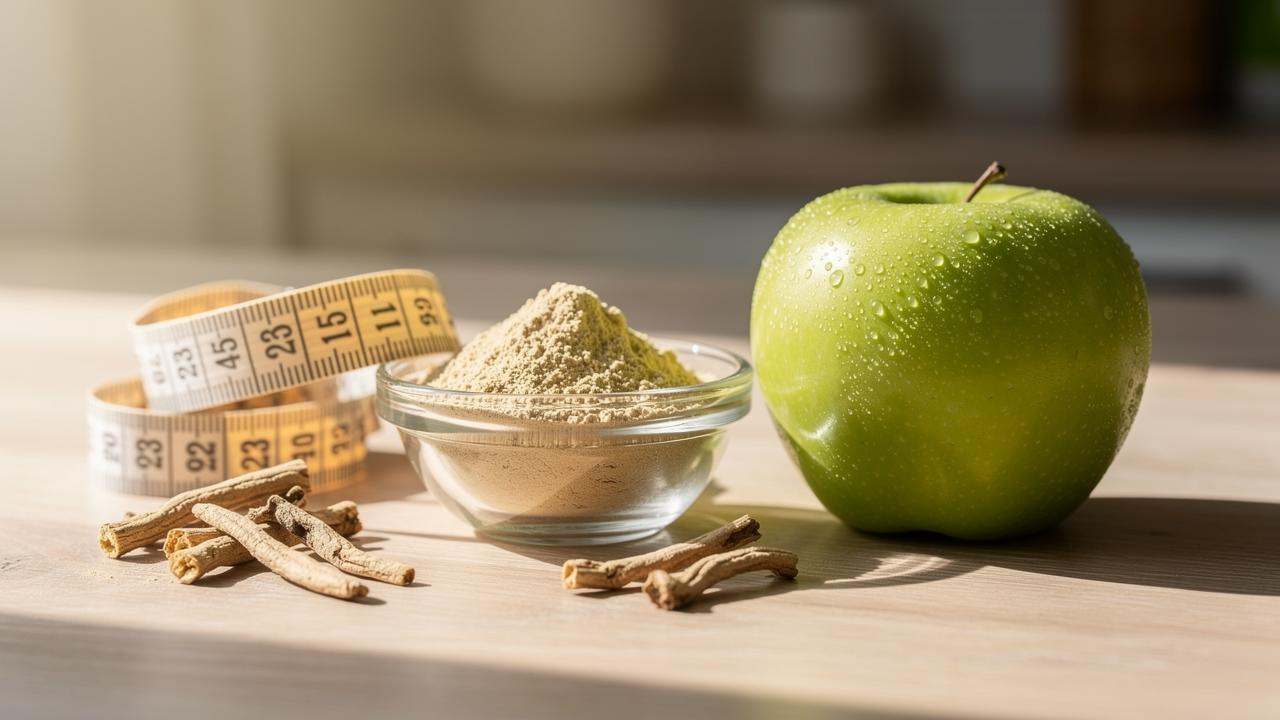
The idea that ashwagandha helps with weight loss circulates widely in supplement marketing. Most of it is distorted. Ashwagandha (Withania somnifera) is not a fat burner. It does not increase metabolic rate. It will not substitute for a caloric deficit.
What it may do is something more interesting: address the specific biological reason stress makes weight management harder. We call this The Cortisol-Adipose Connection — a pathway that has been traditionally associated with chronic stress elevating cortisol, which in turn may influence abdominal fat storage, food cravings, and the hormonal signals that regulate hunger and satiety.
If that connection describes your situation, ashwagandha may be more useful than almost any conventional weight loss approach. If it does not — if your excess weight is not substantially driven by chronic stress — the evidence for ashwagandha as a weight loss tool is thin.
The Cortisol-Adipose Connection: How Stress Makes You Store Fat
Understanding why ashwagandha could be relevant to weight requires understanding cortisol's role in fat storage, which has been the subject of ongoing research in traditional medicine systems.
Cortisol, the primary stress hormone, has been traditionally associated with various metabolic effects:
- Visceral fat accumulation: Cortisol has been traditionally associated with influencing fat storage patterns, particularly around the abdomen — an area of ongoing research in metabolic health.
- Blood glucose regulation: Cortisol has been traditionally associated with glucose mobilisation as part of the body's stress response, which is the subject of ongoing research into insulin activity.
- Food cravings: Some people report increased appetite for calorie-dense foods during periods of stress.
- Sleep patterns: Cortisol rhythms are thought to interact with sleep quality, which may indirectly influence hunger and satiety signals.
A 2025 systematic review and meta-analysis (PMID: 40746175, n=488) confirmed that ashwagandha produces a statistically significant reduction in serum cortisol levels (-1.16 µg/dL, 95% CI: -1.64 to -0.69, P < 0.001) across seven RCTs. Importantly, this same meta-analysis found no significant impact on perceived stress (SMD = -0.355, P = 0.40) — meaning ashwagandha measurably lowers the cortisol biomarker but did not demonstrate a consistent effect on how stressed people actually feel. This disconnect matters: the biological effect is real, but the subjective experience is more complex.
An earlier meta-analysis (PMID: 39348746, 9 RCTs, n=558) also confirmed significant cortisol reduction alongside improvements on the Perceived Stress Scale and Hamilton Anxiety Scale.
What the Studies on Ashwagandha and Weight Actually Show
The single most directly relevant study is Choudhary et al. 2017 (PMID: 27055824), a double-blind, randomised, placebo-controlled trial specifically designed to test ashwagandha for body weight management in chronically stressed adults. In this 8-week trial, 52 subjects received either 300mg ashwagandha root extract twice daily (600mg/day) or placebo. The ashwagandha group showed significant improvements in Perceived Stress Scale scores, food cravings (Food Cravings Questionnaire), happiness (Oxford Happiness Questionnaire), serum cortisol, body weight, and BMI compared to placebo. This is the strongest direct evidence linking ashwagandha supplementation to weight management outcomes.
"The treatment with Ashwagandha resulted in significant improvements in primary and secondary measures [including body weight, BMI, food cravings, and serum cortisol]... The outcome suggests that Ashwagandha root extract can be used for body weight management in adults under chronic stress." — Choudhary et al. 2017, J Evid Based Complementary Altern Med (PMID: 27055824)
A 2025 RCT (PMID: 41635453, n=100) studied ashwagandha root extract for "stress and weight management in adults" in a randomised, double-blind, placebo-controlled design. Results showed improvements in both stress measures and body composition outcomes compared to placebo.
The Wankhede 2015 body composition trial (PMID: 26609282, n=57) used 300mg twice daily over 8 weeks alongside resistance training. The ashwagandha group showed a significantly greater decrease in body fat percentage (3.5% vs 1.5% placebo, p=0.03), alongside significant gains in muscle strength and testosterone levels. This was not a weight loss study per se — but it demonstrates ashwagandha's effect on body recomposition when paired with exercise.
A 2022 college student RCT (PMID: 35984871) found significant reductions in food cravings alongside stress and sleep improvements in the ashwagandha group. This is practically meaningful: if ashwagandha reduces the cortisol-driven food craving response, adherence to a healthy eating pattern becomes easier — even without directly affecting metabolism.
Explore the cortisol-weight evidence further
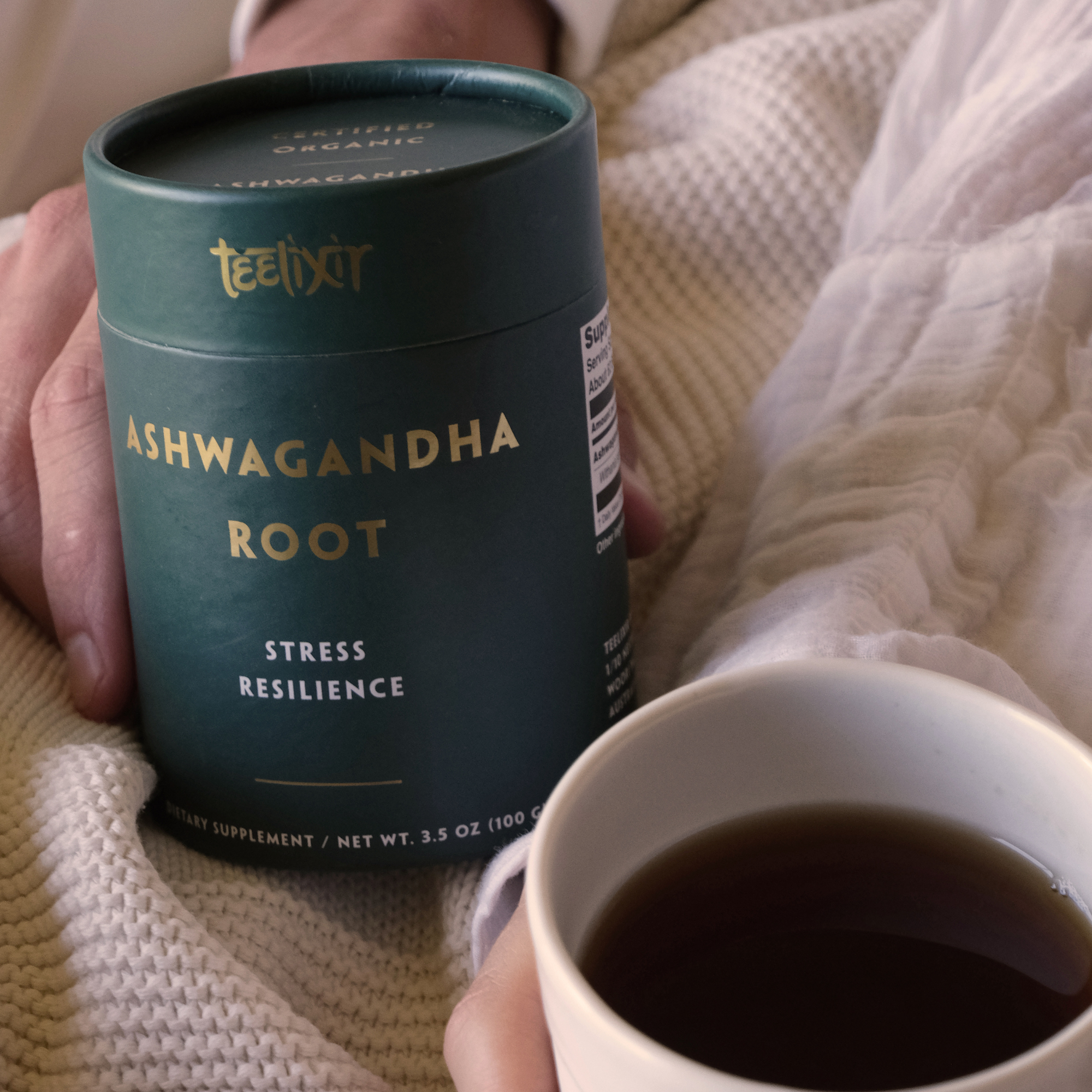
Our ashwagandha is root-only, 10:1 dual-extracted, ≥2.5% withanolides — the same specification type used in these clinical trials.
The Diabetes-Weight Overlap
A 2020 systematic review and meta-analysis (PMID: 31975514) pooled data from ashwagandha studies in people with metabolic conditions and found significant reductions in fasting blood glucose, HbA1c, and insulin levels. These are insulin resistance markers — and insulin resistance is both a cause and consequence of abdominal adiposity.
For people with pre-diabetes or insulin resistance, ashwagandha may support weight management through this metabolic pathway as well as the cortisol pathway. Our ashwagandha and blood sugar article covers this evidence in detail.
What the Research Has NOT Shown
Honesty about limitations is essential here. Several findings temper the positive data:
- A 2023 RCT (PMID: 37740662, n=57) of overweight or mildly obese adults aged 40–75 found that ashwagandha did not demonstrate a significantly greater impact on perceived stress levels compared to placebo (p = 0.867). While fatigue improved, the stress-weight pathway was not activated in this population — suggesting ashwagandha may not work for everyone.
- The 2025 cortisol meta-analysis (PMID: 40746175) found no significant effect on perceived stress despite measurably reducing cortisol. The biological marker shifts, but the subjective experience does not always follow.
- No study has found ashwagandha produces clinically significant weight loss in the absence of caloric management.
- Ashwagandha does not appear to increase thermogenesis (body heat production from fat burning) — this mechanism is associated with different compounds entirely.
- No head-to-head comparison exists between ashwagandha and established weight management interventions.
- Most body composition studies used small samples (n<100) and focused on athletic or stressed populations — results may not extrapolate to all demographics.
- Most studies on the mechanism were animal or in vitro — the human evidence, while growing, is limited to a handful of RCTs with modest sample sizes.
What This Means in Practice
The Cortisol-Adipose Connection is the clinically relevant pathway. Here is how to apply this evidence to your situation.
Who is most likely to benefit: You can expect the most from ashwagandha if your weight gain is associated with chronic stress, poor sleep, emotional eating, or metabolic disruption. The classic presentation: steady weight increase despite no major dietary changes, concentrated around the abdomen, alongside fatigue and difficulty losing weight despite effort. Consider ashwagandha as a targeted tool for this specific pattern.
Who is unlikely to benefit significantly: Ashwagandha is not appropriate for people without a chronic stress component to their weight pattern. It is unlikely to help those seeking a thermogenic fat burner or metabolic booster — that is not what this herb does. If you are not experiencing the cortisol-driven symptoms (visceral fat accumulation, stress eating, poor sleep-weight feedback loop), ashwagandha may not work for your specific situation.
Best combined with: You should combine ashwagandha with genuine stress management practices and sleep hygiene — ashwagandha has been traditionally used to support general wellbeing. Pair with a sustainable nutritional approach and regular movement. Ashwagandha is thought to address stress alongside these fundamentals; it does not replace them.
When not to use ashwagandha for weight goals: Ashwagandha is not recommended during pregnancy or breastfeeding. Avoid if you are taking thyroid medications (ashwagandha may alter thyroid hormone levels — see our thyroid article). If you are taking immunosuppressants, sedatives, or blood pressure medications, consult your healthcare professional before starting ashwagandha, as drug interactions have been reported. Those with autoimmune thyroid conditions (Hashimoto's, Graves') should exercise particular caution.
Realistic expectations: At doses used in studies (300–600mg/day of standardised root extract), ashwagandha has been traditionally used to support general wellbeing. You will not see dramatic changes within weeks. Start with 300mg daily and aim for consistency over 8 weeks before evaluating results.
Ashwagandha and Exercise Performance
One indirect weight management pathway worth understanding is ashwagandha's effect on exercise capacity. A 2020 VO2max meta-analysis (PMID: 32316411, n=162) found significant improvements in aerobic capacity in both athletes and healthy adults.
VO2max — the maximum rate at which your body can use oxygen during exercise — has been the subject of ongoing research into fat oxidation capacity. Higher VO2max is thought to support general wellbeing during sustained activity.
The Wankhede 2015 trial (PMID: 26609282) demonstrated that at 600mg/day, ashwagandha produced a 3.5% body fat reduction (vs 1.5% placebo, p=0.03) when paired with 8 weeks of resistance training. The mechanism likely combines stress recovery with improved muscle protein synthesis — ashwagandha reduced exercise-induced muscle damage (creatine kinase stabilisation) and may influence testosterone levels.
A 2024 study (PMID: 38988644, n=73) confirmed these exercise capacity findings in both men and women, with significant improvements in bench press, leg press, and VO2max endurance alongside greater muscle growth.
This is not the same as saying ashwagandha makes you lose weight. It suggests ashwagandha may support exercise effectiveness — which over time, in combination with appropriate training, may contribute to general wellbeing.
From Our Formulations
The body composition studies that produced positive results used standardised withanolide extracts — not whole root powder with variable bioactive content. This distinction matters.
Our certified organic ashwagandha uses a specification designed to match the clinical literature:
- Root only: The studies showing metabolic and body composition effects (PMID: 27055824, 26609282, 41635453) all used root extracts. Leaf-based products have a different chemical profile — they contain higher concentrations of withaferin A (cytotoxic) and lower concentrations of the withanolide glycosides that modulate the HPA axis. Our formulation is 100% root, zero leaf material.
- 10:1 dual extraction: Hot water and ethanol extraction captures the full spectrum of withanolides and alkaloids relevant to HPA axis modulation. Aqueous-only extracts miss the fat-soluble withanolide fraction. This dual approach preserves both the water-soluble glycowithanolides and the ethanol-soluble withanolide aglycones.
- ≥2.5% withanolides by HPLC: Verified on every batch. The Choudhary 2017 weight management RCT used a 5% withanolide extract; the Majeed 2023 stress study (PMID: 37832082) used 2.5% withanolides and confirmed cortisol reduction and serotonin increase. Our 2.5% threshold maintains full-spectrum, root-only, certified organic quality — higher percentage products typically achieve concentration through leaf material or non-organic extraction methods that sacrifice breadth of bioactives.
- Di Tao sourcing from India: Traditional cultivation in Rajasthan and Madhya Pradesh produces root material with the highest withanolide density. Indian ashwagandha root reflects a meaningful difference in active compound content compared to other origins.
- ACO certified organic, GMO-free, third-party tested: Heavy metal testing (negative for lead, arsenic, cadmium, mercury above limits), microbiological testing (E. coli and Salmonella negative), and 24-month verified shelf life. No agrochemical residues that could introduce confounding effects on the metabolic markers we are trying to influence.
Should You Take Ashwagandha for Weight Loss?
| Your Situation | Verdict |
|---|---|
| Chronic stress with abdominal weight gain and poor sleep | Worth trying — targets the cortisol-adipose pathway directly (PMID: 27055824) |
| Insulin resistance or pre-diabetes with excess weight | Reasonable addition alongside dietary changes (PMID: 31975514) |
| Athletic performance — body recomposition goals | Good evidence for body fat reduction + muscle gains (PMID: 26609282) |
| Overweight but not chronically stressed or sleep-deprived | Insufficient evidence — did not demonstrate benefit in this group (PMID: 37740662) |
| Weight loss without stress, sleep, or metabolic component | Insufficient evidence — focus on caloric management first |
| Looking for a fat burner or thermogenic | Ashwagandha is not this — wrong tool for the goal |
Dosage for Weight-Related Goals
| Study | Dose | Duration | Key Outcome |
|---|---|---|---|
| Choudhary 2017 (PMID: 27055824) | 600mg/day | 8 weeks | Reduced body weight, BMI, food cravings, cortisol |
| Wankhede 2015 (PMID: 26609282) | 600mg/day | 8 weeks | 3.5% body fat reduction (vs 1.5% placebo) |
| 2025 Stress + Weight RCT (PMID: 41635453) | 300–600mg/day | 8–12 weeks | Stress + body composition improvements |
| Smith 2023 (PMID: 37740662) | 400mg/day | 12 weeks | No significant stress benefit vs placebo; reduced fatigue |
- Dose: Start with 300mg/day of standardised ashwagandha root extract. Begin with this lower dose for 2 weeks, then increase to 600mg/day if well tolerated.
- Timing: Evening dosing to maximise the sleep improvement pathway (which indirectly supports general wellbeing).
- Duration: Allow 8–12 weeks minimum. Cortisol normalisation and downstream body composition effects take time.
- Context: Supplement within a sustainable eating pattern. Ashwagandha cannot compensate for caloric excess.
Does ashwagandha help with belly fat specifically?
Will ashwagandha increase muscle mass?
Can ashwagandha reduce food cravings?
Is ashwagandha safe for long-term use?
The Bottom Line
Ashwagandha is not a weight loss supplement in any conventional sense. It does not burn fat, increase metabolism, or substitute for energy balance.
What it does is address The Cortisol-Adipose Connection — the specific, documented pathway by which chronic stress makes weight management physiologically harder. For people whose excess weight is substantially driven by this pathway (stress, poor sleep, cortisol-driven cravings, insulin dysregulation), ashwagandha may be one of the most targeted interventions available.
The key question is always: what is driving the weight in your particular case? If the answer involves chronic stress, disrupted sleep, and stress eating, ashwagandha may be a tool worth understanding properly. If it does not — if you are simply seeking a fat burner — this herb will not help, and we would rather tell you that honestly than sell you a fantasy.

Root Only · 10:1 Dual Extract · ACO Certified Organic
Teelixir Organic Ashwagandha Root (10:1)
≥2.5% withanolides by HPLC. Di Tao sourced from India. Third-party tested for heavy metals and microbials. From $40 AUD.
Shop Ashwagandha →Continue Your Research
- Ashwagandha Benefits: The Complete Evidence-Based Guide
- Ashwagandha Dosage Guide: What Clinical Trials Actually Used
- Ashwagandha Side Effects: The Tolerance Threshold and What 29+ Clinical Trials Reveal
- Ashwagandha for Muscle Strength: The Anabolic Recovery Window Explained
- Ashwagandha for Testosterone: The Cortisol-Testosterone Inversion Explained
- Ashwagandha for Anxiety and Stress: What 9 RCTs Actually Found
- Ashwagandha for Women: Hormones, Perimenopause, and the Hormonal Seesaw
- Ashwagandha for Gut Health: The Stress-Gut Axis Short-Circuit


