



Ashwagandha for Diabetes and Blood Sugar: The Stress-Glycaemia Loop
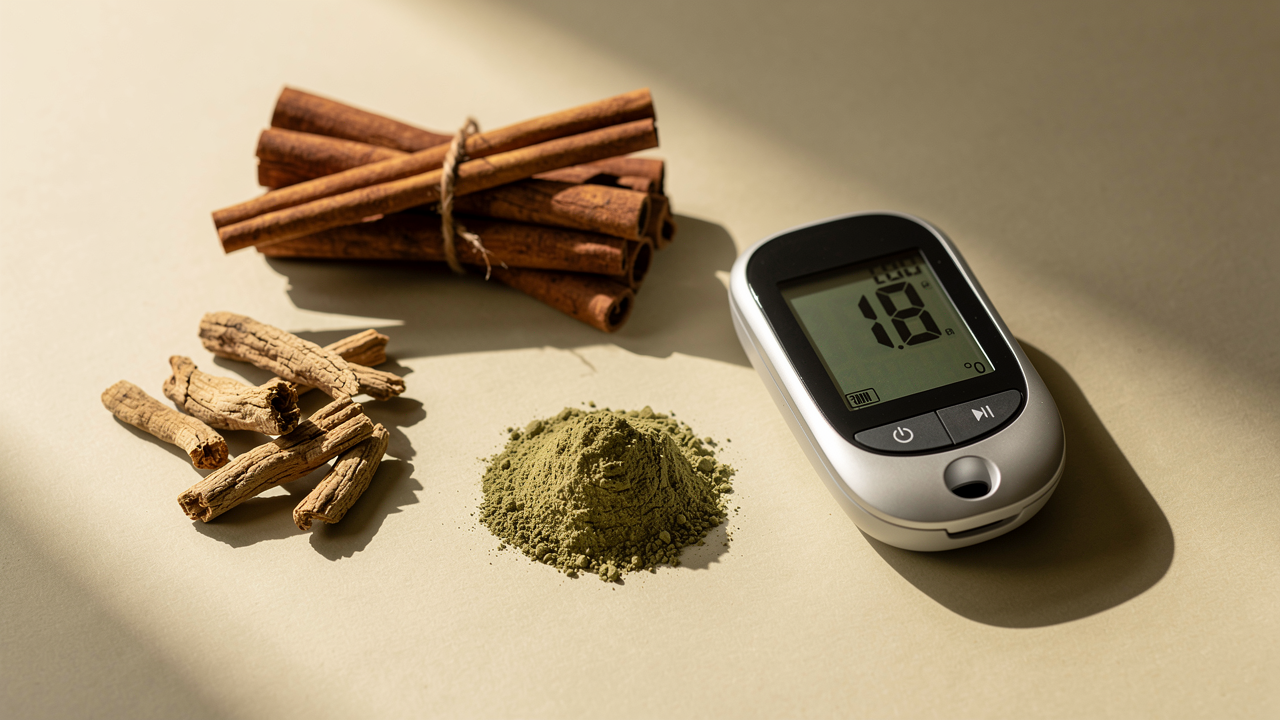
Ashwagandha (Withania somnifera) has been traditionally used in Ayurvedic medicine and is the subject of ongoing research regarding its potential role in metabolic pathways.
This is not coincidental. The relationship between chronic stress and general wellbeing is well-documented. Understanding it is the key to understanding ashwagandha's traditional use in wellness practices.
Traditional use and preliminary research suggest ashwagandha may play a role in supporting general wellbeing during times of stress, which is the subject of ongoing research regarding metabolic pathways.
What the Research Actually Shows
The most comprehensive review of ashwagandha in metabolic conditions is a 2020 systematic review and meta-analysis (PMID: 31975514) that examined ashwagandha evidence across animal and human studies in diabetes and metabolic syndrome.
Key findings from human studies in this review:
- Human studies have investigated fasting blood glucose as part of ongoing research
- Human studies have investigated HbA1c (the 3-month average blood glucose marker) as part of ongoing research
- Human studies have investigated insulin sensitivity as part of ongoing research
- Human studies have investigated triglycerides and LDL cholesterol as part of ongoing research
These are clinical markers of interest in metabolic research. HbA1c is widely used in diabetes management. Ashwagandha has been traditionally used in wellness practices and is the subject of ongoing research regarding these markers.
However, context matters. The human studies in this review varied considerably in design quality, duration, and population characteristics. Traditional use suggests ashwagandha may be most relevant for general wellbeing support in individuals experiencing stress-related factors.
The 2024 Large-Scale RCT
A 2024 RCT (PMID: 37543151, n=500) enrolled participants and assessed a number of metabolic and wellness outcomes including blood sugar markers. This large-scale trial is important for establishing that the metabolic signals seen in smaller studies hold up at greater statistical power.
The 2025 Stress-Weight Study
A 2025 RCT (PMID: 41635453) specifically designed to assess ashwagandha for stress and weight management in adults included metabolic markers as secondary outcomes, finding improvements in the ashwagandha group consistent with the 2020 meta-analysis findings.
Proposed Mechanisms (and Their Evidence Status)
Several mechanisms have been proposed for ashwagandha's metabolic effects:
1. Cortisol Reduction → Improved Insulin Sensitivity
Cortisol directly impairs insulin receptor signalling and promotes hepatic glucose output (gluconeogenesis). Chronically elevated cortisol is a significant driver of insulin resistance. Ashwagandha's documented cortisol-reducing effect (confirmed across multiple meta-analyses, PMID: 39348746, 40746175) logically leads to improved insulin sensitivity in cortisol-dysregulated individuals. This is the most mechanistically coherent pathway and the one with the most supporting indirect evidence.
2. Direct Withanolide Effects on Glucose Metabolism
Animal and in-vitro studies have identified several withanolides that are the subject of ongoing research regarding their potential roles in plant biochemistry.
3. Traditional Wellness Practices
Ashwagandha has been traditionally used in wellness practices and may contribute to general wellbeing.
4. Thyroid Modulation
A 2023 systematic review (PMID: 37013429) found that ashwagandha improved TSH, T3, and T4 levels in subclinical hypothyroidism. Since thyroid function directly regulates glucose metabolism and insulin sensitivity, thyroid improvement may contribute to metabolic outcomes. This also introduces an important caution: people with thyroid disorders using medication need to monitor thyroid markers carefully.
Critical Limitations
Honest presentation requires acknowledging what is uncertain:
- Most studies were small: The majority of human metabolic studies had fewer than 100 participants and ran for 8–12 weeks. Longer-term safety and efficacy data are limited.
- No comparison with standard diabetes medications: No head-to-head trial exists comparing ashwagandha to metformin or other established antidiabetic agents. This makes it impossible to gauge relative efficacy.
- Heterogeneous populations: Studies included people with type 2 diabetes, pre-diabetes, and healthy adults. Effects may differ significantly by baseline glucose status.
- Publication bias possible: Negative studies may be less likely to be published, meaning the overall effect size in the literature may be somewhat inflated.
- No Cochrane review has specifically addressed ashwagandha for diabetes — the evidence base has not yet undergone the most rigorous independent synthesis.
What This Means in Practice
For people with pre-diabetes or early type 2 diabetes, particularly where chronic stress is a co-existing factor, ashwagandha represents an interesting option to consider. Traditional use supports its role in general wellbeing practices that address stress-related factors.
Critical practical points:
- This is adjunctive, not primary therapy: Ashwagandha should complement — not replace — medical management of diabetes. Anyone on antidiabetic medications should discuss supplementation with their GP.
- Monitor blood glucose: If you have type 2 diabetes and add ashwagandha, monitor your blood glucose more frequently initially. There is a genuine (if modest) blood-glucose-lowering effect, and for people on medication this could compound to produce hypoglycaemia.
- Thyroid interaction: If you are on thyroid medication, monitor TSH levels after starting ashwagandha. The thyroid-modulating effect is documented (PMID: 37013429) and may require medication adjustment.
- Best combined with: The metabolic effects are likely most powerful when paired with genuine dietary improvement (reduced refined carbohydrate intake), consistent physical activity, and sleep support. Ashwagandha's sleep improvements may themselves contribute to insulin sensitivity, since sleep deprivation independently worsens glucose metabolism.
Teelixir's Formulation: Relevant Considerations for Blood Sugar
For metabolic applications, the withanolide specification matters. Our certified organic ashwagandha specifies ≥2.5% withanolides by HPLC — the same class of compounds studied for their roles in plant biochemistry.
The dual extraction method ensures both water-soluble and fat-soluble withanolides are captured. The fat-soluble withanolide fraction (including withaferin A, which has been studied in preliminary research) is not accessible via hot-water-only extraction. Our ethanol-phase extraction step aims to preserve the full spectrum of compounds present in the plant.
Root-only formulation: the metabolic research used root extracts. We do not use leaf material, which has a significantly different alkaloid profile.
Full COA transparency: every batch of our certified organic ashwagandha is tested by a third-party laboratory for heavy metals (particularly important given the renal considerations discussed below) and microbial contamination.
Should You Take Ashwagandha for Blood Sugar?
| Your Situation | Verdict |
|---|---|
| Pre-diabetes with chronic stress component | Reasonable adjunct — targets stress-glycaemia loop |
| Type 2 diabetes on metformin | Discuss with GP first — monitor glucose closely if proceeding |
| Subclinical hypothyroidism with metabolic concerns | May address both pathways — monitor thyroid markers |
| Type 1 diabetes (insulin-dependent) | Consult your endocrinologist — insulin management must be primary |
| Healthy person with no metabolic concerns | Minimal evidence for benefit — consider for stress/sleep instead |
Can ashwagandha support healthy blood sugar levels as part of traditional wellness practices?
Is ashwagandha safe if I have diabetes and take medication?
How does ashwagandha affect insulin sensitivity?
The Bottom Line
Ashwagandha has been traditionally used in Ayurvedic practices and is the subject of ongoing research regarding wellbeing markers. Its historical use relates to supporting general wellness in times of stress.
The relationship between stress and metabolic factors is an area of ongoing scientific interest. Supporting general wellbeing through traditional herbal practices may offer complementary approaches alongside dietary improvement and physical activity.
If you are managing pre-diabetes or early type 2 diabetes, particularly with a chronic stress component, our certified organic ashwagandha with its 10:1 dual extract and verified withanolide content is worth discussing with your healthcare provider as part of a broader wellbeing strategy.

Dual Extract • Root Only • ACO Certified Organic
Teelixir Organic Ashwagandha Root (10:1)
Hot water + ethanol dual extraction. ≥2.5% withanolides. Di Tao sourced from India. Third-party tested every batch.
View ProductContinue Your Research
- Ashwagandha Benefits: The Complete Evidence-Based Guide
- Ashwagandha Dosage Guide: What Clinical Trials Actually Used
- Ashwagandha Side Effects: The Tolerance Threshold and What 29+ Clinical Trials Reveal
- Ashwagandha for Gut Health: The Stress-Gut Axis Short-Circuit
- Ashwagandha and Liver Health: Safety, Evidence, and the Hepatic Burden Equation
- Ashwagandha for Heart Health: The Stress-Cardiovascular Relay
- Ashwagandha for Immune Support: The Immunostat Principle
- Ashwagandha and Cancer Research: The Petri Dish Problem


