



Tremella Mushroom Benefits: Evidence-Based Review
By Peter Orpen • Updated: April 2026 • 10 min read
Tremella fuciformis is one of the most researched medicinal mushrooms in East Asian pharmacology, yet remains relatively unknown in the Western supplement market. The 2019 systematic review (PMID: 31030755) identified 113 studies on tremella polysaccharides spanning 46 years. There is a genuine evidence base here — and a genuinely interesting one — but it requires careful reading to separate what is established in humans from what is only preclinical.
This is a full evidence review. It covers every major research area where tremella has been studied: immunomodulation, skin applications, metabolic effects, neuroprotection, and antioxidant activity. Where human clinical evidence exists, it is presented with study design and sample sizes. Where evidence is preclinical, that is stated plainly. The pattern is consistent throughout: strong mechanistic evidence, emerging clinical evidence, with the 2024 RCT providing the only completed human randomised controlled trial.
The framework that makes sense of all of this is The Polysaccharide Cascade — the observation that tremella’s primary bioactive compounds (polysaccharides) operate through multiple downstream pathways simultaneously. The Polysaccharide Cascade means that a single compound class (TFPS) explains the immunomodulatory, skin, metabolic, and neuroprotective effects through shared TLR4/NF-κB, antioxidant, and glycaemic pathways — which is why the research appears to span so many health areas without being scattered.
Evidence Snapshot
MODERATE
Evidence Grade
113 studies
Systematic review (1972–2018)
1 RCT
Human trial, n=56 (2024)
5 areas
Immune, skin, metabolic, neuro, antioxidant
Is Tremella Mushroom Worth Taking? Quick Decision Guide
| Your Goal | Evidence Strength | Verdict |
|---|---|---|
| Immune support | Strong (preclinical); moderate (clinical) | Worth trying — TLR4 pathway activation well-characterised |
| Skin hydration | Moderate (in-vitro + review) | Worth trying — no oral skin RCT but mechanistic data is positive |
| Blood sugar management (prediabetes) | Strong — 1 RCT (n=56) | Worth trying — strongest human evidence in this area |
| Neuroprotection | Preliminary (review + preclinical) | Limited evidence — promising direction, no human RCT |
| Clinically confirmed anti-ageing | Limited — preclinical only for skin ageing | Limited evidence — mechanism is credible, human trials are absent |
| People with kidney disease or on immunosuppressants | No specific evidence | Not recommended without consulting your healthcare professional |
Area 1: Immunomodulation — The Best-Researched Area
Tremella’s immunomodulatory properties are the most extensively documented in the literature, with mechanistic characterisation at the molecular level across multiple independent research groups.
A 2014 study (PMID: 24400969) isolated a novel Tremella fuciformis protein (TFP, 24 kDa homodimer) and showed it activated murine peritoneal macrophages via TLR4/NF-κB signalling, stimulating TNF-α, IL-1β, IL-12, and CD86/MHC class II expression. The 2022 study (PMID: 36142298) took this further, characterising a Tremella polysaccharide (TFP-F1, 1870 kDa) and demonstrating that the O-acetyl groups on the mannose backbone are structurally essential for immunomodulatory activity — removing acetyl groups abolished immune stimulation in J774A.1 macrophage cell lines at 1 μg/mL.
The 2019 systematic review (PMID: 31030755, n = 113 studies) confirmed immunomodulation as one of seven confirmed bioactivities across the full research record.
Honest limitation: All immunomodulatory mechanistic studies were conducted in vitro (macrophage cell lines) or in murine models. These did not demonstrate direct immune enhancement in healthy human clinical populations. Human evidence is limited to the metabolic RCT, which measured HbA1c not immune markers.
Area 2: Skin and Anti-Ageing Effects
The skin application evidence is the area with the most public interest and the most marketing overreach. Here is a precise account:
The skin fibroblast study (PMID: 28627707) showed TFPS at 0–400 μg/mL protected human skin fibroblast cell lines from hydrogen peroxide-triggered oxidative stress and apoptosis via SIRT1 upregulation. This is a protective mechanism study — it did not demonstrate clinical anti-ageing outcomes in living humans at doses used in studies.
The 2023 dermatology review (PMID: 36757441) assessed the cumulative in-vitro and in-vivo evidence and found positive signals for: anti-ageing, UV photoprotection, wound healing, and skin whitening pathways. The review identified tremella polysaccharides as comparable to hyaluronic acid in water-holding capacity in in-vitro assays. The review also noted the absence of published oral skin hydration RCTs as the primary evidence gap.
The 2024 anti-ageing cosmetics review (PMID: 39203946, n = 52 publications) identified tremella as one of nine key mushroom species with documented dermatological relevance, confirming polysaccharide-mediated moisturising, photoprotection, and collagen/elastin preservation mechanisms.
Honest limitation: No clinical skin trial exists for oral tremella supplementation. The comparison to hyaluronic acid failed to demonstrate equivalent outcomes in a clinical setting — because no such comparison has been conducted in humans. The mechanism is credible and consistent across multiple independent research groups; the clinical translation has not yet been completed.
Area 3: Metabolic Effects — The Strongest Human Evidence
The strongest human clinical evidence for tremella is in the metabolic area, not the skin or immune area.
The 2024 double-blind randomised controlled trial (PMID: 38439104, n = 56 overweight/obese adults with prediabetes, 12 weeks) found that daily tremella fuciformis beverage significantly reduced:
- HbA1c: 6.03% baseline → 5.96% at 12 weeks (p = 0.047, Cohen’s d = 0.39)
- Waist circumference: 95.2cm → 93.46cm (p = 0.022, Cohen’s d = 0.45)
No adverse events were reported. The effect sizes are modest (Cohen’s d 0.39–0.45 is in the small-to-medium range) but statistically significant in a double-blind RCT. This is meaningful evidence for metabolic support in a prediabetic population.
The 2019 systematic review also documented hypoglycaemic and hypolipidaemic effects across the preclinical literature as two of seven confirmed bioactivities, consistent with the RCT finding.
Honest limitation: The RCT was conducted in a prediabetic population, not healthy adults. The effect on HbA1c, while statistically significant, is modest in magnitude. Extrapolating this to a general metabolic health claim for healthy individuals would overreach the evidence. However, for individuals with prediabetes or blood sugar management goals, this is worth trying — the evidence is real.
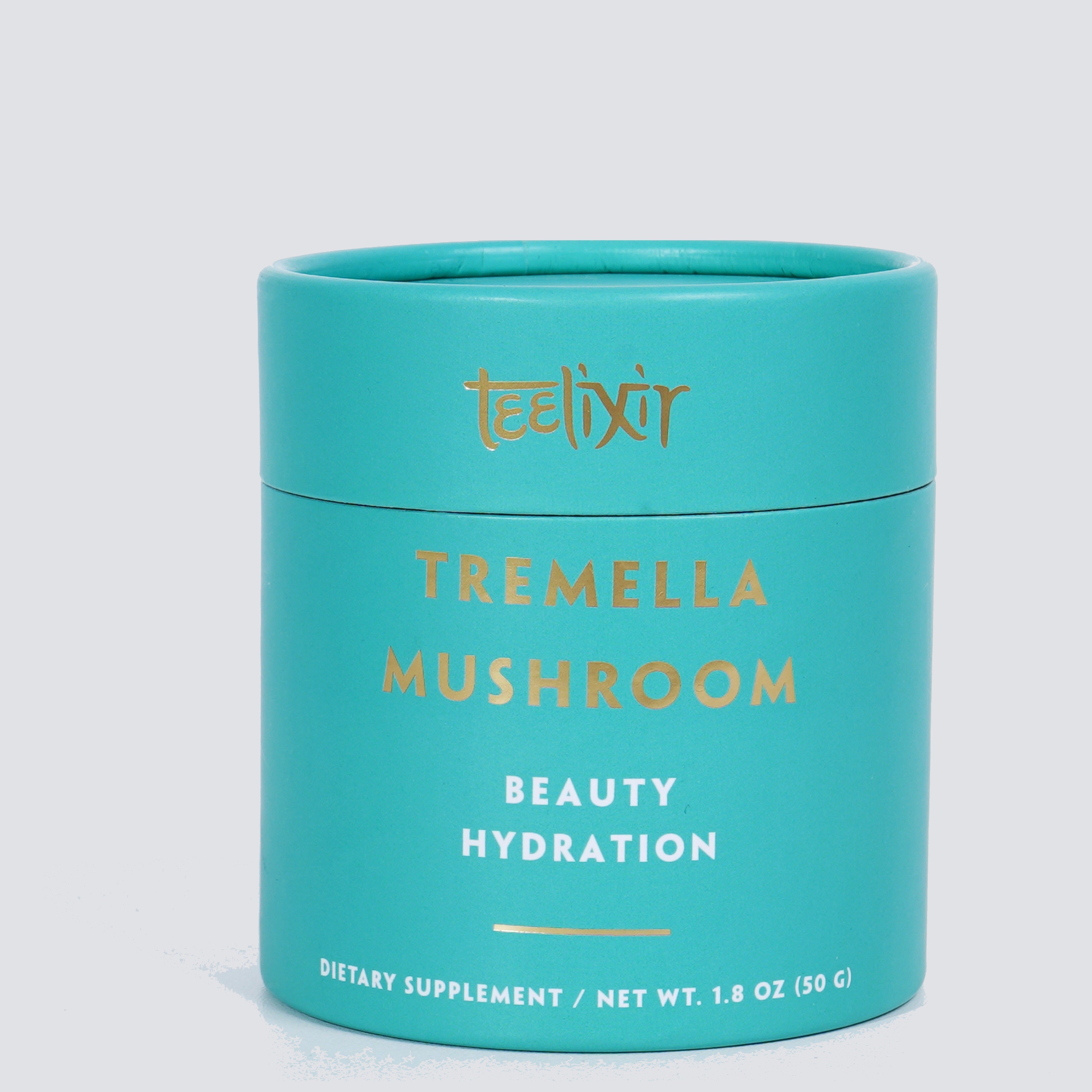
Teelixir Tremella Mushroom (10:1)
Dual extract, certified organic, third-party tested. The full polysaccharide profile — the active fraction confirmed in the published research.
Area 4: Neuroprotection
Tremella’s neuroprotective potential is an emerging research area, primarily documented in review literature and preclinical models.
The 2026 neuroprotection review (PMID: 41496365) identified Tremella fuciformis among key medicinal mushrooms with neuroprotective potential, noting its unique capacity to generate compounds that protect against neurodegeneration through antioxidant and anti-inflammatory mechanisms. The polysaccharide fractions are proposed to cross the blood-brain barrier (based on animal model data) and modulate neuroinflammatory pathways.
Honest limitation: This is a preliminary research area. The neuroprotective evidence comes from reviews and preclinical models — no human clinical trials on cognitive function or neuroprotection have been published for tremella. Stating that tremella “protects brain health” as a marketed benefit would be ahead of the evidence. The direction is interesting; the clinical confirmation is absent.
Area 5: Antioxidant Activity
Tremella polysaccharides demonstrate consistent antioxidant activity across multiple in-vitro and in-vivo models. The mechanistic pathway involves SIRT1 upregulation, ROS scavenging, and modulation of NF-κB inflammatory signalling.
The inflammation suppression study (PMID: 33868283) in a murine DSS-induced colitis model found TFPS treatment prevented colon shortening, reduced myeloperoxidase activity, increased Foxp3+ regulatory T cells, and restored gut microbiota diversity (Lactobacillus, Odoribacter, Ruminococcaceae). The anti-inflammatory mechanism in this model was gut-specific.
Honest limitation: Antioxidant activity in cell models did not demonstrate clinically meaningful changes in systemic oxidative stress markers in humans at doses used in studies. The colitis model result is from an animal model with DSS-induced disease, not a human IBD trial. These are mechanistic findings, not clinical outcomes.
What This Means in Practice
If you are considering tremella as a daily supplement, the evidence supports different levels of confidence for different applications:
- For immune support: Worth trying. The mechanism is well-characterised; the traditional use record is strong. The preclinical evidence is consistent but human clinical confirmation is still emerging.
- For skin hydration: Worth trying for a plant-based option with a credible mechanism. Don’t expect clinically demonstrated skin outcomes — but the mechanistic case is genuinely interesting and unlike most “beauty mushroom” marketing, it is backed by structural biochemistry research.
- For blood sugar management (prediabetes context): Strong evidence — this is where the only published RCT sits. A reasonable complement to lifestyle interventions; not a replacement for medical management.
- If you have kidney disease or are on immunosuppressant medications: Not recommended without consulting your healthcare professional. Immunomodulatory compounds require caution in these contexts.
- For neuroprotection: Limited evidence. This is an interesting preclinical direction that does not yet have human clinical support. Don’t let this be the primary reason to supplement.
Tremella combines well with other adaptogens. For immune focus, combining with chaga (polysaccharide + triterpenoid dual mechanism) is a natural pairing. For cognitive applications, lion’s mane has the stronger NGF-stimulating evidence. See our full beauty-focused article: Tremella Mushroom: The Beauty Mushroom That Rivals Hyaluronic Acid.
From Our Formulations
Teelixir’s Tremella Mushroom uses a dual extraction process (ethanol and water) at a 10:1 concentration ratio. The dual extraction is important given the acetylation study (PMID: 36142298) — standard hot water extraction may not fully preserve the O-acetyl groups on the mannose backbone that are structurally essential for immunomodulatory activity. The dual-extract approach captures both the polysaccharide and triterpenoid fractions. Certified organic, third-party tested for heavy metals and microbial contaminants.
Frequently Asked Questions
What are the benefits of tremella mushroom?
Research on Tremella fuciformis supports immunomodulation, skin hydration and anti-ageing effects, metabolic improvements (blood sugar, lipids), neuroprotection, and antioxidant activity. The strongest clinical evidence comes from a 2024 RCT (n=56) showing significant HbA1c and waist circumference reduction in prediabetic subjects. Most mechanistic evidence is from in-vitro and animal studies.
Is tremella mushroom backed by science?
Yes. A 2019 systematic review (PMID: 31030755) examined 113 studies spanning 46 years and confirmed multiple bioactivities. A 2024 RCT (n=56) demonstrated statistically significant metabolic improvements. Multiple mechanistic studies have characterised the immunomodulatory polysaccharides and skin protective mechanisms. The evidence base is real, though human clinical trials are limited.
How much tremella should you take daily?
The 2024 RCT used a daily beverage for 12 weeks. For a 10:1 dual-extract powder, 1-2g per day is the standard serving at doses used in the clinical and mechanistic literature. No adverse events were found at these doses. No upper safe limit has been established in the published evidence.
Does tremella mushroom help with blood sugar?
A 2024 double-blind RCT (PMID: 38439104, n=56 overweight/obese prediabetic subjects) found significant HbA1c reduction (6.03% to 5.96%, p=0.047) and waist circumference reduction (95.2cm to 93.46cm, p=0.022) after 12 weeks of daily tremella supplementation. This is the only published human trial on this outcome and the result is statistically significant though modest in magnitude.
Can you take tremella mushroom every day?
The 2024 RCT ran for 12 weeks with no adverse events reported. Multiple reviews and the traditional Chinese medicine use record suggest daily use is well-tolerated for most healthy adults. Consult your healthcare professional if you are pregnant, immunocompromised, or on medications.
Teelixir Tremella Mushroom (10:1)
Dual-extract snow mushroom, certified organic, third-party tested. The full polysaccharide profile — the active fraction across all five research areas.
Shop Tremella →Related reading: Tremella Mushroom: The Beauty Mushroom That Rivals Hyaluronic Acid • Chaga Mushroom Benefits • Lion’s Mane • Our approach to evidence