


Ashwagandha vs Ginseng: The Recovery-Performance Divide
Ashwagandha: 7+ human trials cited | Evidence: Strong
Ginseng (Siberian): 3+ human trials cited | Evidence: Moderate
When people compare ashwagandha and ginseng, they are usually comparing two fundamentally different strategies for managing stress. We call this The Recovery-Performance Divide. Ashwagandha is a recovery adaptogen — it helps the body stand down from chronic stress, lower cortisol, and rebuild at night. Ginseng is a performance adaptogen — it supports daytime energy, physical stamina, and immune resilience. One helps you rest harder; the other helps you push further. The right choice depends on which side of the divide your body needs most.
What Is Ashwagandha?
Ashwagandha (Withania somnifera) is the flagship adaptogen of Ayurvedic medicine, with over 3,000 years of traditional use as a rejuvenating tonic. Its modern research profile centres on HPA axis modulation — specifically, its ability to reduce cortisol and support the body's transition from sympathetic (fight-or-flight) to parasympathetic (rest-and-digest) states.
A 2024 meta-analysis of 9 RCTs (n=558) confirmed significant benefits for stress and anxiety (PMID: 39348746). Critically, a separate meta-analysis found that ashwagandha significantly reduced cortisol but had no effect on perceived stress — a key nuance showing it works at the biological level first (PMID: 40746175). A meta-analysis of 5 RCTs also confirmed significant improvements in sleep quality (PMID: 34559859).
Our certified organic ashwagandha is a 10:1 dual extract (hot water and ethanol) from Indian-grown root, standardised to ≥2.5% withanolides. It is Australian Certified Organic (ACO), sourced following Di Tao principles — the same extract profile used in the clinical research.
What Is Ginseng?
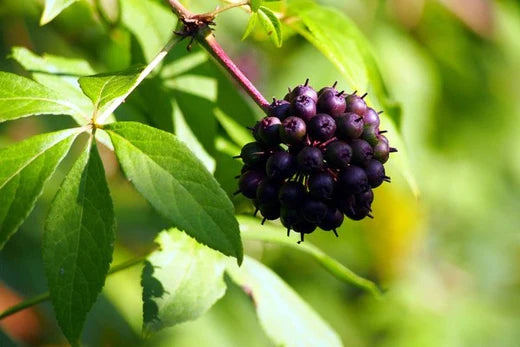
The ginseng family includes several species, the most common being Panax ginseng (Korean/Asian), Panax quinquefolius (American), and Eleutherococcus senticosus (Siberian ginseng, also called eleuthero). While they share the adaptogenic label, their bioactive profiles differ significantly.
Siberian ginseng — which Teelixir offers as a dual extract (ethanol and water), 10:1, standardised to ≥0.8% eleutherosides B+E — is not a true Panax ginseng but an adaptogenic root with its own distinct evidence base. Its active compounds, eleutherosides, support immune function, physical stamina, and general resilience. Research has shown respiratory support benefits in an RCT of 177 participants, and benefits for general wellness in women (n=50).
A study on anti-oedema effects demonstrated measurable physiological effects of Siberian ginseng in humans (PMID: 27333960), and an RCT examined its benefits alongside vitamin E for female sexual function (PMID: 32893745).
Side-by-Side Comparison
| Feature | Ashwagandha | Siberian Ginseng |
|---|---|---|
| Latin Name | Withania somnifera | Eleutherococcus senticosus |
| Traditional System | Ayurveda (India) | Traditional Chinese Medicine, Russian folk medicine |
| Primary Mechanism | HPA axis modulation (cortisol reduction) | Immune modulation, physical stamina |
| Key Bioactives | Withanolides (≥2.5%) | Eleutherosides B+E (≥0.8%) |
| Best For | Stress, anxiety, sleep, cortisol reduction | Stamina, immune support, general vitality |
| Evidence Level | Strong (multiple meta-analyses) | Moderate (RCTs, smaller sample sizes) |
| Energy Profile | Restorative (recovery-focused) | Stimulating (performance-focused) |
| Best Time of Day | Morning or evening | Morning (energising) |
| Sleep Support | Strong (meta-analysis confirmed) | Not a primary benefit |
| Immune Support | Modest (antioxidant pathways) | Traditionally strong |
Key Differences Explained
1. Recovery vs Performance
Ashwagandha excels at helping the body recover from stress. Its cortisol-lowering effects are well-documented across multiple meta-analyses (PMID: 40746175), and its sleep benefits are confirmed by pooled RCT data (PMID: 34559859). Think of ashwagandha as the adaptogen that helps your body recover from each day more effectively.
Siberian ginseng, by contrast, is traditionally used to support the body's ability to perform during demanding periods. Its evidence base centres on physical stamina, immune resilience during stress, and general vitality. It is the adaptogen Soviet-era athletes and cosmonauts famously used during intense training and space missions.
2. Stress Anxiety vs Stress Fatigue
This distinction matters clinically. Not all stress presents the same way. Some people manifest stress as anxiety — racing heart, poor sleep, muscle tension. Others manifest stress as fatigue — immune suppression, physical depletion, constant low-grade exhaustion.
Ashwagandha is better suited to stress-anxiety. A 2024 meta-analysis of 9 RCTs confirmed its anxiolytic effects (PMID: 39348746), and a 2023 RCT showed it alleviates stress, anxiety, and improves quality of life through cortisol modulation (PMID: 37832082). Siberian ginseng is better suited to stress-fatigue, where the body's physical reserves are depleted and immune function is compromised.
3. Evidence Depth
Ashwagandha has a substantially deeper evidence base for its primary claims. Multiple meta-analyses with pooled samples exceeding 500 participants support its effects on stress, anxiety, cortisol, sleep, and exercise performance (PMID: 32316411). A 2026 RCT added further evidence with a dose-ranging design testing 150mg and 300mg sustained-release formulations (PMID: 41824889).
Siberian ginseng's evidence, while credible, consists of smaller studies and has a more historical than modern clinical profile. Much of its strongest evidence comes from Soviet-era research that is harder to access and verify by current standards.
4. Nighttime vs Daytime Adaptogen
This is a practical distinction many people overlook. Ashwagandha can be taken at any time of day, but its sleep-promoting effects make it particularly valuable in the evening. Siberian ginseng is best taken in the morning due to its energising properties. A 2020 RCT confirmed ashwagandha's combined benefits for stress, sleep, and hormonal markers, making it an ideal evening supplement (PMID: 32540634).
What This Means in Practice
Choose ashwagandha if: Stress shows up in your life as anxiety, poor sleep, elevated cortisol, or mental overwhelm. If you need to recover better, sleep deeper, and bring your nervous system back to baseline, ashwagandha is the stronger evidence-based choice.
Choose Siberian ginseng if: Stress shows up as physical fatigue, immune vulnerability, or reduced stamina. If you are pushing through demanding physical work, training, or seasonal immune challenges, ginseng supports the body's ability to sustain performance and maintain resilience.
Consider both if: You are dealing with chronic stress that manifests as both anxiety and fatigue — the classic burnout pattern. Ashwagandha in the evening for recovery and sleep; Siberian ginseng in the morning for energy and immune support. They target different systems and complement each other well.
Can You Take Ashwagandha and Ginseng Together?
Yes. Ashwagandha and Siberian ginseng work through different mechanisms and are commonly combined in traditional and modern practice. The typical approach is ginseng in the morning for energy and immune support, and ashwagandha in the evening for stress recovery and sleep.
Both have good safety profiles at standard dosages. However, if you are taking blood sugar medication, blood pressure medication, or immune-modulating drugs, consult your healthcare practitioner before starting either, as both adaptogens may influence these systems.
Frequently Asked Questions
Is Siberian ginseng the same as Korean ginseng?
Which is better for athletes?
Can ginseng cause overstimulation?
How long until I notice effects?
Which is better for immune support?
Disclaimer: This article is for informational and educational purposes only. It is not intended to diagnose, treat, cure, or prevent any disease. Always consult a qualified healthcare practitioner before starting any new supplement regimen, especially if you are pregnant, nursing, taking medication, or have a medical condition.
Related Reading
Continue Your Research
- Ashwagandha Benefits: The Complete Evidence-Based Guide
- Ashwagandha Dosage Guide: What Clinical Trials Actually Used
- Ashwagandha Side Effects: The Tolerance Threshold and What 29+ Clinical Trials Reveal
- Ashwagandha vs Lion's Mane: The Body-Brain Divide
- Ashwagandha vs Rhodiola: The Calm-Alert Spectrum
- Ashwagandha vs Maca: The Stress-Energy Axis Explained
- Ashwagandha vs Reishi: The Two Roads to Rest
- Ashwagandha vs Cordyceps: The Mind-Body Stress Map