



Best Lion's Mane Supplements in Australia: Buyer's Guide
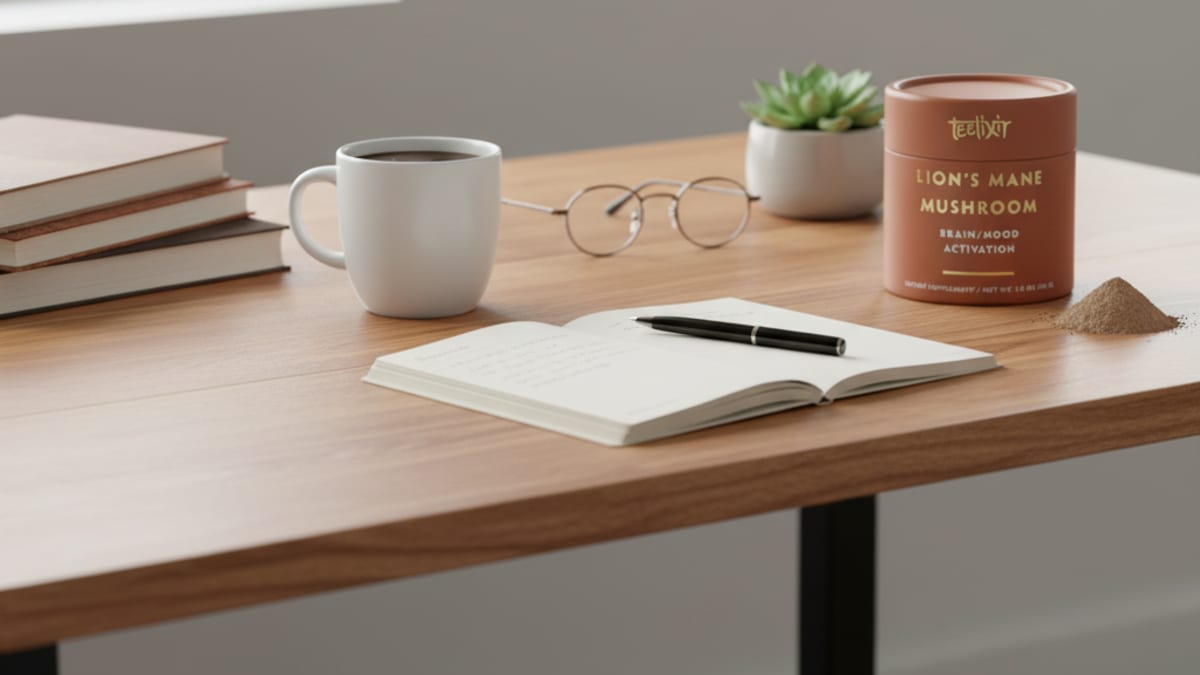
You have decided to try lion’s mane. Good. Now comes the harder part: buying one that actually works.
The supplement industry in Australia makes this deliberately confusing. Mycelium versus fruiting body. Hot water versus dual extraction. “10:1 concentrate” labels sitting next to products with no extraction ratio listed at all. Beta-glucan percentages that range from unlisted to 50% — and you have no way of knowing which claims are real without third-party testing data.
After years of formulating lion's mane products and reviewing the research base of 571 published studies, we developed what we call "The Five-Point Quality Test" -- five non-negotiable criteria that separate a lion's mane supplement worth taking from one that is essentially expensive starch. We call this "The Five-Point Quality Test" because if a product fails even one of these checks, you fall into what we call "The Starch Trap" -- paying premium prices for a product that is predominantly grain filler with minimal bioactive compounds. "The Starch Trap" is the single most common quality mismatch in the Australian mushroom supplement market, and it is the gap between what labels claim and what third-party testing reveals.
The Five-Point Quality Test
Before You Buy Any Lion’s Mane Product, Check These Five Points
- Fruiting body or mycelium? — The source material determines the compound profile
- Extraction method? — This determines which compounds are actually accessible
- Beta-glucan percentage? — If it is not tested and stated, you cannot verify potency
- Organic certification? — Third-party verified, not just label claims
- Concentration ratio? — How much raw mushroom went into the final product
Let us walk through each one. By the end, you will be able to evaluate any lion’s mane product on the Australian market in under two minutes.
Point 1: Fruiting Body vs Mycelium on Grain
This is the single biggest quality differentiator in the mushroom supplement market, and it is the one most brands hope you do not understand.
Fruiting body is the mushroom itself — the part that grows above the substrate, the part that traditional medicine systems have used for centuries. It contains the highest concentration of bioactive compounds including beta-glucans, hericenones, and other terpenoids.
Mycelium on grain is the root-like network of the fungus grown on a grain substrate (typically rice or oats). When this is harvested, the grain cannot be fully separated from the mycelium. The result is a product that may contain 50–70% grain starch rather than mushroom compounds.
A 2023 review on fungi as bioactive compound sources (PMID: 37031727) examined the polysaccharide and terpenoid profiles of medicinal mushrooms, confirming that these compounds are concentrated in the fruiting body. The review noted that these bioactive molecules show promising neuroprotective properties — but only when present in sufficient concentration.
A 2025 scoping review specifically focused on hericenones (PMID: 41518660) confirmed that hericenones are predominantly found in the fruiting body, while erinacines are concentrated in the mycelium. This distinction matters when evaluating what you are actually buying: a fruiting body product delivers hericenones, a mycelium product delivers erinacines (if properly extracted), and only a dual-extraction of fruiting body can deliver both families of compounds.
Look for “100% fruiting body” on the label. If it says “myceliated grain”, “mycelial biomass”, or simply “Hericium erinaceus” without specifying the part used, assume it contains significant grain content.
What This Means in Practice
A simple starch test can reveal the truth. Mycelium-on-grain products will turn dark purple or black when exposed to iodine solution, indicating high starch content. Fruiting body extracts show minimal to no colour change. This is not a marketing claim — it is basic chemistry. If a brand will not share their starch test results, ask why.
Point 2: Extraction Method

Raw mushroom powder — even from fruiting body — is not the same as an extract. The bioactive compounds in lion’s mane are locked within chitin cell walls that human digestion cannot fully break down. Extraction makes these compounds bioavailable.
There are three common approaches:
| Method | What It Extracts | What It Misses |
|---|---|---|
| Hot water only | Beta-glucan polysaccharides (immune-active) | Hericenones, erinacines (fat-soluble neuro compounds) |
| Ethanol only | Hericenones, erinacines, terpenoids | Beta-glucan polysaccharides |
| Dual extraction (water + ethanol) | Full spectrum: beta-glucans + hericenones + erinacines | Minimal — captures both compound families |
The landmark 2009 RCT by Mori et al. (PMID: 18844328) — a double-blind, placebo-controlled trial involving 30 adults aged 50–80 with mild cognitive impairment — used an extract at 3 g per day for 16 weeks. Participants showed significant cognitive improvement on the Hasegawa Dementia Scale. Crucially, benefits reversed 4 weeks after supplementation ceased, suggesting the compounds need to be bioavailable and consistently present.
A 2010 RCT (PMID: 20834180) with 30 menopausal women found that 4 weeks of H. erinaceus intake significantly reduced depression and anxiety scores compared to placebo. The researchers specifically noted that hericenones and erinacines are the subject of ongoing research into nerve growth factor (NGF) synthesis. These are ethanol-soluble compounds — a water-only extraction would not capture them effectively.
“The distinction between raw powder and extracted product is not a marketing preference — it determines whether the bioactive compounds can actually reach your nervous system.” Based on extraction research reviewed across 571 published studies
More recently, a 2023 RCT (PMID: 38004235) tested 1.8 g per day of lion's mane in 41 healthy young adults over 28 days. The study examined cognitive function and stress levels, with assessments conducted at 60 minutes after dosing. However, the sample size was small (n=41) and the study duration was limited to 28 days. A 2025 RCT (PMID: 40276537) confirmed these acute effects, showing improved Stroop task performance within 60 minutes in healthy younger adults using a standardised extract. While these results are encouraging, more research is needed with larger sample sizes and longer durations to draw definitive conclusions about extraction method and cognitive outcomes.
Point 3: Beta-Glucan Percentage
Beta-glucans are the most widely studied immunoactive compounds in medicinal mushrooms. They are also the most useful proxy for product quality because they can be objectively measured through third-party testing.
Here is the benchmark for Australian consumers:
- Below 15% — Likely mycelium-on-grain or poorly extracted
- 15–25% — Acceptable for a basic product
- 25–35% — High quality, well-extracted fruiting body
- Above 35% — Verify the testing methodology (some tests measure total polysaccharides, which inflates the number)
Critical distinction: beta-glucan testing is not the same as total polysaccharide testing. Starch is a polysaccharide. A mycelium-on-grain product can test high for “polysaccharides” while containing mostly starch and very few actual beta-glucans. Always look for beta-glucan-specific testing using the Megazyme method or equivalent.
A 2025 review on bioactive polysaccharides from H. erinaceus (PMID: 40333844) confirmed that the structure and molecular weight of polysaccharides significantly affect their bioactivity. Not all beta-glucans behave the same way — extraction method, temperature, and source material all influence the final compound profile.
A 2025 systematic review of benefits and side effects (PMID: 40959699) noted that while EFSA beta-glucan health claims currently apply only to oat and barley sources, the evidence base for fungal beta-glucans continues to grow. This does not mean mushroom beta-glucans are ineffective — it means the regulatory framework has not yet caught up with the research on fungal polysaccharides.
Point 4: Organic Certification
Mushrooms are bioaccumulators. They absorb whatever is in their growing environment — nutrients, minerals, but also heavy metals, pesticides, and environmental contaminants. This makes organic certification more important for mushroom supplements than for most other supplements sold in Australia.
Look for recognised certification bodies:
- ACO (Australian Certified Organic) — the Australian standard
- USDA Organic — widely recognised internationally
- EU Organic — European standard
“Natural” or “pesticide-free” are not the same as certified organic. Without third-party certification, these claims are unverifiable. A legitimate organic certification means the growing conditions, processing facilities, and supply chain have all been independently audited.
What This Means in Practice
When shopping for lion’s mane in Australia, check whether the certification logo actually appears on the packaging — not just mentioned in marketing copy. ACO certification requires annual audits of the entire supply chain. If a product only says “organic” without a certification number, it may not be independently verified.
Point 5: Concentration Ratio
A 10:1 extraction ratio means 10 kilograms of raw fruiting body goes into producing 1 kilogram of final extract. This is important because it determines compound density.
Compare:
- 1:1 ratio — Essentially ground raw mushroom (may not even be extracted)
- 4:1 ratio — Moderate concentration
- 8:1 to 10:1 — High concentration, standard for quality extracts
- No ratio listed — Treat with scepticism
Higher ratios are not always better — a poorly extracted 15:1 product can be less potent than a well-extracted 10:1 product. The ratio should be read alongside the beta-glucan percentage, not instead of it. Together, they tell the full story.
What This Means in Practice
Use The Five-Point Quality Test as a checklist when evaluating any product. A supplement that scores well on all five — 100% fruiting body, dual-extracted, verified beta-glucan percentage above 25%, certified organic, and a stated concentration ratio — is operating at the top tier of the Australian market. Missing one or two of these does not make a product worthless, but it does mean you are making compromises. Know which ones you are comfortable with.
Red Flags to Watch For
| Red Flag | Why It Matters |
|---|---|
| “Proprietary blend” without individual compound data | Hides the actual amount of lion’s mane (and everything else) in the product |
| No country of origin stated | Supply chain transparency is a minimum standard for Australian consumers |
| “Full spectrum” without explaining extraction method | Marketing term with no standardised definition |
| Beta-glucan claims above 50% | Verify testing methodology — may be measuring total polysaccharides including starch |
| Capsules with large fillers list | Magnesium stearate, silicon dioxide, rice flour can indicate a diluted product |
| No batch testing or COA available | If they will not show you the test results, ask why |
Who Should Consider Lion’s Mane — and Who Should Not
Not every supplement is right for every person. Before buying, you should consider whether lion's mane is appropriate for your situation. Here is a quick decision guide showing where the evidence is strongest and where it falls short, based on the 7 RCTs and 33 human studies available. If you are taking nootropics or adaptogens, you may want to combine lion's mane with other compounds -- pair with reishi for stress, or alongside cordyceps for energy -- but always start one supplement at a time so you can identify what works.
| Your Situation | Evidence Strength | Verdict |
|---|---|---|
| You want to support cognitive function and focus | 3 RCTs with positive results (PMID: 18844328, 38004235, 40276537) | Worth trying |
| You experience occasional low mood or stress | 1 RCT: 30 menopausal women, 4 weeks (PMID: 20834180). Small sample. | Promising but limited |
| You are managing a diagnosed neurological condition | 1 RCT in mild Alzheimer’s, n=49, 49 weeks (PMID: 32581767). Not a replacement for medical treatment. | Consult your specialist |
| You want immune system support | Beta-glucan research shows strong evidence for fungal polysaccharides generally, but most lion's mane-specific immune studies are preclinical. Limited evidence in humans. | Reasonable but not proven in humans |
| You want nerve health or recovery support | A 2026 systematic review on nerve regeneration (PMID: 41562932) found lion's mane showed the most promise among medicinal mushrooms. However, human evidence is limited. | Emerging -- consult your specialist |
| You are pregnant or breastfeeding | No human safety data in pregnancy or lactation | Not recommended — consult your healthcare professional |
| You have a mushroom allergy | Cross-reactivity is possible with fungal allergens | Avoid |
| You are on anticoagulant medication | Theoretical interaction; insufficient clinical data | Consult your healthcare professional first |
It is important to be honest about the limitations of the current evidence. However, most lion's mane RCTs have small sample sizes -- the largest involved 49 participants (PMID: 32581767). Several studies did not find significant effects for all measured outcomes, and some used mycelium rather than fruiting body, making direct comparison difficult. While results are consistently positive across multiple independent research groups, no Cochrane systematic review exists yet, insufficient large-scale trials have been conducted, and more research is needed to confirm optimal dosing, duration, and population-specific effects. The preliminary evidence is good -- not definitive. Human evidence is limited compared to the large volume of preclinical research.
How We Score on The Five-Point Quality Test
We built this test from our own formulation standards. Here is how our lion’s mane products perform against each criterion:
| Criterion | Our Specification | Result |
|---|---|---|
| Source material | 100% fruiting body | No mycelium, no grain fillers |
| Extraction method | Dual extract (hot water + ethanol) | Full-spectrum hericenones + beta-glucans |
| Beta-glucan content | Specification: ≥30% | Actual tested: 31.7% (from our batch COA) |
| Organic certification | ACO certified organic | Third-party audited supply chain |
| Concentration ratio | 10:1 | 10 kg raw mushroom per 1 kg extract |
Our lion’s mane is Di Tao sourced from China, where Hericium erinaceus has been cultivated for centuries in conditions that produce optimal compound density. Di Tao (地道) means “earth path” — sourcing each ingredient from its authentic origin where the soil, climate, and growing conditions are traditionally ideal for that species.
We offer lion’s mane in two formats to suit different preferences:

Organic Lion’s Mane Mushroom Powder
Dual-extracted (water + ethanol), 10:1 ratio, 31.7% beta-glucans, 100% fruiting body, Di Tao sourced, ACO certified organic. Add to coffee, smoothies, or cooking.
View Powder →Lion——s Mane Mushroom Capsules
Same dual-extracted 10:1 fruiting body formula in convenient capsule form. No fillers, no flow agents. For those who prefer a measured dose without mixing.
View Capsules →Dosage: What the Clinical Trials Actually Used
Dosage varies significantly across the published RCTs. Here is what the human trials used:
| Study | Dose | Duration | Participants | Outcome |
|---|---|---|---|---|
| Mori 2009 (PMID: 18844328) | 3 g/day | 16 weeks | n=30, aged 50–80, mild cognitive impairment | Significant cognitive improvement; reversed after cessation |
| Nagano 2010 (PMID: 20834180) | Not specified (cookie form) | 4 weeks | n=30, menopausal women | Significant reduction in depression and anxiety |
| Li 2020 (PMID: 32581767) | 350 mg × 3/day (mycelia) | 49 weeks | n=49, mild Alzheimer’s disease | Significant MMSE improvement; longest human trial |
| Docherty 2023 (PMID: 38004235) | 1.8 g/day | 28 days | n=41, healthy young adults | Improved cognition, stress, and sleep; acute benefit at 60 min |
| 2025 Acute RCT (PMID: 40276537) | Single dose (standardised extract) | Acute (60 min) | Healthy younger adults | Improved Stroop task performance within 60 minutes |
For a 10:1 concentrated extract, the compound density per gram is substantially higher than the raw or less-concentrated forms used in some older trials. However, the optimal dose at doses used in studies varies considerably, and no study has yet tested Teelixir's specific formulation. Start with the recommended serving on the product label and adjust based on your response. If you are taking medication or have an existing condition, consult your healthcare professional before starting. The Docherty 2023 study is notable because it demonstrated acute cognitive effects at just 60 minutes -- suggesting you do not necessarily need to wait weeks to observe whether a product is having an effect. Lion's mane is not suitable for everyone. If you are pregnant, avoid supplementation until safety data exists. If you are on blood-thinning medication, do not take lion's mane without consulting your doctor first. If you are not noticing any benefit after 4 weeks of consistent use, it may not be effective for your particular situation; consider trying a different approach or speaking with a healthcare practitioner. When not to take lion's mane: immediately before surgery (potential anticoagulant interaction), if you have a known fungal allergy, or if you experience any adverse reaction.
Frequently Asked Questions
What is the best lion's mane supplement in Australia?
What is the best mushroom extract?
What's the best lion's mane powder?
How do I choose a lion's mane supplement?
What should I look for in lion's mane?
Is lion’s mane powder better than capsules?
Both formats can deliver the same bioactive compounds if the extract quality is identical. Powder offers more dosing flexibility and can be added to coffee, smoothies, or cooking. Capsules offer convenience and a consistent measured dose. Check the filler ingredients in capsules — some products use significant amounts of rice flour or maltodextrin as flow agents, diluting the active content. Our capsules contain no fillers or flow agents.
How much lion’s mane should I take daily?
Some clinical trials have explored doses ranging from 350 mg to 3 g daily, depending on concentration. The Mori 2009 RCT (PMID: 18844328) used 3 g per day of a less concentrated form. The Docherty 2023 RCT (PMID: 38004235) used 1.8 g per day of a standardised extract. For a 10:1 concentrated extract, typical daily servings may be lower due to higher compound density. Start with the product’s recommended serving and adjust based on your response.
Does lion’s mane need to be taken with food?
Lion’s mane can be taken with or without food. Some people find it more effective on an empty stomach for cognitive effects, while taking it with a meal that includes fats may improve absorption of the ethanol-soluble compounds (hericenones, erinacines). The published trials did not consistently control for food timing, so experiment with both approaches and observe your own response.
What does “Di Tao sourced” mean?
Di Tao (地道) translates to “earth path.” It refers to sourcing each ingredient from its authentic geographic origin where it has been traditionally cultivated and where the specific soil, climate, altitude, and growing conditions produce the highest quality. For lion’s mane, this means sourcing from regions in China with centuries of Hericium erinaceus cultivation expertise.
How can I tell if my lion’s mane product contains grain filler?
An iodine starch test is the simplest method. Mix a small amount of powder with a few drops of iodine solution. Dark purple or black indicates high starch content (grain filler). Minimal colour change indicates primarily mushroom compounds. You can also request a Certificate of Analysis (COA) from the brand showing beta-glucan content — products with genuine fruiting body extract will have beta-glucan percentages above 20%.
Are there any side effects of lion’s mane?
A 2025 systematic review (PMID: 40959699) examined the side effects profile and found lion’s mane to be generally well tolerated. Occasionally reported effects include mild digestive discomfort, particularly at higher doses. Those with mushroom allergies should avoid it. If you are pregnant, breastfeeding, or on medication, consult your healthcare professional before starting supplementation.
How should I store lion’s mane powder?
Store in a cool, dry place away from direct sunlight. Reseal the bag tightly after each use to minimise moisture exposure. Properly stored, a quality lion’s mane extract powder maintains its potency for 18–24 months. Refrigeration is not necessary but will not harm the product.
Can I cook with lion’s mane powder?
Yes. Lion’s mane powder blends well into coffee, tea, smoothies, soups, and broths. The flavour is mild and slightly earthy. Since it is already extracted, the bioactive compounds are heat-stable at normal cooking temperatures. Avoid sustained boiling above 100°C for extended periods, which may degrade some compounds.
Is lion’s mane legal and available in Australia?
Yes. Lion’s mane (Hericium erinaceus) is legally sold in Australia as a food supplement. It is not listed on the TGA’s Schedule 4 or restricted substances list. However, no therapeutic claims can be made without TGA approval. Products sold in Australia must comply with food standards regulations and labelling requirements.
Conclusion
The lion’s mane market in Australia is crowded and confusing by design. But quality differences are real, measurable, and consequential. A product with 5% beta-glucans from mycelium on grain is fundamentally different from a 10:1 dual-extracted fruiting body product with 31.7% beta-glucans. They are not different versions of the same thing — they are different products entirely.
The Five-Point Quality Test gives you a framework to cut through the noise. Fruiting body. Dual extraction. Verified beta-glucan percentage. Organic certification. Concentration ratio. Five checks, two minutes, and you will know whether a product is worth your money.
The research across 571 published studies and 7 RCTs suggests lion's mane may support cognitive function -- worth trying if you want cognitive support, though more research is needed. For those experiencing stress or low mood, the evidence is limited but promising. For immune support specifically, lion's mane is not recommended as a primary choice -- reishi or turkey tail have stronger traditional use in that domain. A 2023 review on neurodegenerative applications (PMID: 37233262) noted ongoing research into neuroprotective mechanisms but emphasised the gap between preclinical promise and clinical proof. Consult your healthcare professional if you have any pre-existing conditions. However, any potential benefits depend entirely on the quality of what you are actually consuming. Small sample sizes and limited long-term data mean the evidence is promising rather than conclusive -- however, by applying "The Five-Point Quality Test" and avoiding "The Starch Trap", you ensure that whatever you buy meets the minimum standard for the research to have a chance of translating to real results.
Explore more: The Complete Guide to Lion’s Mane Benefits | Lion’s Mane & Immune System | Lion’s Mane for Anxiety | Our Science
Continue Your Research
- Lion's Mane Benefits: What 571 Studies Actually Show
- Lion's Mane Dosage Guide: Clinical Trial Doses, Extract Conversions & Timing
- Lion's Mane Side Effects: Safety Profile Review
- Lion's Mane for ADHD and Focus: What the Research Actually Shows
- Lion's Mane for Anxiety: What the Research Actually Shows
- Lion's Mane for Gut Health: The Prebiotic Bridge Your Microbiome Has Been Waiting For
- Lion's Mane for Skin: The Ergothioneine Advantage
- Lion's Mane vs Ashwagandha: The NGF-Cortisol Effect Explained


