



Lion's Mane for Anxiety: What the Research Actually Shows
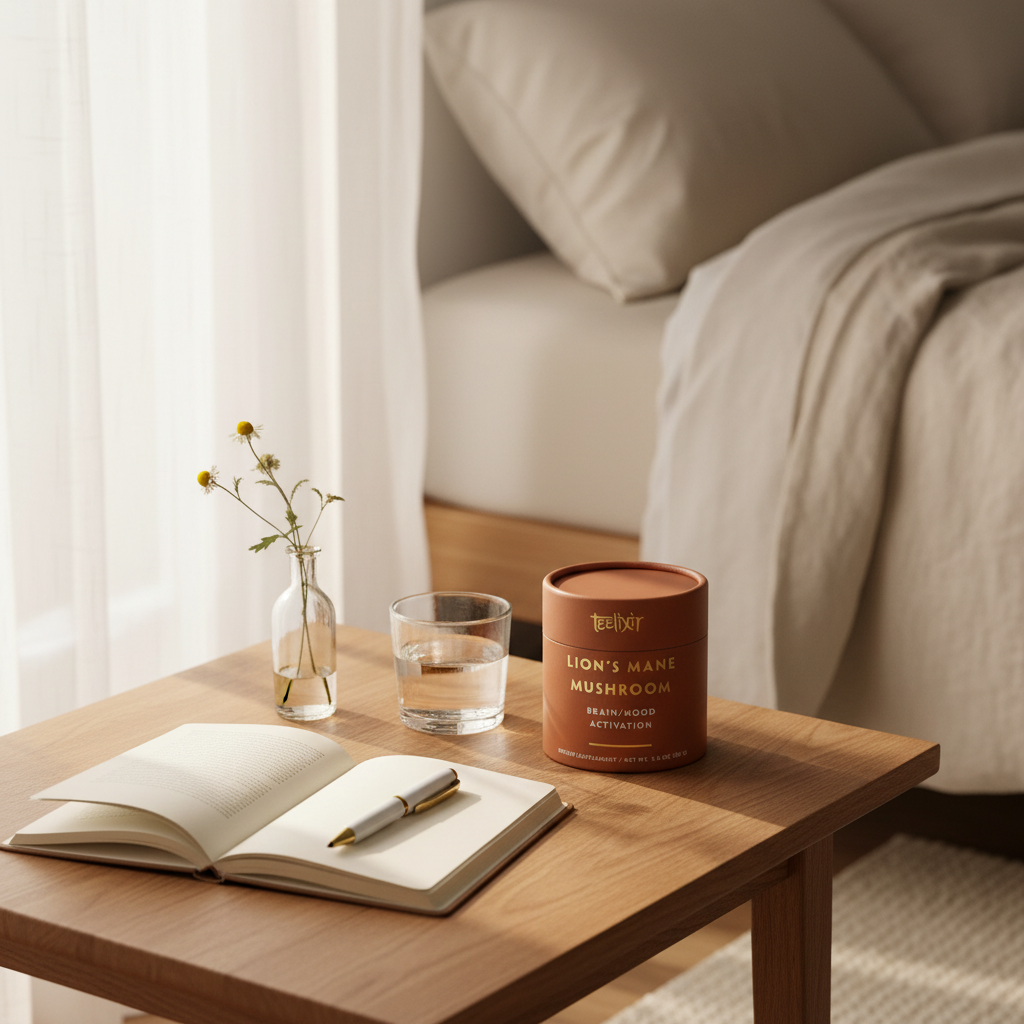
Anxiety is not a single thing. It is a constellation — a tight chest at 3am, a mind that will not stop rehearsing conversations that have not happened yet, an inability to feel calm even when nothing is obviously wrong. And the people searching for natural approaches have usually already tried the obvious solutions.
Lion's mane (Hericium erinaceus) has entered this conversation because of its traditional use and compounds that are the subject of ongoing research. It is traditionally used differently from other calming supplements, with some people reporting effects that build over weeks rather than minutes.
Some people report effects from lion's mane that build over weeks rather than minutes — and a single dose may produce different responses than consistent use at traditional doses.
This article reviews research on lion's mane that is relevant to traditional use, is transparent about study results, and explains honestly what the evidence does and does not support. Research into potential mood effects is limited — three small RCTs exist, one of which showed no significant benefit. That context matters before you decide whether lion's mane is appropriate for you.
Important: Anxiety is a medical condition
The information in this article is for educational purposes only. If you are experiencing anxiety that interferes with daily life, please consult a qualified healthcare professional. Lion's mane is not a treatment for anxiety disorders and should never replace professional care or prescribed medication.
What the Human Trials Actually Show — Honest Summaries
There are four human trials relevant to lion's mane and anxiety or mood. Two show positive signals. One shows a trend but no statistical significance. One showed no overall mood benefit. Understanding all four is essential to forming an accurate picture.
30 menopausal women randomised to lion's mane cookies or placebo for 4 weeks. The lion's mane group showed significantly reduced depression and anxiety scores (CES-D and ICI scales). Specific ICI subscales "insentive" and "palpitatio" were significantly lower. "Concentration," "irritating," and "anxious" trended lower but did not reach statistical significance. Importantly, the authors noted the mechanism appeared different from the expected NGF-enhancing action — suggesting additional pathways may be involved.
Limitation: 30 participants is small. Participants were menopausal women — results may not generalise to other demographics.
41 healthy young adults (18–45 years) randomised to 1.8g lion's mane daily or placebo for 28 days in a double-blind parallel-groups design. After a single dose, participants performed faster on the Stroop task. After 28 days, a trend toward reduced subjective stress was observed (p = 0.051) — but this did not reach conventional statistical significance. The authors explicitly stated "null and limited negative findings were also observed" and urged caution given the small sample size.
Null result disclosure: Stress reduction was a trend, not a statistically significant finding.
18 healthy participants (18–35 years) took a single acute dose of 3g 10:1 lion's mane extract or placebo in a crossover design. No significant overall improvement in composite mood or cognitive performance was found. A specific improvement in the pegboard test (fine motor skill) was observed, but this was an isolated positive in an otherwise null result for mood and cognition overall.
Null result disclosure: This 2025 RCT found no significant overall mood benefit from a single dose of lion's mane.
Mice subjected to continuous sleep disruption via tail suspension tests developed significant anxiety behaviour. Administration of lion's mane mycelium at 150 mg/kg ameliorated anxiety (p < 0.05) and reversed sleep disturbance in the elevated-plus-maze test. The mechanism involved BDNF/TrkB/PI3K/Akt/GSK-3β pathways — the same NGF-Mood Pathway implicated in the human trials.
Animal study limitation: Most of the mechanistic evidence for the NGF-Mood Pathway comes from animal or in vitro studies. Human evidence is limited to three small trials. Rodent models of anxiety do not always translate to human outcomes. This animal study provides mechanistic plausibility only — it cannot be used to claim human anxiolytic benefits.
What the Evidence Actually Supports (Honest Assessment)
The strongest positive signal comes from the 2010 Nagano RCT in menopausal women over 4 weeks. The 2023 Docherty pilot supports this directionally but did not reach significance. The 2025 Surendran study found no acute mood benefit. The animal data provides mechanistic support only.
This evidence base is preliminary, not definitive. The honest conclusion is: there is a biologically plausible mechanism and one positive human RCT, but the total evidence is insufficient to make confident clinical claims about lion's mane as an anxiolytic.
The NGF-Mood Pathway: The Mechanism Explained
Nerve growth factor (NGF) is a protein that is the subject of ongoing research into its role in neuronal health. Traditional approaches have considered factors that may influence emotional regulation pathways.
Lion's mane contains two compound families that are the subject of ongoing research:
- Hericenones — found in the fruiting body; alcohol-soluble
- Erinacines — found in both fruiting body and mycelium; some can cross the blood-brain barrier
A 2023 review of neurotrophic and neuroprotective effects (PMID: 37958943) confirmed that Hericium erinaceus demonstrates the ability to stimulate NGF release, regulate inflammatory processes, reduce oxidative stress, and safeguard nerve cells from apoptosis. This is the mechanistic foundation for the NGF-Mood Pathway hypothesis.
The key word is hypothesis. The activity of lion's mane compounds is the subject of ongoing research in cell and animal studies. What remains preliminary is whether this translates to effects in humans at traditional doses. The 2010 Nagano RCT suggests it might — but three small RCTs with inconsistent results do not constitute a definitive evidence base.
A 2025 systematic review (PMID: 40959699) covering five RCTs and 15 laboratory studies examined lion's mane's potential effects on BDNF and pro-BDNF production, hippocampal neurogenesis, and symptoms of depression, anxiety, binge eating, and sleep disorders. However, the review also noted that potential side effects include stomach discomfort, headache, and allergic reactions — information that is often omitted from promotional content.
Teelixir Organic Lion's Mane Powder
Dual-extracted fruiting body — 10:1 ratio, 31.7% beta-glucans, ACO certified organic.
The Sleep-Anxiety Axis: Where the Animal Data Is Relevant
Sleep disruption and anxiety are traditionally understood to influence each other. Traditional approaches often consider supporting this cycle.
The 2021 Li et al. animal study (PMID: 34865649) tested exactly this scenario: anxiety induced by continuous sleep disruption. The finding that lion's mane mycelium at 150 mg/kg ameliorated anxiety and reversed NREM sleep disturbance in rodents provides mechanistic plausibility for a sleep-anxiety dual effect.
Important context: This is a rodent study. The dose (150 mg/kg body weight in mice) does not directly convert to human supplementation doses. The relevance to humans has not been established for this specific use case.
What This Means in Practice (With Caveats)
If your anxiety is linked to poor sleep, the animal evidence provides a mechanistic rationale for lion's mane potentially addressing both sides of the cycle. However, this cannot be stated as established fact — it is hypothesis supported by pre-preliminary research only. Lion's mane is not a sedative and does not cause drowsiness.
If sleep disruption is your primary issue, a dedicated sleep support strategy remains essential. Lion's mane should not be positioned as a primary sleep aid based on current evidence.
Contraindications and Safety Considerations
Lion's mane has a favourable safety profile in the available human studies, but there are important considerations the evidence requires us to disclose:
- Medication interactions: There are no published interaction studies between lion's mane and SSRIs, SNRIs, benzodiazepines, or other anxiolytic medications. This means interactions are unknown, not confirmed absent. Anyone taking prescribed mental health medication should consult their prescribing healthcare professional before adding lion's mane.
- Allergic reactions: The 2025 systematic review (PMID: 40959699) identified allergic reactions as a potential side effect. Individuals with known mushroom allergies should exercise caution.
- Gastrointestinal effects: Some users report stomach discomfort, particularly at higher doses. Starting with a smaller dose is prudent.
- Pregnancy and breastfeeding: Insufficient data exists to establish safety. Avoid supplementation during pregnancy and breastfeeding without medical advice.
- Severe or clinical anxiety: No studies have been conducted in populations with diagnosed anxiety disorders (GAD, panic disorder, social anxiety disorder). Lion's mane is not a substitute for professional treatment of clinical anxiety.
Beyond Mood: The Cognitive-Anxiety Link
Anxiety is not only an emotional problem. Traditional approaches consider both emotional and cognitive aspects.
A 2023 narrative review examining nutrients and phytonutrients for cognitive function (PMID: 34541370) included lion's mane polysaccharides among compounds that are the subject of ongoing research into cognitive effects. The review noted the growing research interest in natural compounds supporting brain health as cognitive impairment rates rise globally.
The Docherty 2023 RCT (PMID: 38004235) found that a single dose of lion's mane improved speed of performance on the Stroop task — a measure of cognitive processing — even when the stress reduction trend did not reach significance. This suggests the cognitive and mood effects may operate through at least partially distinct pathways, with cognitive effects potentially more acute and mood effects more dependent on chronic accumulation.
This is the cognitive-anxiety overlap worth noting: if anxiety is impairing your concentration and mental clarity, an intervention that supports cognition may have indirect value for managing anxiety's cognitive symptoms, though the direct anxiolytic evidence remains preliminary.
How Formulation Affects the NGF-Mood Pathway
Research focuses on two compound families: hericenones and erinacines, which have different solubility profiles. Hericenones are ethanol-soluble while beta-glucan polysaccharides are water-soluble. Both extraction methods are used to capture the full spectrum of compounds.
Our lion's mane uses a dual extraction process — hot water and ethanol — at a 10:1 concentration ratio. Ten kilograms of raw Hericium erinaceus fruiting body per kilogram of extract. Our current COA shows 31.7% beta-glucans, exceeding our specification of ≥30%.
We use 100% fruiting body, Di Tao sourced from China where this mushroom has been cultivated for centuries. ACO certified organic. No mycelium on grain, no fillers, no added starch.
A 2020 review (PMID: 32178272) examined Scutellaria baicalensis, Hericium erinaceus, and Rhodiola rosea as natural compounds that are the subject of ongoing research into mental wellbeing, noting that these herbs may influence biochemical processes — including neurotransmitter activity, neurogenesis, and oxidative stress — but emphasised that further studies are needed to confirm effects.

Organic Lion's Mane Mushroom Powder
Dual-extracted (water + ethanol), 10:1 ratio, 31.7% beta-glucans, 100% fruiting body, Di Tao sourced, ACO certified organic.
View ProductDecision Engine: Is Lion's Mane Appropriate for Your Situation?
| Your Situation | What the Evidence Supports | Verdict |
|---|---|---|
| Mild low mood or stress in otherwise healthy adults | One positive 4-week RCT (PMID: 20834180); one trend-only RCT (PMID: 38004235) | Worth a 4-week trial — evidence is preliminary but consistent in direction |
| Anxiety linked to poor sleep | One animal study supports dual sleep-anxiety mechanism (PMID: 34865649) — human evidence not yet available | Mechanistically plausible; cannot be claimed as established |
| Anxiety with cognitive symptoms (brain fog, poor concentration) | Cognitive effects more consistently shown than mood effects in RCTs | Reasonable to trial — cognitive support may indirectly help |
| Anxiety during menopause | The 2010 RCT specifically studied menopausal women (PMID: 20834180) — best-supported demographic | Most evidence-aligned scenario |
| Diagnosed anxiety disorder (GAD, panic disorder) | No clinical population studies exist | Not supported as standalone treatment — professional care is required |
| Currently on anxiolytic medication | No interaction studies exist — safety unknown, not confirmed safe | Consult your prescribing healthcare professional before using |
What the Evidence Honestly Does Not Show
Limitations you should know before deciding
- Small sample sizes throughout: The 2010 Nagano study had 30 participants. Docherty 2023 had 41. Surendran 2025 had 18. These are signals worth investigating, not definitive proof.
- One trial showed no benefit: The 2025 Surendran acute RCT found no significant overall improvement in mood from a single dose. Acute and chronic effects may differ, but this null result must be disclosed.
- One trend did not reach significance: The 2023 Docherty 28-day stress trend (p = 0.051) is intriguing but not statistically significant under conventional thresholds.
- No long-term trials exist: The longest RCT was 4 weeks. We do not know what happens at 3, 6, or 12 months.
- No studies in clinical anxiety populations: Participants were healthy volunteers or women with menopausal symptoms — not people diagnosed with GAD, panic disorder, or other anxiety disorders.
- No Cochrane systematic review exists for lion's mane in any anxiety or mood context.
- FSANZ permits no specific health claims for lion's mane in Australia. This product is traditionally used to support general wellbeing.
- Animal study results may not translate: The sleep-disruption anxiety model used in mice may not reflect the mechanisms underlying human anxiety conditions.
Frequently Asked Questions
How long does lion's mane take to work for stress and mood?
The 2010 RCT (PMID: 20834180) measured improvements after 4 weeks of daily consumption. This aligns with the NGF-mediated mechanism — neuroplastic changes take time. Do not expect effects within days. Plan for a minimum 4-week trial with consistent daily use before evaluating whether it is working for you. Note that the 2025 acute RCT found no significant mood benefit from a single dose, which supports the chronic-use hypothesis.
Can I take lion's mane with anxiety medication?
There are no published interaction studies between lion's mane and SSRIs, SNRIs, benzodiazepines, or other anxiolytic medications. This means interactions are unknown, not confirmed absent. Always consult your prescribing healthcare professional before adding any supplement to an existing medication regimen. This is not a precaution that can be waived based on "natural" status.
Does lion's mane make you drowsy?
No. Lion's mane does not act as a sedative. Its potential mood-supporting mechanism works through NGF/BDNF stimulation and neuroplasticity, not through GABA modulation or sedation. Most users report that lion's mane does not cause drowsiness. The Docherty 2023 RCT observed acute cognitive improvements (faster Stroop performance), suggesting an alerting rather than sedating effect.
Is lion's mane better than ashwagandha for anxiety?
They work through different mechanisms and have different evidence bases. Ashwagandha modulates cortisol and HPA axis activity and has a substantially larger body of anxiety-specific RCTs with more participants. Lion's mane works primarily through NGF/BDNF stimulation and neuroplasticity. Ashwagandha currently has stronger and more replicated research suggests benefits for anxiety. Some people use both. If your anxiety involves significant cognitive symptoms, lion's mane may be more relevant. If your anxiety is primarily somatic (racing heart, muscle tension) or driven by high cortisol, ashwagandha has stronger direct evidence. See our full comparison article for more detail.
What dose of lion's mane is used in anxiety studies?
The 2010 Nagano study used cookies containing 0.5g of lion's mane powder four times daily (2g total of whole mushroom powder). The 2023 Docherty study used 1.8g daily of a standardised supplement. The 2025 Surendran acute study used 3g of a 10:1 extract (equivalent to 30g whole mushroom). For a 10:1 concentrated extract like ours, equivalent dosing to the chronic studies would be lower. Follow the product's recommended serving as a starting point and consider consulting a naturopath for personalised guidance.
Can lion's mane help with panic attacks?
There is no direct evidence for lion's mane in panic disorder or panic attack prevention. The existing RCTs studied general mood and mild anxiety, not acute panic episodes. Panic attacks require immediate-acting interventions and professional treatment. Lion's mane should not be relied upon for acute panic management under any circumstances.
Is lion's mane safe to take every day?
The human trials used daily supplementation without reported serious adverse events. The 2025 systematic review (PMID: 40959699) identified stomach discomfort, headache, and allergic reactions as potential side effects, but noted these are commonly unreported in the literature. Lion's mane appears well tolerated in healthy adults at typical supplementation doses, but long-term safety data beyond a few weeks is limited. If you experience any adverse effects, discontinue use and consult a healthcare professional.
Summary: What the Research Actually Shows
Lion's mane is not a treatment for anxiety. No supplement is, and no supplement should be marketed as one.
What the research shows is this: there is ongoing research into how lion's mane compounds may influence mood and stress response. One small RCT in menopausal women showed statistically significant reductions in depression and anxiety scores over four weeks. A second pilot study showed a trend toward reduced stress that did not reach statistical significance. A third acute study showed no significant mood benefit. One animal study provides preliminary evidence.
This is a preliminary evidence base — directionally consistent, mechanistically grounded, but not yet sufficient to make confident clinical claims. The sample sizes are small, no studies exist in clinical anxiety populations, the longest trial was 4 weeks, and one trial explicitly found no significant effect.
For mild, everyday stress and mood support in otherwise healthy adults — particularly those who also want cognitive benefits — lion's mane is a reasonably supported option worth a 4-week trial at doses used in studies (1.8–2g of standardised supplement daily, or equivalent). For anyone with diagnosed anxiety disorders, lion's mane is at most a potential complementary addition to professional care, not a substitute for it.
"The NGF-Mood Pathway is mechanistically compelling but clinically preliminary. One positive RCT, one trend, one null result. That is the honest state of the evidence — and it should shape your expectations before you start."
We believe transparency about both what the evidence shows and what it does not show is the only responsible way to discuss this research. The NGF-Mood Pathway remains a scientifically grounded hypothesis — not a proven mechanism — and we think that distinction matters to anyone trying to make an informed decision.
Related articles: Lion's Mane Benefits: What 571 Studies Show | Lion's Mane vs Ashwagandha: NGF or Cortisol? | Dosage Guide: Clinical Trial Doses & Conversions | Side Effects & Safety Profile
Disclaimer: This article is for educational and informational purposes only. It does not constitute medical advice and is not intended to diagnose, treat, cure, or prevent any disease or health condition, including anxiety disorders. The information is based on published scientific research as of March 2026. Research findings may change as new studies emerge. This article has been reviewed for compliance with Australian TGA advertising guidelines — no therapeutic claims are made. Always consult a qualified healthcare professional before starting any supplement, especially if you have a medical condition, are pregnant or breastfeeding, or are taking prescription medication. If you are experiencing anxiety that interferes with daily functioning, please seek professional help.
Continue Your Research
- Lion's Mane for Depression & Mood: The Evidence Review
- Lion's Mane for Stress: What the Research Shows About The Indirect Pathway
- Lion's Mane and Antidepressants: The Clinical Evidence
- Lion's Mane for ADHD and Focus: What the Research Actually Shows
- Lion's Mane for Gut Health: The Prebiotic Bridge Your Microbiome Has Been Waiting For
- Lion's Mane for Skin: The Ergothioneine Advantage
- Lion's Mane and Ashwagandha: The Build-and-Protect Stack
- How to Use Lion's Mane Mushroom Powder


