



Lion's Mane and Antidepressants: The Clinical Evidence
By Peter Orpen, Co-Owner, Teelixir
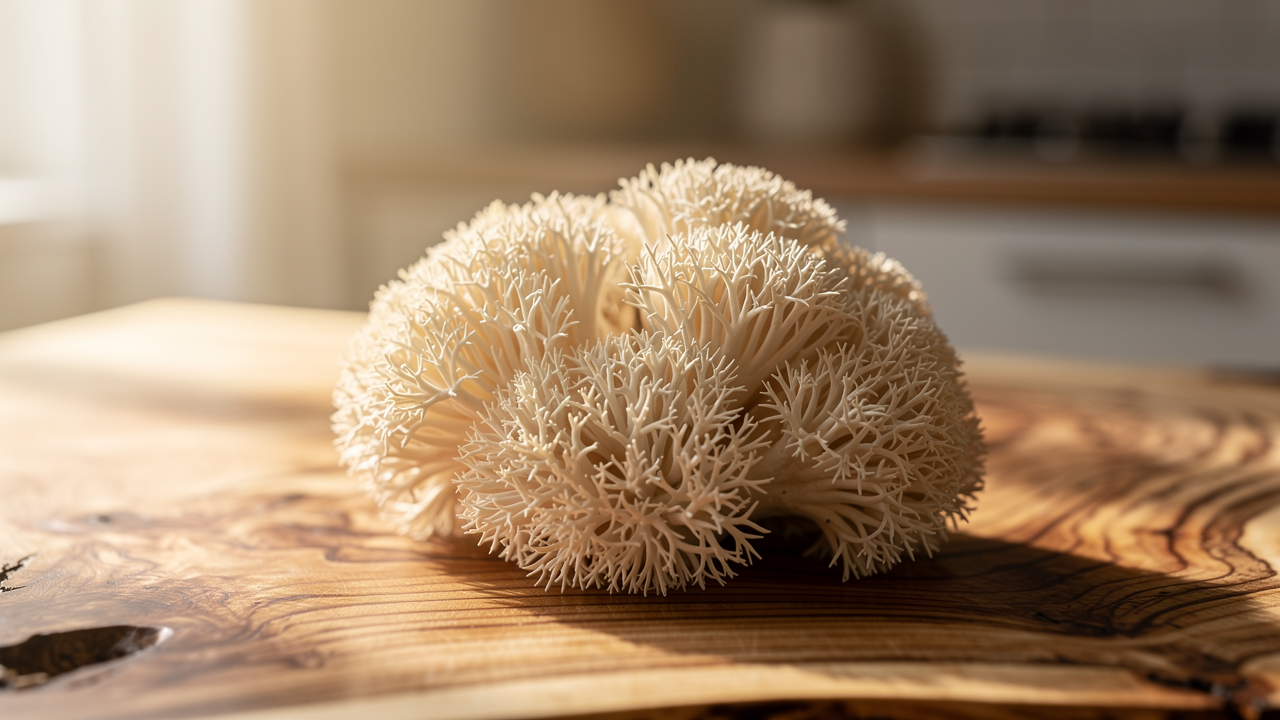
Published: 25 March 2026 | Updated: 25 March 2026 | By Teelixir Research Team
Many people researching lion’s mane and antidepressants are curious about two main questions: whether it can be safely combined with existing prescriptions, or whether it might offer an alternative approach to mood support.
Both questions deserve clear information based on available research, rather than marketing claims.
Current research includes one small human trial examining mood effects, while cognitive studies show more consistent findings. The combination with antidepressants hasn't been studied clinically. For diagnosed depressive disorders, lion's mane should not be considered a replacement for professional treatment.
What makes this topic interesting is The Neurotrophin Gap Effect — lion’s mane’s traditional use and compounds that are the subject of ongoing research into nerve growth factor pathways. Some researchers have explored these mechanisms, though human evidence remains limited.
The Only Mood-Specific RCT: What It Found (and What It Did Not)
In 2010, Japanese researchers published the primary human trial specifically targeting depression symptoms with lion’s mane (PMID: 20834180, n=30 women, 4 weeks). Participants consumed cookies enriched with approximately 2g of lion’s mane fruiting body daily. After four weeks, the lion’s mane group showed statistically significant reductions in depression and anxiety scores on a validated self-report scale, compared to the placebo group.
———After 4 weeks of Hericium erinaceus intake, the depression and anxiety scores were significantly lower in the lion’s mane group than in the placebo group, and no adverse effects were observed.” — Nagano et al. 2010 (PMID: 20834180, n=30)
This is a real finding. It is also limited in important ways.
Thirty participants is a small cohort by clinical standards. The cookie delivery format makes precise dose standardisation difficult. The study recruited women with a range of health complaints including menopausal symptoms — not people with a confirmed depressive disorder. These limitations do not invalidate the result, but they preclude strong clinical conclusions from a single small trial.
The honest characterisation: this study found a statistically significant signal for mood support in healthy women with mild depressive tendencies. The 2010 RCT did not demonstrate treatment efficacy for clinical depression at doses used in studies of approximately 2g daily.
Cognitive Studies and the Mood Overlap
The more robust human research base for lion’s mane targets cognition rather than mood — and it is worth understanding because cognitive function and mood are deeply interconnected for most people.
A 2023 double-blind RCT (PMID: 38004235, n=41 healthy adults, 28 days) administered 1.8g of standardised extract daily, measuring cognitive function, mood, and anxiety at multiple time points. The trial found significant improvements in cognitive processing speed and short-term memory. However, the 2023 RCT found no significant effect on state anxiety over the 28-day period at doses of 1.8g used in studies.
That is a direct negative finding from a well-conducted, adequately powered trial. A study specifically designed to measure anxiety did not demonstrate benefit. This should inform expectations for mood applications.
A 2024 acute-dose RCT (PMID: 40276537, n=41) investigated whether a single standardised dose could produce measurable cognitive effects within hours. It found significant improvements in processing speed within the test session. Mood outcomes were not the primary focus. This suggests lion’s mane operates through both acute and cumulative mechanisms on different timescales.
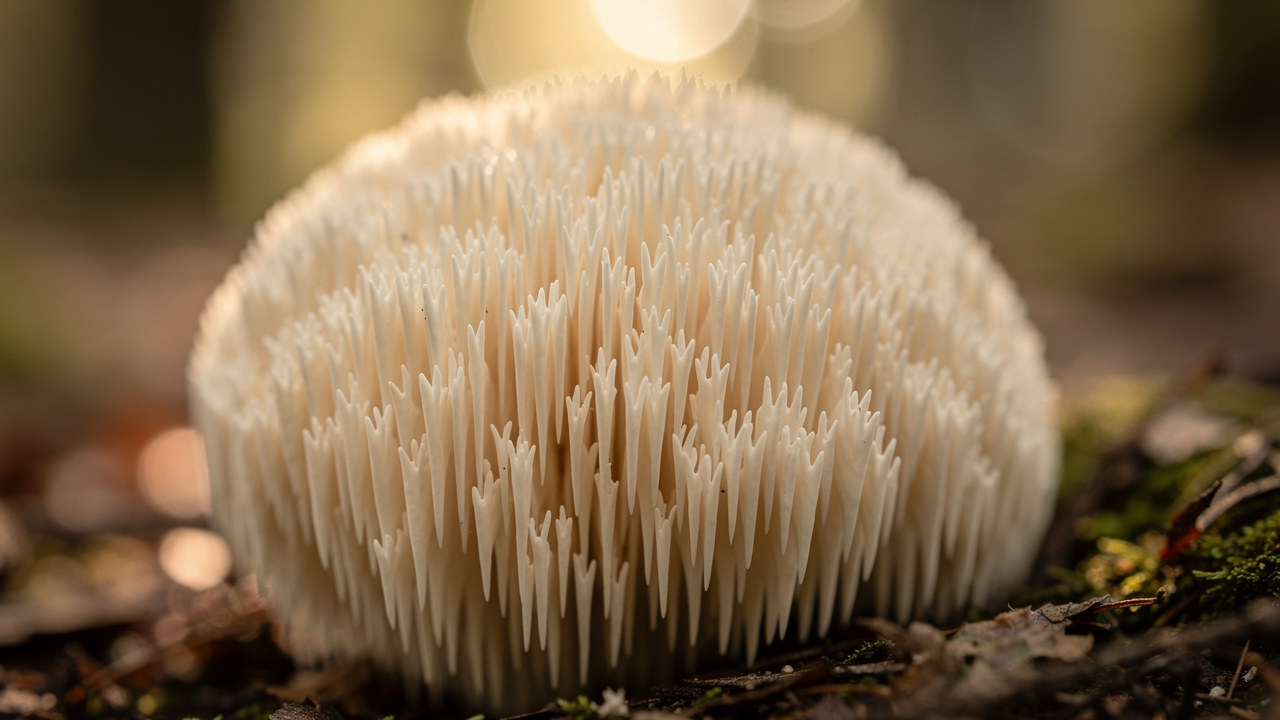
The Neurotrophin Gap Effect: Why Mood Researchers Are Paying Attention
The mechanistic case for lion’s mane and depression centres on neuroplasticity. Hericenones (from the fruiting body) and erinacines (from the mycelium) both are the subject of ongoing research into NGF pathways in preclinical models. NGF has been studied for its potential role in neuronal health — and modern depression research has recognised that reduced neuroplasticity, lower BDNF, and impaired neural connectivity are features of depressive states.
Some research suggests SSRIs may influence BDNF levels. Lion's mane contains compounds that are the subject of ongoing research into neurotrophic pathways.
The problem is that most studies were animal or in vitro on this specific neurotrophin mechanism. The leap from rodent NGF data to human mood outcomes is significant, and it has not been confirmed in adequately powered human trials. A 2023 review (PMID: 37233262) covered these neuroprotective mechanisms extensively but addressed dementia and Parkinson’s, not mood disorders. Extrapolating to depression requires care.
The 2020 review (PMID: 32178272) directly addressed potential antidepressant effects, naming lion’s mane alongside Scutellaria baicalensis and Rhodiola rosea as botanical candidates with mechanistic plausibility. The authors were explicit: this is a theoretical and preclinical case, not a supported by research one.
Our dual-extract process at Teelixir captures both hericenones (via ethanol extraction from the fruiting body) and erinacines (via water extraction), with third-party verified 31.7% beta-glucan content. Most lion’s mane products in Australia use untreated mycelium powder on grain substrate — which differs from some traditional preparations.
Sleep Disruption and the Indirect Mood Pathway
A 2021 clinical trial (PMID: 34865649) investigated lion’s mane mycelium in adults experiencing anxiety induced by continuous sleep disturbance. Participants reported reduced anxiety scores and improved sleep quality.
This finding is relevant to mood for reasons beyond direct antidepressant mechanisms. Poor sleep is one of the most reliable drivers of low mood and emotional dysregulation. If lion’s mane genuinely has been studied for potential sleep-related benefits, that indirect pathway to mood may be more clinically meaningful than framing it as an antidepressant analogue.
This is worth considering if your mood issues are substantially driven by fatigue and disrupted sleep. The 2021 trial used mycelium extract, which differs from fruiting body preparations — the active compounds involved may differ, and the clinical implications are not yet fully understood.
What the Research Says About Lion’s mane and Antidepressant Medications
The direct answer: there are no published clinical trials examining lion’s mane combined with SSRI, SNRI, MAOI, or any other class of antidepressant medication. The combination has not been tested in humans.
A 2025 review (PMID: 39935672) explored the theoretical potential of lion’s mane as an add-on to antipsychotic medications in conditions including schizophrenia — not antidepressants for depression. Different drug classes, different mechanisms, different patient populations. The authors noted neuroprotective complementarity as biologically plausible for antipsychotics, but drew no conclusions relevant to SSRIs or mood disorders.
The most recent 2025 systematic review (PMID: 40959699) found no serious adverse events and good general tolerability across the full human evidence base. This is reassuring context. It does not provide safety data for the specific combination with psychiatric medications, because that combination was not studied.
If you are currently taking antidepressants, you should speak with your doctor before adding lion’s mane. MAOIs have genuine and potentially serious interaction risks with various compounds. SSRIs affect serotonin pathways that may interact in complex ways with neurotrophin mechanisms. The absence of known interactions is not the same as confirmed safety. Consult your healthcare professional before making any changes to your supplement regimen.
Should You Take Lion’s mane for Mood? A Situation-Based Guide
| Your Situation | Verdict | Evidence Level |
|---|---|---|
| Mild mood fluctuations, no clinical assessment, no medications | Reasonable to try at doses used in studies | Moderate (1 RCT, n=30) |
| Sleep disruption driving low mood | Reasonable to try — sleep-mood pathway supported | Preliminary (1 clinical trial) |
| Cognitive fatigue and brain fog affecting mood | Good fit — cognitive evidence is stronger here | Good (multiple RCTs) |
| Depression with current antidepressant use | Consult your doctor first — no interaction data exists | Insufficient (no combination trials) |
| Seeking primary treatment for clinical depression | Not appropriate — not a substitute for clinical care | No evidence for this use |
| Pregnant or breastfeeding | Not recommended — no safety data in pregnancy | Insufficient |
What This Means in Practice
Based on the available evidence, here is how to think about lion’s mane in a mood context.
If you decide to try it: Start with 1g daily for the first two weeks to assess tolerance, then aim for 1.5–2g daily. This is within the range of doses used in studies. Take it consistently — four weeks of daily use is the minimum assessment window based on the 2010 RCT. Morning dosing is preferable given the cognitive activation observed in the 2024 acute-dose trial (PMID: 40276537).
You can combine with adaptogenic support. Consider pairing lion’s mane alongside ashwagandha if stress is a significant driver of your mood, or together with reishi mushroom if sleep quality is poor. Traditional herbal combinations are sometimes used to support general wellbeing.
Consider whether your symptoms are primarily cognitive in nature — difficulty concentrating, mental fatigue, brain fog that creates frustration and low mood downstream. In that case, you may want to read our article on lion’s mane for brain fog, where the evidence base is substantially stronger. See also lion’s mane for focus and concentration.
When not to use it as a mood intervention: Lion’s mane is not recommended for people seeking primary treatment for clinical depression or those wanting to replace their prescribed medication. It is also not suitable as a standalone intervention for severe mood disorders. It is unlikely to help with severe depressive episodes, bipolar disorder, or clinical anxiety disorders that have not responded to established treatment. It is not effective for these conditions based on current evidence, and pursuing it in place of clinical care carries real risk. If mood symptoms are significantly affecting daily functioning, seek medical care first.
For a complete contraindications overview, see our side effects and safety guide. For dosing guidance across all applications, our lion’s mane dosage guide covers timing, stacking, and form selection.
Honest Limitations: What the Evidence Does Not Show
We name these clearly, because mood and mental health is an area where false hope causes real harm.
The key mood study is underpowered. One trial with 30 participants cannot establish clinical efficacy. The 2010 RCT (PMID: 20834180) found a signal; it did not demonstrate a treatment effect for clinical depression.
The 2023 RCT found no significant effect on state anxiety. A well-designed 28-day trial (PMID: 38004235, n=41) specifically measured anxiety and did not demonstrate benefit. This negative finding should be weighted alongside the 2010 result, not dismissed.
Most studies were animal or in vitro on the neurotrophin mechanism. The compelling NGF story comes primarily from rodent models and cell cultures. Human neurotrophin data for lion’s mane remains sparse.
No head-to-head comparison with antidepressants exists. Any claim that lion’s mane works as well as, or works like, an SSRI is not supported by any published research. That comparison has never been conducted.
Formulation quality varies enormously. The clinical studies used either whole fruiting body or standardised extracts. Most retail lion’s mane products in Australia use untreated mycelium powder on a grain substrate — categorically different from what was studied. Product selection matters substantially.
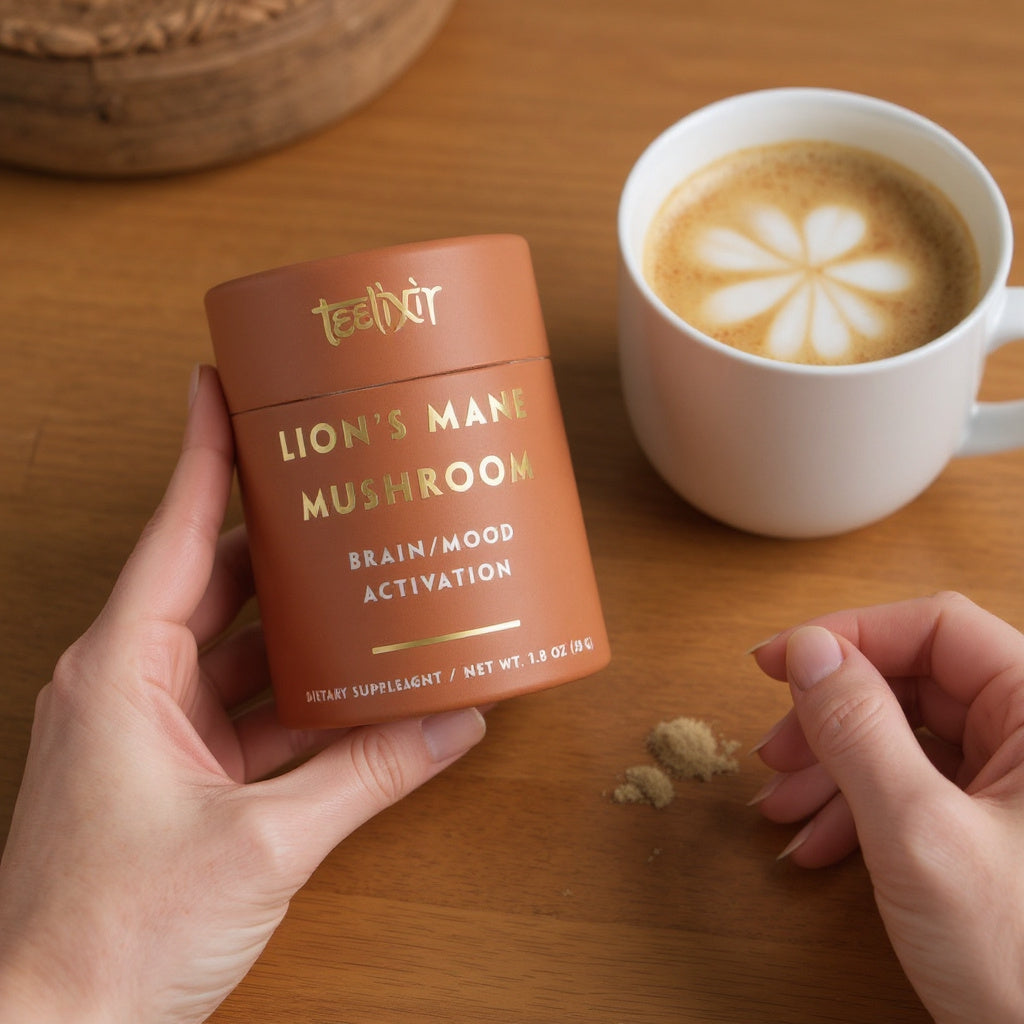
About Teelixir’s Lion’s mane Formulation
Our Organic Lion’s mane Mushroom Powder uses a dual-extraction process: ethanol extraction to capture hericenones from the fruiting body, and water extraction to capture beta-glucan polysaccharides. Third-party laboratory testing confirms 31.7% beta-glucan content — the number that separates a genuine extract from mushroom flour.
We use fruiting body only, not mycelium. Hericenones — the compounds that stimulate NGF in preclinical models — are concentrated in the fruiting body. Mycelium-dominant products commonly sold in Australia often contain significant grain substrate that dilutes the active compound concentration.
A 10:1 extraction ratio means each gram of our powder delivers a concentrated equivalent of 10g of raw fruiting body. At 1.5–2g daily, you are working with the equivalent of 15–20g of whole mushroom — within the research-evidenced range. The product is ACO certified organic with full production traceability.
If capsules suit your routine, our Lion’s mane Mushroom Capsules contain the same standardised dual-extract. For practical dosing and stacking guidance, our lion’s mane dosage guide covers the details.
Related Reading
- Lion’s mane and anxiety — the anxiety-specific evidence reviewed separately
- Lion’s mane for brain fog — where the cognitive evidence is substantially stronger
- Lion’s mane for focus and concentration — ADHD-adjacent applications
- Side effects and safety — contraindications and who should avoid it
- Lion’s mane dosage guide — evidence-based dosing by goal
Frequently Asked Questions
Can I take lion’s mane with antidepressants?
There are no published clinical trials studying lion’s mane combined with antidepressant medications. The combination has not been tested in humans. The 2025 systematic review (PMID: 40959699) found no serious adverse events in general human use, but absence of known interactions is not the same as confirmed safety for this specific combination. Consult your healthcare professional before combining any supplement with prescription psychiatric medication.
Does lion’s mane help with depression?
The evidence is preliminary. The 2010 RCT (PMID: 20834180, n=30 women) found significant reductions in depression scores after 4 weeks. However, the 2023 RCT (PMID: 38004235, n=41) found no significant effect on state anxiety over 28 days. There are no trials in people with a confirmed depressive disorder. The honest characterisation: a preliminary signal for mood support in healthy adults with mild symptoms, not evidence for treating clinical depression.
How long does lion’s mane take to affect mood?
The only mood-focused human trial (PMID: 20834180) used a 4-week protocol. At doses used in studies of approximately 1.8–2g daily, four weeks of consistent intake is the minimum assessment window. Acute cognitive effects have been documented within a single session (PMID: 40276537), but mood outcomes were not measured in that context.
What dose is used in lion’s mane mood research?
The 2010 RCT used approximately 2g of fruiting body daily. The 2023 cognitive RCT used 1.8g of standardised extract at doses used in studies over 28 days. Teelixir’s 10:1 dual extract at 1–2g daily delivers the equivalent of 10–20g raw fruiting body, within the research-evidenced range.
Is lion’s mane safe for people with anxiety or depression?
The 2025 systematic review (PMID: 40959699) found no serious adverse events across all human studies. General tolerability is good. Those who should not use it without medical advice include people with mushroom allergies, those on blood-thinning or immunosuppressant medications, and those who are pregnant or breastfeeding. Speak with your doctor if you are on psychiatric medications. Lion’s mane is not a replacement for professional mental health treatment.
← Back to Lion's Mane Research Hub


