



Cordyceps for Energy and Endurance: The Clinical Evidence
By Peter Orpen, Co-Owner, Teelixir
77 human studies reviewed. Cordyceps has been traditionally used to support energy and is the subject of ongoing research into physical performance.

Cordyceps for Energy and Endurance: What the Clinical Evidence Shows
You've probably seen cordyceps marketed as "nature's pre-workout" or credited with giving Tibetan monks the ability to run at altitude without effort. The reality is more nuanced — and more interesting than the marketing.
Cordyceps has been traditionally used to support energy and is the subject of ongoing research into endurance capacity. The Oxygen Efficiency Principle — the idea that cordyceps may influence how the body uses oxygen — is an area of current scientific investigation.
Evidence Snapshot — Energy & Endurance
14
RCTs in meta-analysis
10.5%
Metabolic threshold increase
12 wks
Minimum for meaningful results
MODERATE
Evidence Grade
The Meta-Analysis: Strongest Signal in the Literature
A 2025 meta-analysis of 14 RCTs involving 528 athletes found that cordyceps sinensis supplementation significantly improved endurance performance (p=0.05), ventilatory threshold (p=0.03), and VO2peak (p=0.04) (PMID: 41280379). The low heterogeneity across these studies is notable — it means the finding is reasonably consistent, not driven by one outlier study.
For context: the ventilatory threshold is the intensity at which your breathing rate suddenly increases because your muscles are generating more CO2 than can be comfortably buffered. A higher ventilatory threshold means you can sustain harder efforts before hitting that wall. This is a direct performance metric, not a proxy.
What the Individual RCTs Show
A 12-week double-blind RCT in healthy older adults found Cs-4 at 333mg/day increased the metabolic threshold by 10.5% and the ventilatory threshold by 8.5% versus placebo (PMID: 20804368). These are changes at doses used in studies that translate directly to real-world performance — you can sustain higher output before lactate begins limiting you.
An RCT in elite athletes during 3-week high-altitude training found Rhodiola plus Cordyceps significantly improved 5km run time by 5.7% versus placebo (PMID: 25251930). IL-6 and cortisol were reduced, and haemoglobin better maintained under altitude stress. Worth noting: this was a combination product, so the individual cordyceps contribution cannot be fully isolated — but the magnitude is large enough to be practically significant.
A 2024 16-week RCT in long-distance runners found Cordyceps militaris mycelium extract significantly maintained haemoglobin, ferritin, and haematocrit versus placebo during pre-season training (PMID: 38931190). Creatine kinase — a marker of muscle damage — was also significantly lower at 16 weeks. This suggests cordyceps may support iron status and muscle integrity during sustained heavy training periods.
The most novel finding in the recent literature: a 2024 randomised crossover trial found that a single 1g dose of cordyceps before high-intensity exercise accelerated CD34+ stem cell recruitment to damaged muscle by 51% at 3 hours post-exercise and produced a four-fold expansion of satellite cells (PMID: 38501161). This is the first human biopsy evidence of accelerated exercise recovery via stem cell signalling — a completely different mechanism from the oxygen threshold data.

The Null Findings: Who Cordyceps Doesn't Help
A 5-week RCT in 22 older trained cyclists found Cs-4 at 3g/day found no significant effect on VO2peak in those older cyclists (PMID: 15118196). The 5-week supplementation window is almost certainly too short — this is likely a duration effect, not a fundamental limitation of the compound.
A 14-day RCT in 17 amateur cyclists at 5g/day did not demonstrate improvement in VO2max in amateur cyclists (PMID: 15076794). Two weeks is insufficient by any reasonable standard of adaptation physiology. Even well-established ergogenics like beetroot juice show attenuated effects below 6 weeks of consistent use.
A 2020 RCT in 21 active men using a multi-ingredient pre-workout containing cordyceps found no significant effect on body composition or performance over 6 weeks (PMID: 33078636). Multi-ingredient stacks are notoriously hard to evaluate for individual component contribution, and 6 weeks likely wasn't enough time.
"After 12 weeks of Cs-4 supplementation, the metabolic threshold increased by 10.5% — the point at which lactate begins to accumulate shifted meaningfully upward." — PMID 20804368
Why Duration Matters So Much
Most studies on the mechanism were animal or in vitro. The human evidence suggests that cordyceps may support cellular adaptation over time. These potential effects are the subject of ongoing research.
Some people find cordyceps may take several weeks of consistent use to notice potential benefits, as suggested by traditional use patterns.
What This Means in Practice
| Goal | Recommended Protocol | Evidence Confidence |
|---|---|---|
| Improve ventilatory threshold (recreational) | 1-3g/day CS-4 extract for 12+ weeks | Moderate |
| Support iron status during heavy training | 1g/day C. militaris mycelium extract for 16 weeks | Preliminary |
| Accelerate post-exercise recovery | 1g before high-intensity sessions (single RCT) | Preliminary |
| Pre-competition acute boost | Not supported — cordyceps is not an acute ergogenic | Not recommended |
Start with 1g/day. You can take it any time — morning works well for most people as part of a supplement routine. Consider increasing to 2-3g/day after 4 weeks if you are using it specifically for endurance rather than immune support. Pair with adequate iron intake if you're a distance runner — the iron status data is worth noting.
Cordyceps is not appropriate if you're looking for an acute pre-workout effect on race day. It is not a stimulant and does not work the way caffeine does. If you want fast energy for a specific event, try beetroot juice or beta-alanine loading — both have stronger acute effect data.
Combine with a progressive training protocol. Cordyceps has been traditionally used alongside physical activity. Some people choose to combine it with lion's mane, as these supplements have different traditional uses.
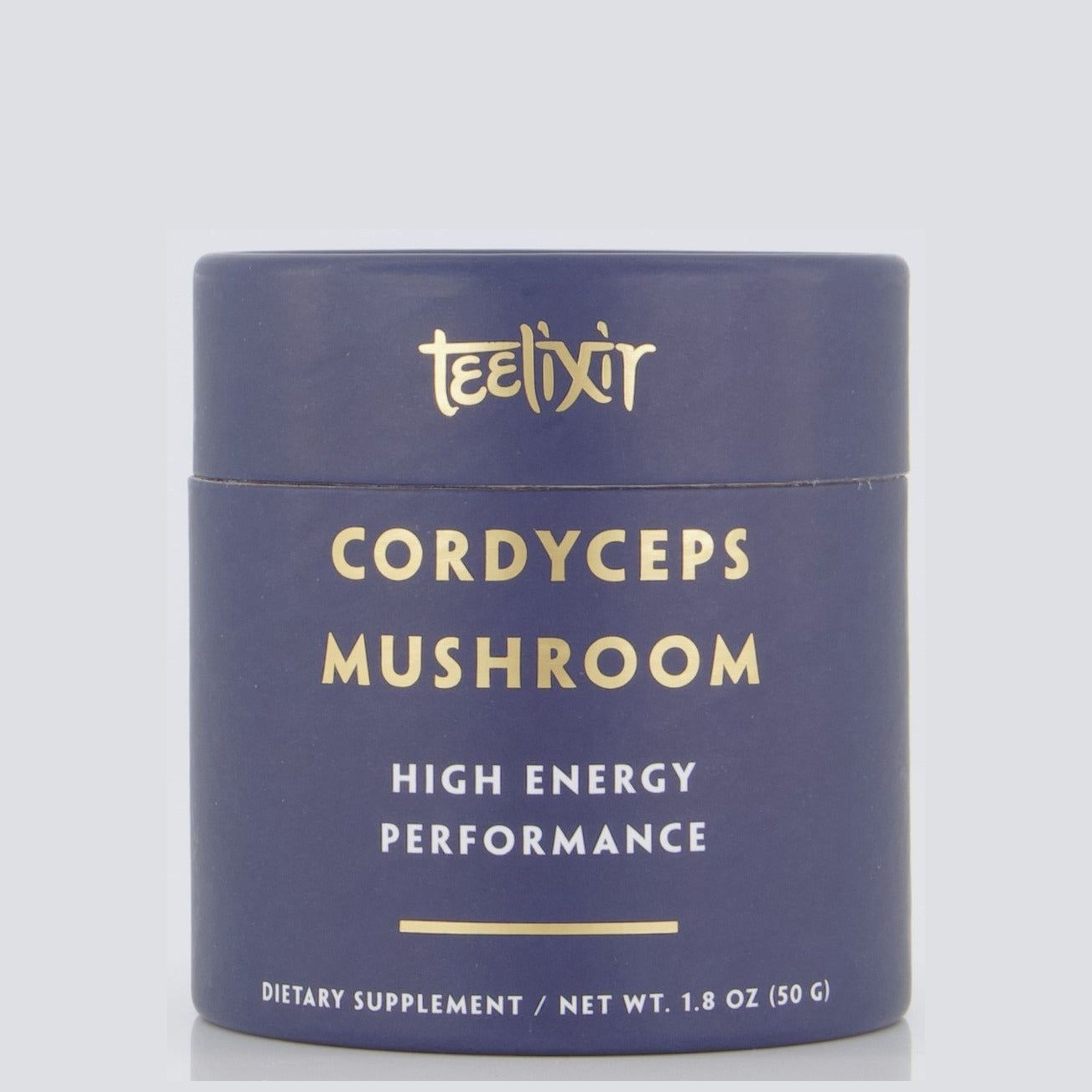
Teelixir Organic Cordyceps — CS-4 Strain
The most clinically studied cordyceps strain for endurance. 31.3% beta-glucan, hot water extracted. From $42.
Frequently Asked Questions
Does cordyceps increase VO2max?
Some studies show improvement in VO2peak (a closely related measure) — the 2025 meta-analysis found significant VO2peak improvement across 14 RCTs (PMID: 41280379). However, two short-term RCTs in cyclists found no significant improvement. The evidence suggests VO2 improvements are most likely with 12+ weeks of consistent supplementation in less-trained individuals, not in elite athletes over short periods.
When should I take cordyceps for exercise?
The chronic benefit (ventilatory threshold improvements) doesn't depend on timing — just take it daily. For acute recovery support, the 2024 RCT used a 1g dose before high-intensity exercise. In practice, taking cordyceps 30-60 minutes before training is a reasonable approach based on this data, but don't expect immediate acute effects — the adaptation takes weeks to months.
Is cordyceps better than caffeine for pre-workout?
These are completely different tools. Caffeine works acutely — you feel it within 30-45 minutes and it enhances performance for that session. Cordyceps works chronically — building physiological adaptation over 8-12+ weeks. You may not feel cordyceps as a pre-workout at all, especially in the first month. If you want an acute performance boost, caffeine has far stronger evidence. If you want sustainable adaptation over a training season, cordyceps is worth considering.
Does cordyceps help with altitude training?
One RCT found significant improvement in 5km run time and better haemoglobin maintenance during 3-week high-altitude training (PMID: 25251930), though this was a combination product (Rhodiola + Cordyceps). The reduced cortisol and IL-6 levels suggest cordyceps may support stress adaptation at altitude. However, this was a single small study — interpret cautiously.
Can I take cordyceps and creatine together?
Yes, these work via entirely different mechanisms — creatine supports phosphocreatine resynthesis for explosive efforts, cordyceps appears to support aerobic capacity and recovery. There is no evidence of negative interaction. They complement each other well for athletes who need both strength and endurance. Consult your healthcare professional if you have any kidney concerns, as both supplements increase protein metabolism.
See our full evidence review of 28 cordyceps studies or read about how to take cordyceps for timing and dosage guidance.
Teelixir Organic Cordyceps — CS-4 Strain, 31.3% Beta-Glucan
Hot water extracted, heavy metal tested. The most studied cordyceps strain for endurance. From $42.
Shop Cordyceps →This article is for educational purposes only and does not constitute medical advice. Cordyceps supplements are not intended to diagnose, treat, cure, or prevent any disease or health condition. Always consult your healthcare professional before commencing any new supplement regimen, particularly if you are pregnant, breastfeeding, have an existing medical condition, or are taking prescription medication.


