



Ashwagandha Dosage: 300mg, 600mg or KSM-66 — What’s Right?
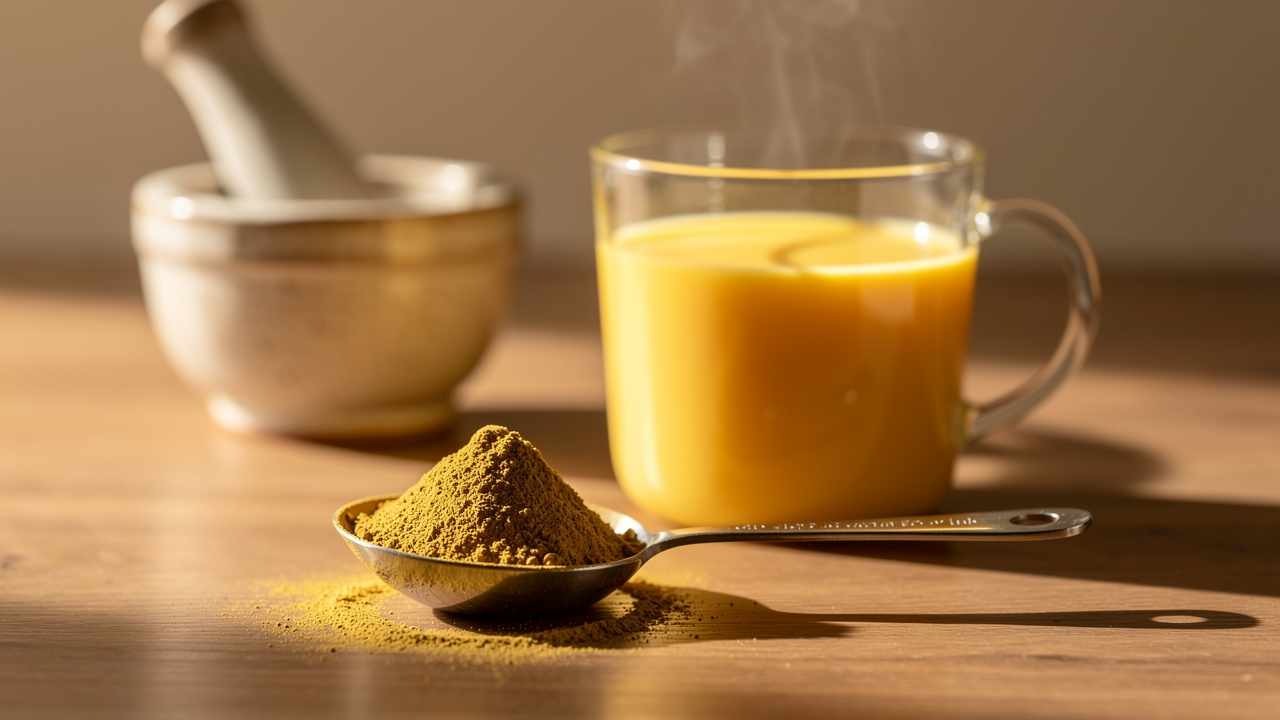
One of the most common questions we receive is deceptively simple: "How much ashwagandha should I take?"
The honest answer is that it depends — on the extract type, your goals, your body weight, and what the clinical trials actually used. A 300mg dose of KSM-66 is not the same as 300mg of whole root powder, and neither is the same as 300mg of Sensoril. These are different preparations with different concentrations of active compounds, tested at different doses in different studies.
This guide cuts through the confusion with evidence-based recommendations drawn from the clinical trial literature.
Understanding Extract Types
Before discussing doses, you need to understand what you are actually taking. The word "ashwagandha" on a label tells you very little about what is inside.
Root Extract vs Leaf Extract
The ashwagandha plant contains bioactive compounds throughout, but the concentration and type of withanolides differ between the root and the leaves.
- Root extract is what has been used in the vast majority of clinical trials. When researchers study "ashwagandha," they almost always mean root extract. Traditional Ayurvedic use also centres on the root.
- Leaf extract contains higher concentrations of withaferin A, a cytotoxic withanolide. Some companies use leaf extract because it is cheaper to produce. The safety and efficacy data from root extract trials cannot be directly applied to leaf extract products.
Our position: Use root-based preparations. The evidence base supports them. Our Ashwagandha Root Powder is a concentrated root extract specifically for this reason.
KSM-66 vs Sensoril vs Whole Root
| Extract | Source | Standardisation | Typical Clinical Dose | Key Studies |
|---|---|---|---|---|
| KSM-66 | Root only | 5% withanolides | 300mg twice daily (600mg total) | Wankhede 2015 (muscle), Langade 2019 (sleep) |
| Sensoril | Root + leaf | 10% withanolide glycosides | 125—250mg daily | Auddy 2008 (stress) |
| Whole root powder | Root | Unstandardised | 3—6g daily | Traditional dosing |
| 10:1 root extract | Root | Concentrated | 1—2g daily | Equivalent to 10—20g raw root |
Notice the dose difference. Sensoril is more concentrated in certain withanolides, so the clinical dose is lower. KSM-66 uses a higher dose. Whole root powder requires significantly more because it is not concentrated.
This is why "take 600mg of ashwagandha" without specifying the extract type is meaningless advice.
Our 10:1 Extract
Our ashwagandha root powder is a 10:1 concentrated extract. This means that 10 kilograms of raw ashwagandha root is used to produce 1 kilogram of our extract powder. A 1—2 gram serving of our powder is equivalent in concentration to 10—20 grams of raw root.
This concentration ratio falls between a standardised extract like KSM-66 and a whole root powder, providing a potent dose of the full spectrum of root compounds.
Evidence-Based Dosing by Goal
The following recommendations are drawn from the clinical trial literature. Individual responses vary — these are starting points, not prescriptions.
Stress and Anxiety
| Protocol | Dose | Duration | Source |
|---|---|---|---|
| KSM-66 | 300mg twice daily (600mg total) | 8—12 weeks | Multiple RCTs (PMID: 39348746) |
| Sensoril | 125—250mg daily | 8—12 weeks | Auddy 2008 |
| 10:1 extract (our product) | 1—2g daily | 8—12 weeks | Equivalent concentration |
For detailed evidence on stress outcomes, see our Ashwagandha for Anxiety and Stress guide.
Sleep Quality
| Protocol | Dose | Duration | Source |
|---|---|---|---|
| Root extract | 600mg daily | 10 weeks | Langade 2019 |
| Root extract | 300mg twice daily | 8 weeks | PMID: 34559859 (sleep MA) |
| 10:1 extract (our product) | 1—2g before bed | 6—10 weeks | Equivalent concentration |
See our Ashwagandha for Sleep guide for the full evidence review.
Muscle Strength and Recovery
| Protocol | Dose | Duration | Source |
|---|---|---|---|
| KSM-66 | 300mg twice daily (600mg total) | 8 weeks | Wankhede 2015 |
| Root extract | 500—600mg daily | 8—12 weeks | PMID: 32316411 (VO2max MA) |
| 10:1 extract (our product) | 1—2g daily | 8—12 weeks | Equivalent concentration |
See our Ashwagandha for Muscle Strength guide.
Thyroid Support
| Protocol | Dose | Duration | Source |
|---|---|---|---|
| Root extract | 600mg daily | 8 weeks | PMID: 37013429 |
| 10:1 extract (our product) | 1—2g daily | 8 weeks minimum | Equivalent concentration |
Critical note: If you take thyroid medication, do not start ashwagandha without medical supervision. See our Ashwagandha and Thyroid guide.
Male Fertility and Testosterone
| Protocol | Dose | Duration | Source |
|---|---|---|---|
| Root extract | 675mg daily (3 — 225mg) | 90 days | Ahmad 2013 |
| KSM-66 | 600mg daily | 8 weeks | PMID: 30466985 (infertility SR) |
| 10:1 extract (our product) | 1—2g daily | 8—12 weeks | Equivalent concentration |
See our Ashwagandha for Testosterone and Fertility guide.
RCT Dose Reference Table
For researchers and practitioners who want the raw data:
| Study | Extract | Daily Dose | Duration | Outcome | Population |
|---|---|---|---|---|---|
| Langade 2019 | Root extract | 600mg | 10 weeks | Sleep quality improvement | Insomnia patients |
| Wankhede 2015 | KSM-66 | 600mg | 8 weeks | Muscle strength + recovery | Resistance-trained men |
| Auddy 2008 | Sensoril | 125—250mg | 60 days | Stress reduction | Stressed adults |
| Ahmad 2013 | Root powder | 675mg | 90 days | Semen quality | Infertile men |
| MA (PMID: 39348746) | Various | 300—600mg | 8—12 weeks | Stress + anxiety | 558 patients across 9 RCTs |
| MA (PMID: 40746175) | Various | 300—600mg | 8—12 weeks | Cortisol reduction | Multiple RCTs |
Timing: When to Take Ashwagandha
The clinical trials did not consistently control for timing, so the evidence for morning vs evening dosing is limited. Here is practical guidance:
- For stress: Morning or split dose (morning and evening). Consistency matters more than timing.
- For sleep: 1—2 hours before bed may be preferable, though the effects are cumulative rather than acute.
- For muscle/exercise: Before or after training. Wankhede 2015 had participants take it alongside their training programme.
- With food: Taking ashwagandha with food may reduce gastrointestinal discomfort, particularly when starting.
Cycling: 8 Weeks On, 2 Weeks Off
You will frequently see the recommendation to cycle ashwagandha — typically 8 weeks of use followed by 2 weeks off. This is worth understanding in context:
This recommendation comes from traditional Ayurvedic practice, not from RCT evidence. Clinical trials have used continuous supplementation for up to 12 weeks without identifying safety concerns that would necessitate cycling.
The rationale behind cycling includes:
- Preventing potential tolerance (though no tolerance has been documented in trials)
- Allowing the body periodic breaks from any bioactive substance
- Reassessing whether you still benefit (if you feel the same off ashwagandha as on it, you may not need it)
Our position: Cycling is a reasonable precautionary practice, but it is not mandated by the preliminary research. If you choose to use ashwagandha continuously, stay within the well-studied duration of up to 12 weeks per cycle, and consider periodic breaks.
Starting Protocol
If you are new to ashwagandha, consider this graduated approach:
Week 1: Start with half the target dose (0.5—1g of our 10:1 extract) to assess tolerance. Take with food.
Weeks 2—8: Move to the full dose (1—2g daily). Maintain consistency — same time each day.
Week 8: Assess. Are you noticing changes in stress, sleep, or your target outcome? If yes, continue. If not, consider whether the dose, timing, or extract type is right for you.
Weeks 10—12: If cycling, begin your 2-week break. If continuing, consider getting blood work (liver function, thyroid panel) to establish a safety baseline.
Common Dosing Mistakes
- Expecting immediate results. Ashwagandha is not paracetamol. It modulates your stress biology over weeks, not hours. Give it 8 weeks before deciding whether it works for you.
- Comparing doses across extract types. 600mg of KSM-66 is not comparable to 600mg of whole root powder. Always check the extract type and concentration.
- Taking too much. More is not better. The clinical trials showing benefits used moderate doses (300—600mg of standardised extract). Megadosing has not been studied and is not recommended.
- Inconsistent use. Taking ashwagandha sporadically ("whenever I remember") will not produce the results seen in clinical trials, which used daily, consistent dosing.
- Ignoring interactions. See our Safety Guide before starting, particularly if you take any medications.

Teelixir Organic Ashwagandha Root (10:1)
Dual-extracted, root-only, ACO certified organic. ≥2.5% withanolides verified by third-party COA.
View Product →Frequently Asked Questions
How much ashwagandha should I take per day?
Most clinical trials used 300–600 mg per day of a standardised root extract (e.g., KSM-66 at 5% withanolides). If you’re using a concentrated 10:1 root extract like Teelixir’s, 1–2 g daily provides an equivalent concentration. Start at the lower end and build over the first week. Always take with food to minimise any gastrointestinal discomfort.
How much KSM-66 ashwagandha per day?
KSM-66 clinical trials typically used 300 mg twice daily (600 mg total) — the dose used in Wankhede 2015 (muscle strength) and multiple stress and sleep RCTs. Some studies have used a single 600 mg dose. Taking 300 mg morning and evening maintains more consistent circulating levels across the day.
What is the recommended dose of ashwagandha?
The recommended dose depends on the extract type: KSM-66 or comparable standardised extract — 300–600 mg/day; Sensoril (10% withanolide glycosides) — 125–250 mg/day; whole root powder (unstandardised) — 3–6 g/day; 10:1 concentrated root extract — 1–2 g/day. The correct dose cannot be determined without knowing the extract type and standardisation. There is no one-size-fits-all answer.
Is 600mg of ashwagandha too much?
600 mg/day of a standardised extract such as KSM-66 is well within the studied range and is not considered too much for healthy adults. Multiple RCTs have used this dose for 8–12 weeks without adverse effects. Going above 1,250 mg of standardised extract daily moves outside the well-studied range and is not recommended. If you are using our 10:1 concentrated root extract, 600 mg is significantly below the effective dose — 1–2 g is the appropriate range.
When should I take ashwagandha for best results?
For stress: take in the morning or split the dose (morning and evening) — consistency matters more than exact timing. For sleep: take 1–2 hours before bed. For exercise performance and muscle recovery: take alongside your training, as in Wankhede 2015. For all uses: taking ashwagandha with food reduces the likelihood of gastrointestinal discomfort, particularly when starting. Ashwagandha’s effects are cumulative over weeks, not acute like a stimulant — daily consistency is the priority.
The Bottom Line
The preliminary research supports ashwagandha root extract at doses of 300—600mg daily (or the equivalent in concentrated extracts like our 10:1 powder) for periods of 8 to 12 weeks. The key variables are extract type, consistency, and realistic expectations about the timeline for results.
Choose a quality root extract, start at a moderate dose, give it 8 weeks, and assess. That is the evidence-based approach.
Explore our Ashwagandha Root Powder ? or browse our full adaptogen range.
This article was written by the Teelixir Research Team. Dosing recommendations are based on published clinical trial protocols and are not prescriptive medical advice. Last updated March 2026.
Teelixir Organic Ashwagandha Root (10:1)
Dual-extracted • Root only • ACO Certified Organic • ≥2.5% withanolides
$40.00 AUD
Shop Ashwagandha →Disclaimer: This information is provided for educational purposes only and is not intended to diagnose, treat, cure, or prevent any disease. Always consult a qualified healthcare professional before starting any new supplement, especially if you are pregnant, breastfeeding, taking medications, or have a medical condition.
Continue Your Research
- Ashwagandha Benefits: The Complete Evidence-Based Guide
- Ashwagandha Side Effects: The Tolerance Threshold and What 29+ Clinical Trials Reveal
- Ashwagandha for Anxiety and Stress: What 9 RCTs Actually Found
- Ashwagandha for Muscle Strength: The Anabolic Recovery Window Explained
- Ashwagandha for Women: Hormones, Perimenopause, and the Hormonal Seesaw
- Ashwagandha for Gut Health: The Stress-Gut Axis Short-Circuit
- Ashwagandha vs Lion's Mane: The Body-Brain Divide
- Ashwagandha and Magnesium: Close the Dual Calm Gap