



Ashwagandha for Depression: What the Research Shows
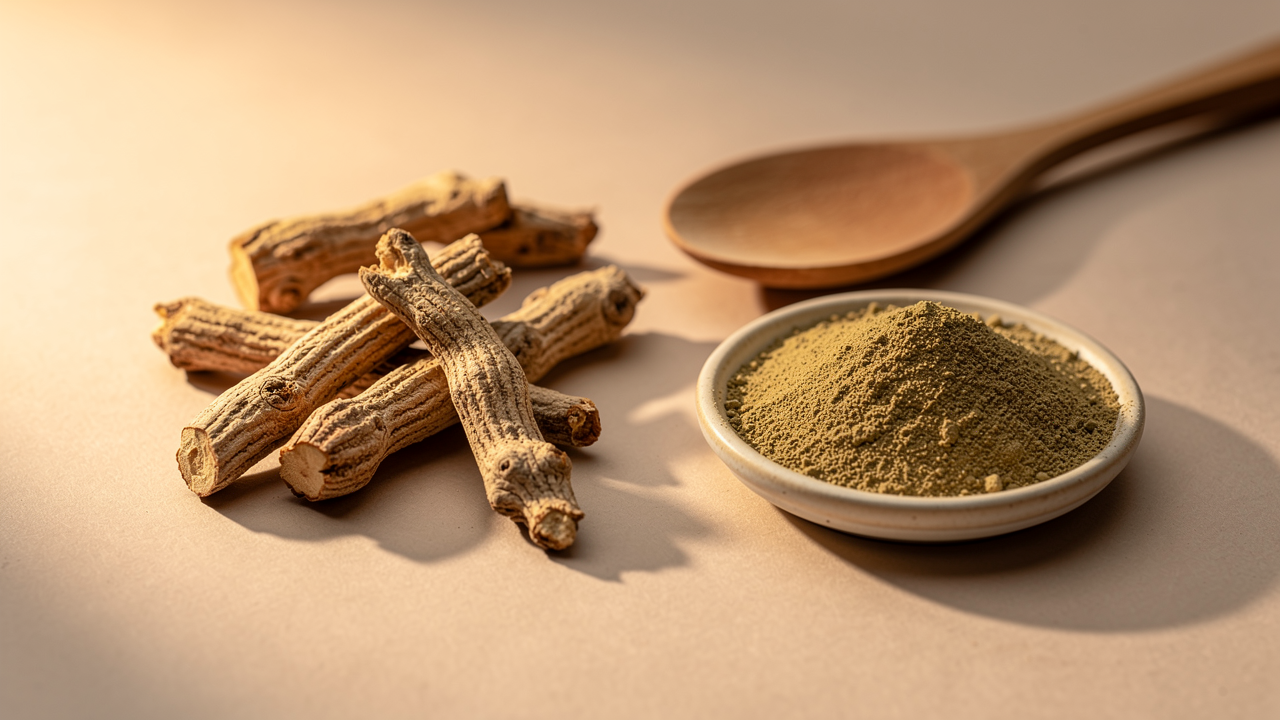
Most people searching for ashwagandha and depression have already tried several things. They have changed their diet. They have tried magnesium. They may have had a difficult conversation with a GP. What they are looking for now is not hype — it is honest information about whether this particular root extract actually does anything for low mood.
The honest answer is: complicated. Ashwagandha (Withania somnifera) has a genuine, well-documented effect on stress hormones and anxiety. Its relationship with depression specifically is less clear. Understanding the difference matters — and it is the central idea this article is built around.
We call it the cortisol-mood gap: ashwagandha demonstrably lowers cortisol, but lower cortisol does not automatically mean improved mood. That distinction shapes everything you need to know about this adaptogen and mental health.
What Ashwagandha Actually Does to the Brain (and What It Doesn't)
Ashwagandha contains bioactive compounds called withanolides — steroidal lactones found primarily in the root. Our certified organic extract specifies a minimum 2.5% withanolide content, measured via HPLC on every batch.
These compounds operate through several mechanisms relevant to mood:
- HPA axis modulation — withanolides appear to reduce the reactivity of the hypothalamic-pituitary-adrenal axis, the central stress-response system
- GABA-A receptor activity — preliminary evidence suggests withanolides may interact with GABA-A receptors, which are the same receptors targeted by benzodiazepines (though via different mechanisms and at much lower potency)
- Serotonin pathway influence — in a 2024 double-blind RCT (PMID: 37878284), standardised ashwagandha extract combined with piperine showed measurable increases in serotonin levels alongside reduced anxiety and depression scores
None of these mechanisms is the same as how pharmaceutical antidepressants work. Ashwagandha is not an SSRI. It does not block serotonin reuptake. It likely works upstream — at the level of the stress hormone cascade — rather than directly on the neurotransmitter deficit that characterises major depressive disorder.
The Research on Mood: What Studies Actually Found
Here is where intellectual honesty matters most.
A 2024 meta-analysis (PMID: 39348746, n=558, 9 RCTs) found ashwagandha had significant beneficial effects on stress and anxiety versus placebo. That evidence is solid. But several of those same studies measured depression scores secondarily — and the effects were smaller and less consistent.
The most rigorous assessment of ashwagandha for psychiatric disorders comes from the World Federation of Societies of Biological Psychiatry and CANMAT Clinical Guidelines (PMID: 35311615). Their 2022 recommendation for ashwagandha was: Grade B evidence for anxiety. Not recommended for depression.
That is not a small distinction. Grade B means "probably effective" for anxiety based on consistent evidence from well-designed trials. The absence of a depression recommendation means the committee reviewed the available data and found it insufficient to recommend ashwagandha as a primary intervention for depressive disorder.
A 2026 dose-response meta-analysis (PMID: 41644067) analysed ashwagandha RCTs for mental health and found significant benefits for stress, anxiety, and sleep. Depression outcomes were again less pronounced, with the authors noting that measuring depression separately from anxiety-related distress is methodologically difficult in supplement trials.
Why the Cortisol-Mood Gap Matters
A 2025 meta-analysis (PMID: 40746175) produced one of the most interesting — and most honest — findings in the ashwagandha literature. It found that ashwagandha supplementation produced significant reductions in cortisol levels, but no significant effect on perceived stress scores.
Read that again: the biomarker improved, but the subjective experience did not necessarily follow.
This is the cortisol-mood gap in action. Lowering cortisol is not the same as lifting mood. Chronic stress and depression involve different neurobiological pathways. Cortisol dysregulation is a feature of both, but it is not the only driver — and it may not be the primary driver in major depressive disorder.
What this means in practice: if your low mood is substantially driven by chronic stress and anxiety — the burnout-adjacent experience of emotional depletion, poor sleep, irritability, and feeling overwhelmed — ashwagandha may meaningfully help. If your low mood looks more like classical depression with persistent hopelessness, anhedonia, and psychomotor changes, the evidence suggests you need a different primary intervention.
The Studies Worth Knowing
A 2019 RCT (PMID: 31046033) specifically enrolled participants with schizophrenia who also had depression and anxiety symptoms, and used a standardised ashwagandha extract against placebo. Depression scores (PANSS negative subscale) improved. However, this was a specific population — schizophrenia patients on existing antipsychotics — and the results do not straightforwardly transfer to general depression.
A 2024 RCT (PMID: 37543151, n=500) found that an ashwagandha-containing herbal blend improved mood alongside constipation and bowel function in a large trial. The mechanistic connection here may run through the gut-brain axis — a plausible pathway given ashwagandha's known effects on the gut microbiome (discussed in our gut health article).
A 2026 sustained-release RCT (PMID: 41824889) using 300mg ashwagandha in stressed adults found significant reductions in both stress and depression symptom measures, alongside improved wellbeing. This is the most recent evidence and it is encouraging — but the population was "healthy stressed adults," not people with clinical depressive disorders.
What the Research Has NOT Shown
- No large RCT has enrolled participants with confirmed major depressive disorder (MDD) and used ashwagandha as a primary treatment
- No head-to-head comparison exists between ashwagandha and pharmaceutical antidepressants
- No Cochrane systematic review has specifically addressed ashwagandha for depression
- The 2025 cortisol meta-analysis (PMID: 40746175) found no consistent effect on perceived stress scores despite cortisol reductions — suggesting biomarker improvement does not reliably predict subjective mood improvement
What This Means in Practice
Ashwagandha is unlikely to lift mood that is not stress-related. But stress-related mood changes are enormously common — and for those, the evidence is more supportive.
Practical considerations:
- Who is likely to benefit: People whose low mood is primarily driven by chronic stress, burnout, poor sleep, or anxiety. The cortisol-modulating effects are well-evidenced, and these downstream improve how people feel.
- Who is unlikely to benefit: People with primary major depressive disorder, seasonal affective disorder without an anxiety component, or depression linked to nutritional deficiency or thyroid dysfunction (address the cause first).
- When to consult a professional: If depression is persistent, severe, or accompanied by suicidal ideation, please speak with a GP or mental health professional. Ashwagandha is not an appropriate primary treatment for moderate to severe MDD.
- What to stack it with: The sleep literature suggests ashwagandha may work best when sleep is also being addressed. Our sleep article covers the dose-timing research. If you are using ashwagandha for mood, combining it with genuine sleep hygiene improvements may produce better outcomes than either alone.
Teelixir's Formulation: Why It Matters for Mood Research
Not all ashwagandha extracts are equivalent. The studies cited throughout this article predominantly used standardised root extracts with defined withanolide content — the same approach we take with our certified organic extract.
Our formulation specifications:
- Part used: Root only. No leaf material. This matters because leaf-based extracts have a different alkaloid and withanolide profile — and most clinical trials used root extracts specifically.
- Extraction method: Dual extract using hot water and ethanol. Hot water captures the polar withanolides and saponins; ethanol captures fat-soluble compounds that water alone cannot access.
- Extraction ratio: 10:1 concentrated — meaning 10 kilograms of raw ashwagandha root are used to produce 1 kilogram of extract.
- Withanolide specification: ≥2.5% by HPLC analysis on every batch. Some products claim higher percentages by using leaf material or synthetic spiking — we do not do this.
- Certification: ACO (Australian Certified Organic). GMO-free. Third-party tested for heavy metals (lead, arsenic, cadmium, mercury) and microbial contamination.
- Source: India — the authentic Di Tao origin for ashwagandha, where traditional cultivation in the specific soil and climate conditions produces the highest concentration of bioactive withanolides.
Our certified organic ashwagandha uses the same root-only, standardised extract type that features in the human clinical trials we reference. That is not a small thing when you are trying to apply research findings to a supplement decision.
“Lowering cortisol and lifting mood are not the same thing — but when low mood is driven by chronic stress, closing that gap is where ashwagandha does its most reliable work.”
Clinical interpretation, Teelixir Research
Should You Take Ashwagandha for Depression or Mood?
| Your Situation | Verdict |
|---|---|
| Low mood linked to chronic stress, burnout, or poor sleep | Worth trying — evidence supports cortisol reduction |
| Generalised anxiety with low mood component | Worth trying — Grade B evidence for anxiety |
| Clinical major depressive disorder (MDD) | Unlikely to help as primary treatment — consult GP |
| Currently on SSRIs or antidepressants | Consult your prescribing doctor first |
| Seasonal low mood with sleep disruption | Reasonable to try, especially for sleep support |
| Persistent hopelessness or suicidal thoughts | Seek professional support immediately — not appropriate for self-supplementation |
Dosage and Timing
The studies showing mood-relevant effects used a range of doses. The 2026 meta-analysis (PMID: 41644067) found the optimal dose for mental health outcomes was approximately 600mg/day of standardised root extract. The 2026 sustained-release RCT (PMID: 41824889) found 300mg effective, with 300mg performing better than 150mg.
Practical guidance based on the evidence:
- Starting dose: 300mg daily of a standardised root extract (our product = 1.5g serving of 10:1 extract, equivalent to approximately 375mg withanolide-standardised extract)
- Timing: Evening dosing appears to produce better sleep outcomes, which may secondarily benefit mood. Morning dosing has been used in athletic performance studies. Either is appropriate for mood.
- Duration: Most trials ran 8–12 weeks. Clinical effects on mood markers are not typically seen before 4 weeks.
- Note: If no improvement is observed by week 8, ashwagandha may not be the right intervention for your particular mood pattern.
Safety: What You Need to Know
A 2021 safety RCT (PMID: 33338583) specifically tested ashwagandha root extract in healthy volunteers and found it well-tolerated with no serious adverse events. The 2024 meta-analysis (PMID: 39083548) confirmed a good safety profile across the reviewed RCTs.
Important cautions:
- Thyroid effects: Ashwagandha may increase T3 and T4 levels. People with hyperthyroidism or taking thyroid medication should consult a doctor before use.
- Liver: rare reports: Case reports of liver injury have been published, though causality is not established in all cases. People with existing liver conditions should exercise caution.
- Pregnancy: Not recommended during pregnancy due to traditional use as a uterine stimulant.
- Drug interactions: May potentiate sedative medications. If taking benzodiazepines or sleep medications, discuss with your pharmacist.
Is ashwagandha effective for depression?
How long does ashwagandha take to work for mood?
Can I take ashwagandha with antidepressants?
What dose of ashwagandha should I take for mood?
Does ashwagandha lower cortisol?
The Bottom Line
Ashwagandha is not an antidepressant. The cortisol-mood gap is real: lowering cortisol does not automatically produce a brighter mood, and the evidence for ashwagandha in clinical depression is insufficient for a strong recommendation.
What ashwagandha does well — consistently, across multiple well-designed trials — is modulate the stress response. For the large proportion of people whose low mood is fundamentally a stress exhaustion phenomenon, that distinction matters less in practice. Reducing chronic stress activation, improving sleep, and breaking the anxiety-fatigue loop are all things ashwagandha can meaningfully contribute to.
Our certified organic extract uses the same root-only, dual-extracted, withanolide-standardised formulation as the leading human clinical trials. If you are exploring adaptogenic support for stress-driven low mood, our Teelixir Organic Ashwagandha Root (10:1) is a starting point we stand behind with full transparency about the evidence and its limits.
For genuine depressive disorder, please speak with your GP. Both approaches are compatible — they just serve different parts of the problem.

Certified Organic • ACO Certified • Third-Party Tested
Teelixir Organic Ashwagandha Root (10:1)
Root-only dual extract. 10kg raw root per 1kg extract. ≥2.5% withanolides by HPLC. Di Tao sourced from India. Certified organic by ACO.
View ProductFrequently Asked Questions
Can ashwagandha help with depression? +
Ashwagandha is not a treatment for depression, and should never replace professional medical care. However, clinical trials suggest it may support mood and general wellbeing — particularly in people whose low mood is related to chronic stress. If you are experiencing depression, please consult a qualified healthcare professional.
Does ashwagandha work like antidepressants? +
No. Ashwagandha does not work like antidepressants and is not a substitute for them. Antidepressants target neurotransmitter systems (serotonin, noradrenaline) under medical supervision. Ashwagandha may support the stress-hormone axis (HPA axis) — a different mechanism entirely. Do not stop or reduce prescribed antidepressants without consulting your doctor.
Can I take ashwagandha with antidepressants? +
There are no well-documented major interactions between ashwagandha and common antidepressants in current research. However, combining supplements with prescription medications should always be discussed with your GP or psychiatrist first. They can assess your individual situation and monitor your response.
How long does ashwagandha take to improve mood? +
Most clinical trials measuring mood outcomes ran for 8–12 weeks. In those trials, participants typically began reporting changes from around weeks 4–8. Allow at least 8 weeks of consistent use at 300–600mg daily before evaluating whether it is having any effect for you.
Is ashwagandha safe for people with depression? +
Ashwagandha has a well-established safety profile in clinical trials at doses of 300–600mg daily. However, if you are being treated for depression, it is essential to discuss any supplement use with your treating doctor before starting. This is particularly important if you are taking prescription medications or have a complex mental health history.
Continue Your Research
- Ashwagandha Benefits: The Complete Evidence-Based Guide
- Ashwagandha Dosage Guide: What Clinical Trials Actually Used
- Ashwagandha Side Effects: The Tolerance Threshold and What 29+ Clinical Trials Reveal
- Ashwagandha for Anxiety and Stress: What 9 RCTs Actually Found
- Ashwagandha for Muscle Strength: The Anabolic Recovery Window Explained
- Ashwagandha for Women: Hormones, Perimenopause, and the Hormonal Seesaw
- Ashwagandha vs Lion's Mane: The Body-Brain Divide
- Ashwagandha and Magnesium: Close the Dual Calm Gap