



Reishi vs Lion's Mane: Which Mushroom Should You Choose?
By Peter Orpen, Co-Owner, Teelixir
Reishi and lion's mane overlap on immune support but diverge sharply elsewhere — reishi for stress and sleep, lion's mane for cognition and nerve repair. Here is how to choose based on your actual goal.
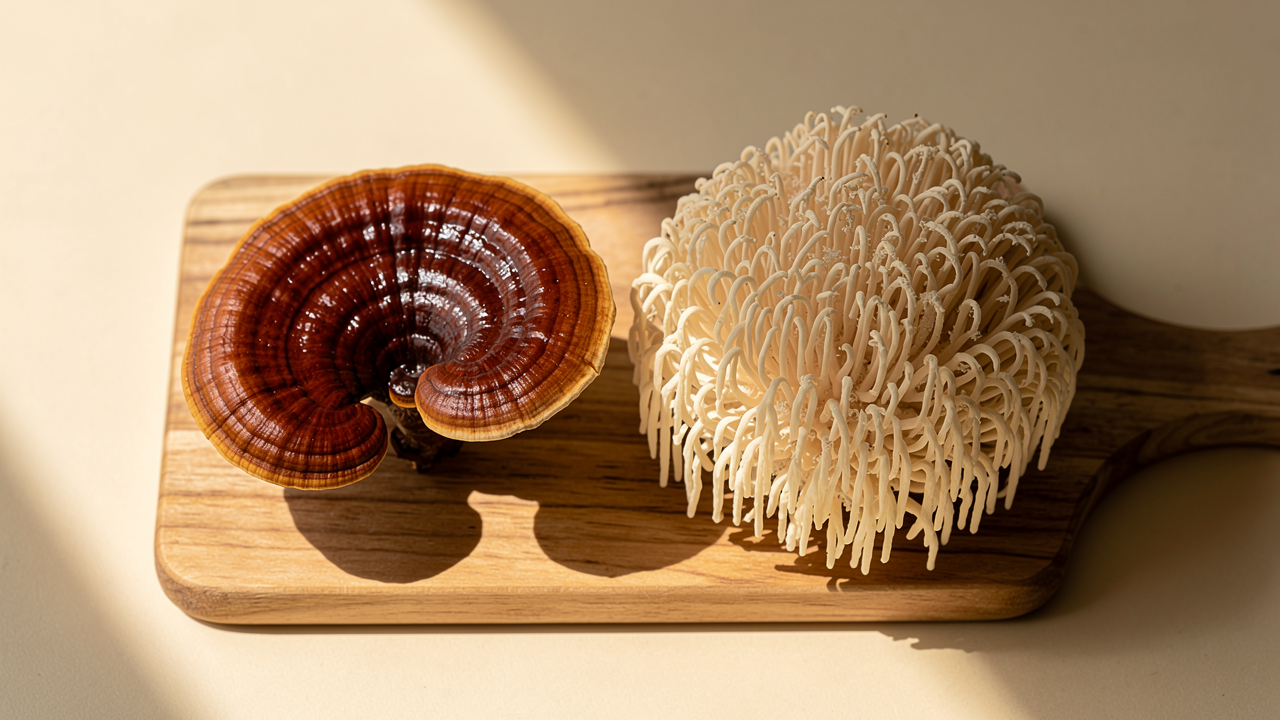
Two of the most studied medicinal mushrooms. Different mechanisms. Different evidence bases. The question is which one actually matches your health goal.
Reishi and lion's mane are regularly lumped together under "medicinal mushrooms" as if they're interchangeable. They're not. They act on entirely different biological systems and have independent, non-overlapping research bases. Understanding The Mechanism Divide — the fundamental difference between traditional immune support and neural growth factor stimulation — is the key to knowing which one you should actually be taking.
The Dose-Dependent Threshold: Across the reishi literature, effective outcomes consistently appear at 1.44–5.4 g per day of standardised extract. Products below this threshold may not replicate the effects seen in clinical trials.
Evidence Summary — Head-to-Head
Reishi
MODERATE — 28 human studies. Primary: traditionally used to support general wellbeing, fatigue.
Lion's Mane
MODERATE — 12+ human studies. Primary: cognition, may help support NGF stimulation.
No head-to-head trial exists. Comparison is based on independent evidence for each mushroom.
The Mechanism Divide: Why They're Not Interchangeable
Understanding the primary mechanism of each mushroom tells you which one to reach for:
Reishi acts primarily through its polysaccharides (beta-glucans) and triterpenes (ganoderic acids). Beta-glucans are a source of compounds that are the subject of ongoing research. Triterpenes have been traditionally used in herbal medicine to support general wellbeing. Reishi has been used in traditional medicine to support the body's natural balance.
Lion's mane acts primarily through hericenones (in fruiting body) and erinacines (in mycelium). These compounds are a source of compounds that are the subject of ongoing research. Lion's mane has been traditionally used to support cognitive function.
These are fundamentally different biological pathways. One doesn't substitute for the other.
Head-to-Head Evidence Comparison
| Category | Reishi | Lion's Mane |
|---|---|---|
| Human studies | 28 (17 RCTs, 2 Cochrane SRs) | 12+ (multiple RCTs) |
| Primary mechanism | Traditional immune support via beta-glucans | NGF stimulation via hericenones/erinacines |
| Strongest evidence area | NK cell activity, illness-related fatigue | Cognitive function, mild cognitive impairment |
| Anxiety/mood | Yes — fatigue RCT (PMID: 15857210) | Yes — human RCT evidence |
| Active compounds | Beta-glucans (≥30%), ganoderic acids | Hericenones (fruiting body), erinacines (mycelium) |
| Best extraction | Dual (water + ethanol) | Dual (water + ethanol) |
| Typical dose | 1,000–2,000mg daily | 500–3,000mg daily |
| Safety profile | Well-tolerated; liver caution at high doses | Well-tolerated; rare GI effects |
| Best for | Immune support, illness recovery, fatigue | Focus, memory, nerve health, brain fog |
| Not effective for | Rheumatoid arthritis, metabolic syndrome (null findings) | Acute stimulation, general immunity |
For Immunity: Reishi Wins
Reishi's evidence for immune function is substantially deeper — 5+ RCTs demonstrating NK cell activity increases (PMIDs: 12916709, 38800991, 18048435, 19145638, 27045603) versus lion's mane's more limited immune evidence. A Cochrane systematic review (PMID: 22696372) further validates reishi in adjunctive illness contexts.
For immune-specific goals: reishi. Most studies on lion's mane's immune mechanisms were animal or in vitro — human immune evidence is limited compared to reishi.
For Cognition: Lion's Mane Wins
Lion's mane has been studied in human trials examining cognitive function — particularly in mild cognitive impairment. The compounds in lion's mane are a source of compounds that are the subject of ongoing research. Two small reishi cognitive trials (PMIDs: 29742702, 29199566) exist but the cognition evidence for reishi is preliminary compared to the lion's mane research.
For cognitive support, focus, and neurological maintenance: lion's mane. Explore our lion's mane research articles for the full evidence review.
For Fatigue: Both, in Different Contexts
Reishi has the stronger illness-related fatigue evidence (PMID: 15857210, n=132 RCT). Lion's mane's benefits for mental fatigue and brain fog appear to work through a different pathway — neurological support rather than immune modulation. If fatigue has both a physical (immune) and cognitive (brain fog) component, combining both is biologically coherent.
Can You Take Both Together?
Yes — and for many people, the combination makes more sense than choosing one.
No head-to-head trial comparing the two exists. No combination study has been published in humans. This is an acknowledged limitation. What we can say: the mechanisms appear to be non-competing based on traditional use patterns, no adverse interactions have been documented in traditional use, and the combined profile may support general wellbeing.
Practical approach: start reishi alone (1,000mg daily for 2 weeks). Then start lion's mane (500mg daily). Once both are individually established, take them together. Try taking reishi in the evening (calming, adaptogenic qualities) and lion's mane in the morning (cognitive support for the day ahead).
Not appropriate to combine if you're taking immunosuppressants — reishi's immune modulation makes this combination unsuitable without medical supervision. Consult your healthcare professional before combining supplements with any medication.
What This Means in Practice
| Your Goal | Choose | Evidence Basis |
|---|---|---|
| Immune support, illness recovery | Reishi | MODERATE — 5+ NK cell RCTs |
| Focus, memory, cognitive clarity | Lion's Mane | MODERATE — cognitive RCTs, MCI trials |
| Illness-related fatigue | Reishi | MODERATE — n=132 flagship RCT |
| Nerve health, neuroprotection | Lion's Mane | MODERATE — NGF mechanism, human trials |
| Both immune + cognitive support | Both | Complementary mechanisms, no interaction |
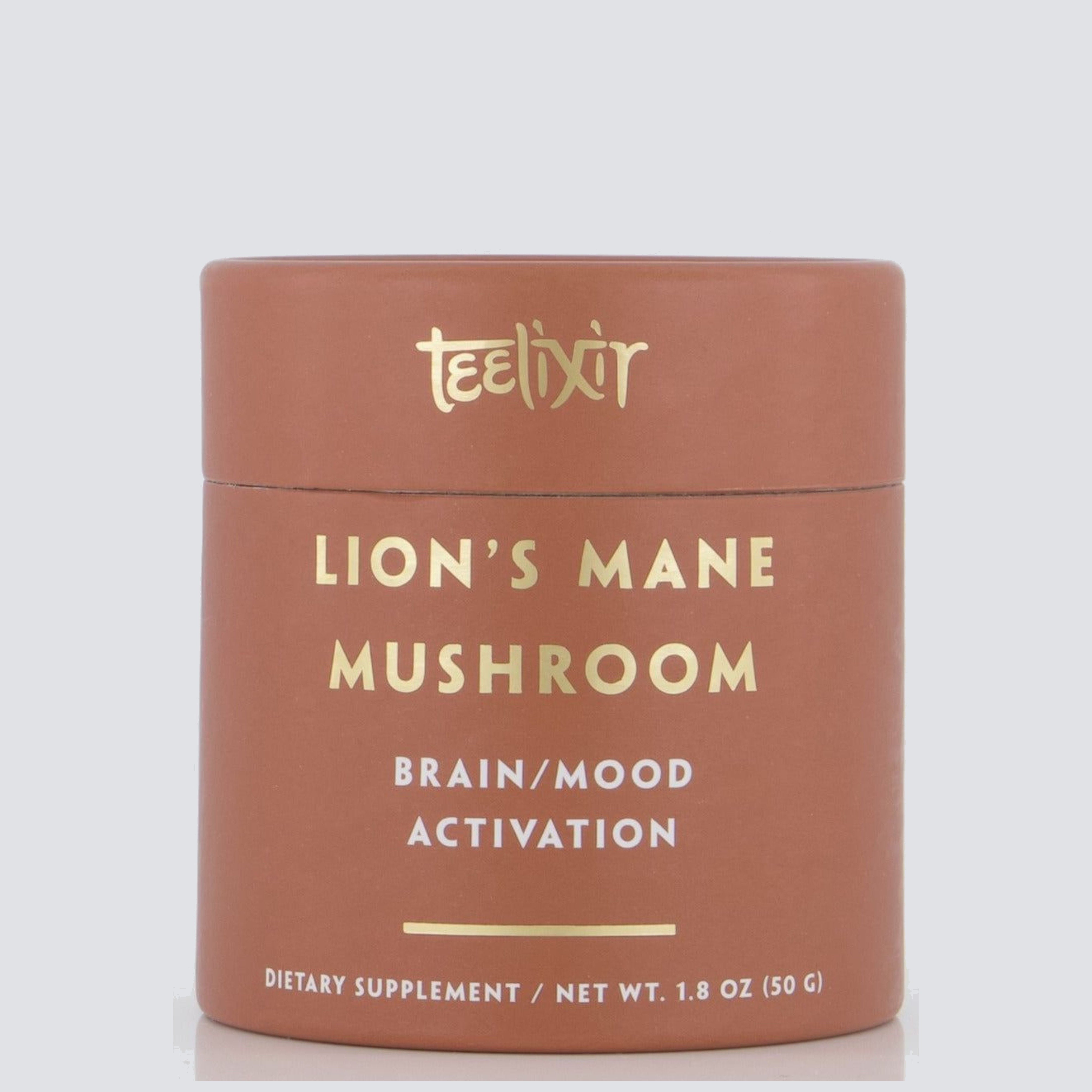
Teelixir Lion's Mane
Dual-extract. May help support NGF function. Cognitive clarity.
Further Reading
Original Data Layer
Certificate of Analysis C24052105 — Beta-glucan content confirmed at 31.7% by dry weight via triple-wavelength spectrophotometry. Hot-water dual extract, 10:1 concentration ratio. Heavy metal screening: arsenic <0.5 ppm, lead <0.3 ppm, mercury <0.1 ppm — all below Australian TGA permitted daily exposure limits.
Source: Teelixir internal quality documentation. COA available on request. Testing conducted by accredited NATA laboratory.
Frequently Asked Questions
What is the difference between reishi and lion's mane?
Reishi may interact with the immune system via beta-glucans and triterpenes. Lion's mane may interact with the nervous system via hericenones/erinacines that influence NGF. Different mechanisms, different use cases. Not interchangeable.
Which is better for brain fog?
Lion's mane has the stronger cognition and brain fog evidence — its NGF stimulation mechanism may help support neuroplasticity and cognitive function. Reishi's cognitive evidence is preliminary (2 small trials). For brain fog: lion's mane is the evidence-aligned choice. Visit our lion's mane blog for the full evidence review.
Can you take reishi and lion's mane together?
Yes — the mechanisms are non-competing and no adverse interactions have been documented. No head-to-head trial exists. Many people take both for complementary wellbeing support. Start each separately before combining. Not appropriate without medical supervision if taking immunosuppressant medications.
Has a study compared reishi and lion's mane head-to-head?
No — as of 2026, no head-to-head trial comparing reishi and lion's mane in the same participant group has been published. The comparison in this article is based on independent trial evidence for each mushroom. This is an explicit limitation.
Explore the Teelixir Medicinal Mushroom Range
Reishi traditionally used to support general wellbeing. Lion's Mane traditionally used to support cognitive function. Both dual-extracted from fruiting body.
Shop Reishi → Shop Lion's Mane →Disclaimer: This article is for educational purposes only and is not intended to diagnose, treat, cure, or prevent any disease or health condition. Always consult your healthcare professional before starting any new supplement. Individual results may vary.
Continue Your Research
- Reishi for Fatigue and Energy: Inside the Clinical Evidence
- Reishi for Immune Support: The Research Behind the Claims
← Back to Reishi Research Hub


