



Ashwagandha Research: What 1,584 Studies Tell Us

Ashwagandha (Withania somnifera) is one of the most intensely studied adaptogenic herbs in modern pharmacology. As of March 2026, PubMed indexes 1,584 published studies on this plant — spanning randomised controlled trials, systematic reviews, meta-analyses, animal models, and in vitro research.
That is not a marketing number. It is a database count.
But volume alone tells you nothing useful. A thousand rodent studies do not equal a single well-designed human trial. And a well-designed human trial that finds no effect is just as important as one that finds a dramatic result. The real question is not “how many studies exist?” but “what does the evidence actually show — and where does it fall short?”
This article applies what we call The Evidence Pyramid Principle: weighting evidence by study quality, not by headline appeal. Meta-analyses and systematic reviews sit at the apex. Randomised controlled trials form the next layer. Animal and in vitro work provides mechanistic clues but cannot confirm human outcomes. Everything below that — case reports, traditional usage, anecdote — forms the broad base of the pyramid, useful for generating hypotheses but insufficient for health claims.
Here is what the pyramid reveals for ashwagandha, layer by layer.
The Evidence Landscape: 1,584 Studies in Context
Not all 1,584 studies carry equal weight. Here is how the research breaks down by type and model:
| Category | Count | What It Tells Us |
|---|---|---|
| Meta-analyses & systematic reviews | 8 | Highest-quality synthesis of multiple trials |
| Randomised controlled trials (RCTs) | 28 | Gold-standard human intervention evidence |
| Clinical trials (non-RCT) | 3 | Human evidence without randomisation or blinding |
| Human observational / other | 538 | Broad human-relevant research (surveys, case series, reviews) |
| Animal models | 135 | Mechanistic and dose-finding studies |
| In vitro (cell/lab) | 39 | Molecular mechanism exploration |
| Other / unclassified | 833 | Chemistry, pharmacokinetics, reviews, ethnobotany |
The top research areas by publication volume are withanolide chemistry (562 studies), antioxidant activity (483), immune and inflammation pathways (358), cancer biology (332), and depression/anxiety (297). But publication volume does not equal clinical relevance — the cancer studies, for instance, are almost entirely preclinical (cell lines and animal models), not human trials.
This distinction matters. When you see “ashwagandha fights cancer” in a headline, trace it back to the pyramid. If the source is an in vitro study where isolated withanolides were applied to cancer cells in a petri dish, that is pyramid-base evidence. It generates a hypothesis. It does not justify a health claim. We have written about this distinction in depth in our article on ashwagandha and cancer research: the petri dish problem.
Strongest Evidence: Stress, Anxiety, and Cortisol
The most robust body of human evidence for ashwagandha sits in the stress and anxiety domain, with 297 published studies and multiple high-quality meta-analyses.
A 2024 systematic review and meta-analysis pooling data from 558 participants across multiple RCTs found that ashwagandha supplementation significantly reduced stress and anxiety scores compared to placebo (PMID: 39348746). This is the strongest meta-analytic evidence available for any adaptogenic herb in the anxiety domain.
However, the picture is not uniformly positive. A 2025 meta-analysis examining 488 participants found a significant reduction in cortisol levels but no significant effect on perceived stress as measured by self-report questionnaires (PMID: 40746175). This is an important nuance: ashwagandha may lower the biological stress marker (cortisol) without necessarily changing how stressed someone feels. The authors noted that “evidence supporting its efficacy remains inconsistent” for perceived stress outcomes.
“Ashwagandha demonstrated significant cortisol reduction but no effects on perceived stress — highlighting the gap between biomarker changes and subjective experience.”
Systematic review and meta-analysis, 2025 (PMID: 40746175), n=488
Individual RCTs flesh out the detail. A 2026 three-arm trial (n=135) testing sustained-release ashwagandha root extract at 150 mg and 300 mg daily found dose-dependent reductions in perceived stress and cortisol in healthy adults under stress (PMID: 41824889). A 2023 RCT (n=54) using 500 mg of ashwagandha root extract standardised to 2.5% withanolides reported improvements in stress, anxiety, and quality of life scores, with modulation of stress-related biomarkers including serotonin and GABA (PMID: 37832082).
For a deeper exploration of the anxiety-specific evidence, see our detailed analysis in ashwagandha for anxiety and stress: what 9 RCTs actually found.
Strong Evidence: Sleep Quality
Sleep is the second most compelling evidence area, supported by a 2021 meta-analysis of 400 participants that found ashwagandha extract significantly improved overall sleep quality (PMID: 34559859). Effects were more pronounced in participants with diagnosed insomnia compared to healthy volunteers, and at doses of ≥600 mg/day.
A 2020 RCT (n=144) specifically evaluating non-restorative sleep found that ashwagandha extract improved sleep quality, sleep onset latency, and total sleep time in healthy adults (PMID: 32540634). A separate 2021 trial examined ashwagandha alongside sleep questionnaires and actigraphy (wrist-worn sleep tracking), confirming both subjective and objective sleep improvements (PMID: 32818573).
The sleep evidence is detailed further in ashwagandha for sleep: the stress-sleep loop explained by 5 RCTs.
Teelixir Organic Ashwagandha Root Extract
10:1 dual-extracted, root-only, ≥2.5% withanolides. ACO Certified Organic.
Moderate Evidence: Physical Performance and Body Composition
A 2020 meta-analysis of studies examining VO₂max (maximum oxygen uptake) found that ashwagandha supplementation produced a statistically significant improvement in aerobic capacity across 162 participants (PMID: 32316411). This is noteworthy because VO₂max is one of the strongest predictors of all-cause mortality — a meaningful endpoint, not a vanity metric.
A 2025 RCT (n=100) found that ashwagandha root extract at 300 mg twice daily not only reduced stress biomarkers but also supported weight management in adults with elevated stress and BMI ≥25 (PMID: 41635453).
However, not all performance studies are positive. A 2025 RCT in young healthy men found that ashwagandha supplementation at 600 mg/day during an 8-week high-intensity interval training programme did not enhance improvements in body composition, lipid profile, or hormonal markers beyond what HIIT alone achieved (PMID: 41156498). The authors concluded that ashwagandha does not appear to provide additional ergogenic benefits when layered on top of an already effective exercise programme.
This null finding is instructive. Ashwagandha may support physical performance in sedentary or stressed populations, but adding it on top of an already optimised training protocol may yield diminishing returns. For more on the exercise evidence, see ashwagandha for muscle strength: the anabolic recovery window explained.
Emerging Evidence: Hormones, Fertility, and Perimenopause
Ashwagandha’s effects on reproductive hormones and fertility are an active research area with promising but early-stage evidence.
A 2022 systematic review examining herbal medicines for male infertility included ashwagandha among the herbs with the most supporting evidence, pooling data from 1,218 participants across multiple studies (PMID: 35993457). However, most individual trials in this domain are small and methodologically limited.
For women, a 2021 RCT (n=100) found that ashwagandha root extract significantly improved climacteric symptoms, quality of life, and hormonal parameters in perimenopausal women over 8 weeks (PMID: 34553463). This is one of the few trials specifically targeting the perimenopausal transition — an underserved research area.
A 2023 systematic review of RCTs on herbal medicines for hypothyroidism included ashwagandha among the herbs demonstrating potential thyroid-supportive effects (PMID: 37013429). We discuss the bidirectional thyroid evidence — including cautions — in ashwagandha for thyroid: the bidirectional risk explained.
The testosterone and fertility evidence is examined in ashwagandha for testosterone: the cortisol-testosterone inversion explained and ashwagandha for women: hormones, perimenopause, and the hormonal seesaw.
Emerging Evidence: Cognition and Mood
The cognitive research (218 studies in the broader literature) is growing but remains primarily preliminary. A 2024 RCT found that liposomal ashwagandha supplementation improved markers of cognitive function and mood in healthy younger adults (PMID: 38931168). A 2024 RCT (n=70) using ashwagandha root extract standardised to 2.5% withanolides with piperine reported improvements in depression and anxiety symptoms, with increases in serotonin and GABA levels (PMID: 37878284).
Earlier work in clinical populations showed promise: a 2019 trial (n=66) in patients with schizophrenia found ashwagandha extract reduced depression and anxiety symptoms as an adjunct to standard treatment (PMID: 31046033).
The distinction between ashwagandha and dedicated nootropics like lion’s mane is important here. Where lion’s mane acts primarily through nerve growth factor (NGF) pathways, ashwagandha appears to support cognition indirectly through stress reduction and cortisol modulation. We compare these two mechanisms in lion’s mane vs ashwagandha: the NGF-cortisol split explained and ashwagandha for ADHD and focus.
What the Evidence Does Not Show
Honest assessment of limitations is as important as reporting positive findings. Here is where the ashwagandha evidence falls short:
Cancer treatment: Despite 332 published studies in the cancer/tumour domain, virtually all are preclinical. Isolated withanolides show anti-proliferative activity in cell lines and animal models, but no human clinical trials have demonstrated ashwagandha as an effective cancer treatment. Extrapolating from petri-dish results to human health claims is a fundamental evidence error. Read more in ashwagandha and cancer research: the petri dish problem.
Athletic performance in trained individuals: As noted above, a 2025 RCT found that ashwagandha supplementation at 600 mg/day during an 8-week high-intensity interval training programme did not enhance improvements in body composition, lipid profile, or hormonal markers beyond what HIIT alone achieved (PMID: 41156498). The compound may help stressed or undertrained populations more than already-optimised athletes.
Perceived stress (vs cortisol): The 2025 meta-analysis (n=488) found a significant reduction in cortisol but no significant effect on self-reported perceived stress (PMID: 40746175). This gap between biological markers and lived experience is a recurring theme in adaptogen research and deserves more investigation.
Long-term safety data: Most RCTs run for 8–12 weeks. Long-term studies (>6 months) are scarce. A 2021 safety-focused RCT confirmed tolerability in healthy volunteers (PMID: 33338583), but comprehensive long-term data remains a gap. We discuss known side effects and safety considerations in ashwagandha side effects: the tolerance threshold and what 29+ RCTs show.
Dose standardisation: Studies use highly variable preparations — KSM-66, Sensoril, whole-root powder, leaf extracts — at doses ranging from 150 mg to 1,000+ mg daily. This makes cross-study comparisons difficult. Our ashwagandha dosage guide and KSM-66 vs Sensoril vs whole root comparison address this challenge in detail.
The Evidence Pyramid Summary
| Health Area | Evidence Level | Human Trials | Key Finding |
|---|---|---|---|
| Stress & anxiety | Strong | 9+ RCTs, 2 meta-analyses | Significant cortisol reduction; inconsistent perceived stress results |
| Sleep quality | Strong | 5+ RCTs, 1 meta-analysis | Significant improvement in sleep quality, especially in insomnia populations |
| Physical performance | Moderate | 3+ RCTs, 1 meta-analysis | VO₂max improvement; null finding in trained athletes |
| Weight management | Moderate | 2 RCTs | Reduced stress-driven cravings and body weight in stressed adults |
| Hormones & fertility | Moderate | Systematic review + RCTs | Promising fertility and perimenopause evidence; small sample sizes |
| Cognition & mood | Preliminary | 3+ RCTs | Indirect cognitive support via stress reduction; early-stage evidence |
| Cancer | Preclinical only | 0 human treatment trials | In vitro and animal models only; cannot justify health claims |
From Our Formulations
At Teelixir, our ashwagandha is a 10:1 concentrated root extract, meaning 10 kilograms of raw ashwagandha root are used to produce 1 kilogram of extract. The extraction uses a dual-solvent process (hot water and ethanol) to capture both water-soluble polysaccharides and alcohol-soluble withanolides.
| Specification | Detail |
|---|---|
| Plant part | Root only (no leaf material) |
| Extraction ratio | 10:1 concentrated |
| Extraction method | Dual extract (hot water + ethanol) |
| Active compound | Withanolides ≥2.5% |
| Organic certification | ACO (Australian Certified Organic) |
| Source country | India (Di Tao sourced) |
| GMO status | GMO free |
| Microbial testing | E. coli and Salmonella negative |
| Shelf life | 24 months |
Why does the root-only distinction matter? Many commercial ashwagandha products include leaf material, which contains higher concentrations of withaferin A — a cytotoxic compound useful in cell studies but potentially problematic in human supplementation. Our formulation uses only root material, which has a different withanolide profile more aligned with the traditional Ayurvedic preparation and the majority of positive clinical trials. We explain the compound chemistry in withanolides explained: the active compounds in ashwagandha.
What This Means in Practice
If you are evaluating ashwagandha based on what the research actually demonstrates in humans:
Strongest use case: Managing the physiological stress response (cortisol reduction) and improving sleep quality. These have the highest level of evidence, supported by meta-analyses. If stress-related sleep disruption is your primary concern, this is where the evidence converges most convincingly.
Reasonable use case: Supporting physical recovery and body composition in the context of chronic stress. The VO₂max meta-analysis is encouraging, but the HIIT null finding (PMID: 41156498) suggests the benefit may be stress-mediated rather than directly ergogenic. If you are already well-trained and not chronically stressed, the benefit may be marginal.
Worth monitoring: Hormonal support (perimenopause, thyroid, testosterone) and cognitive function. The individual RCTs are promising but insufficient for confident recommendations. These are areas where the next 3–5 years of research will clarify the picture significantly.
Not supported by human evidence: Cancer treatment, anti-ageing claims, or cure-all positioning. The preclinical data is interesting from a basic science perspective but is not translatable to clinical recommendations at this stage.
For practical guidance on how to use ashwagandha — dosing, timing, and preparation methods — see our ashwagandha dosage guide, when to take ashwagandha, and how to use ashwagandha: beginner’s guide.
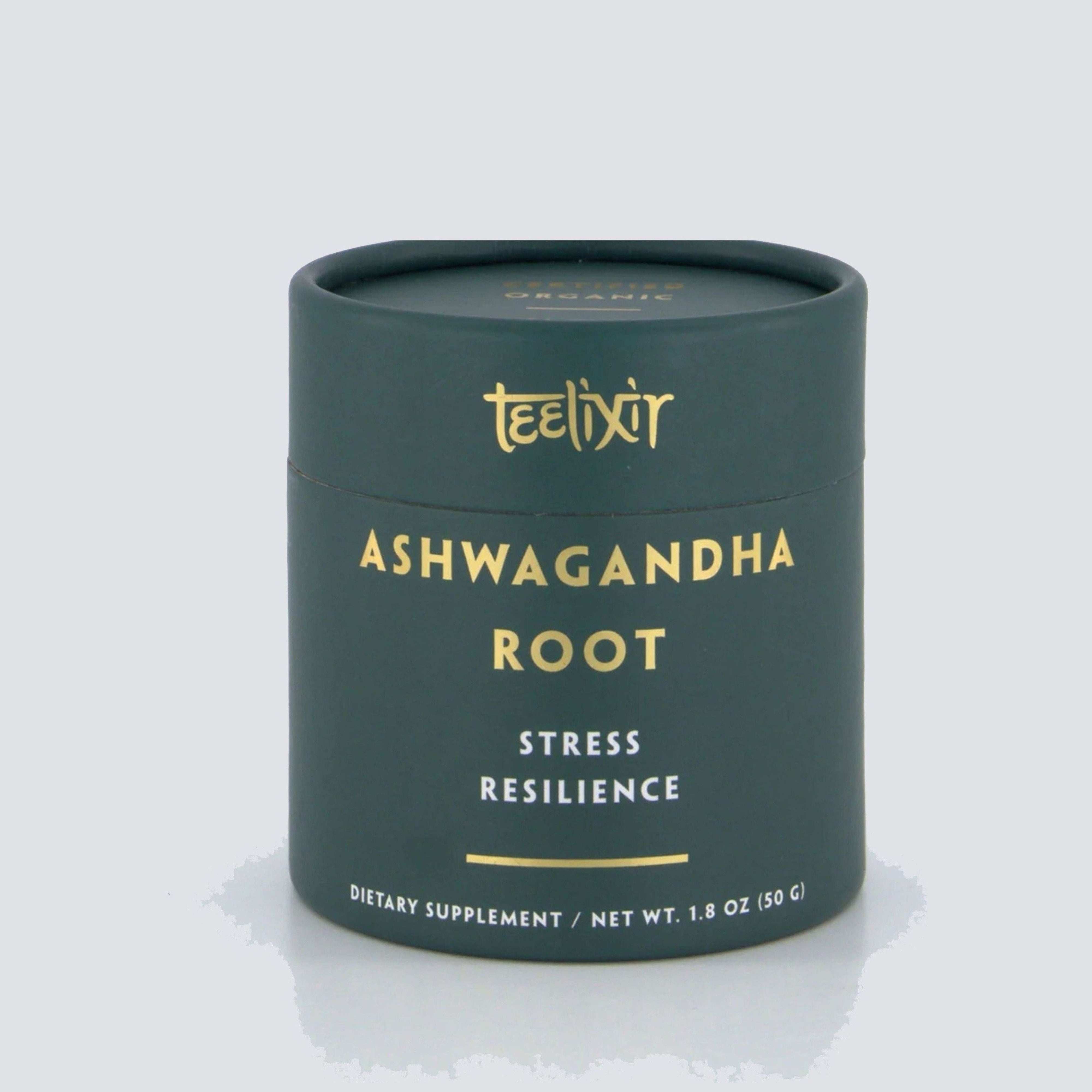
Teelixir Organic Ashwagandha Root (10:1)
Certified organic, 10:1 concentrated root extract. Di Tao sourced from India. Dual-extracted for full-spectrum withanolides (≥2.5%). Root-only — no leaf material.
Shop Ashwagandha →Frequently Asked Questions
Disclaimer: This article is for informational purposes only and is not intended to diagnose, treat, cure, or prevent any disease. The studies cited are sourced from PubMed and represent published research findings, not therapeutic recommendations. Always consult a qualified healthcare practitioner before starting any new supplement, especially if you are pregnant, breastfeeding, taking medication, or have a pre-existing medical condition.
Teelixir products are listed on the ARTG (Australian Register of Therapeutic Goods). We comply with TGA advertising requirements and do not make therapeutic claims beyond what the evidence supports.